
BPC-157 Research Guide: Structure, Applications, Storage & Quality Considerations
Explore BPC-157 research, molecular structure, preclinical applications, storage considerations, and product quality factors. Learn how researchers evaluate testing, documentation, purity, and research materials while understanding the current limitations of human evidence.
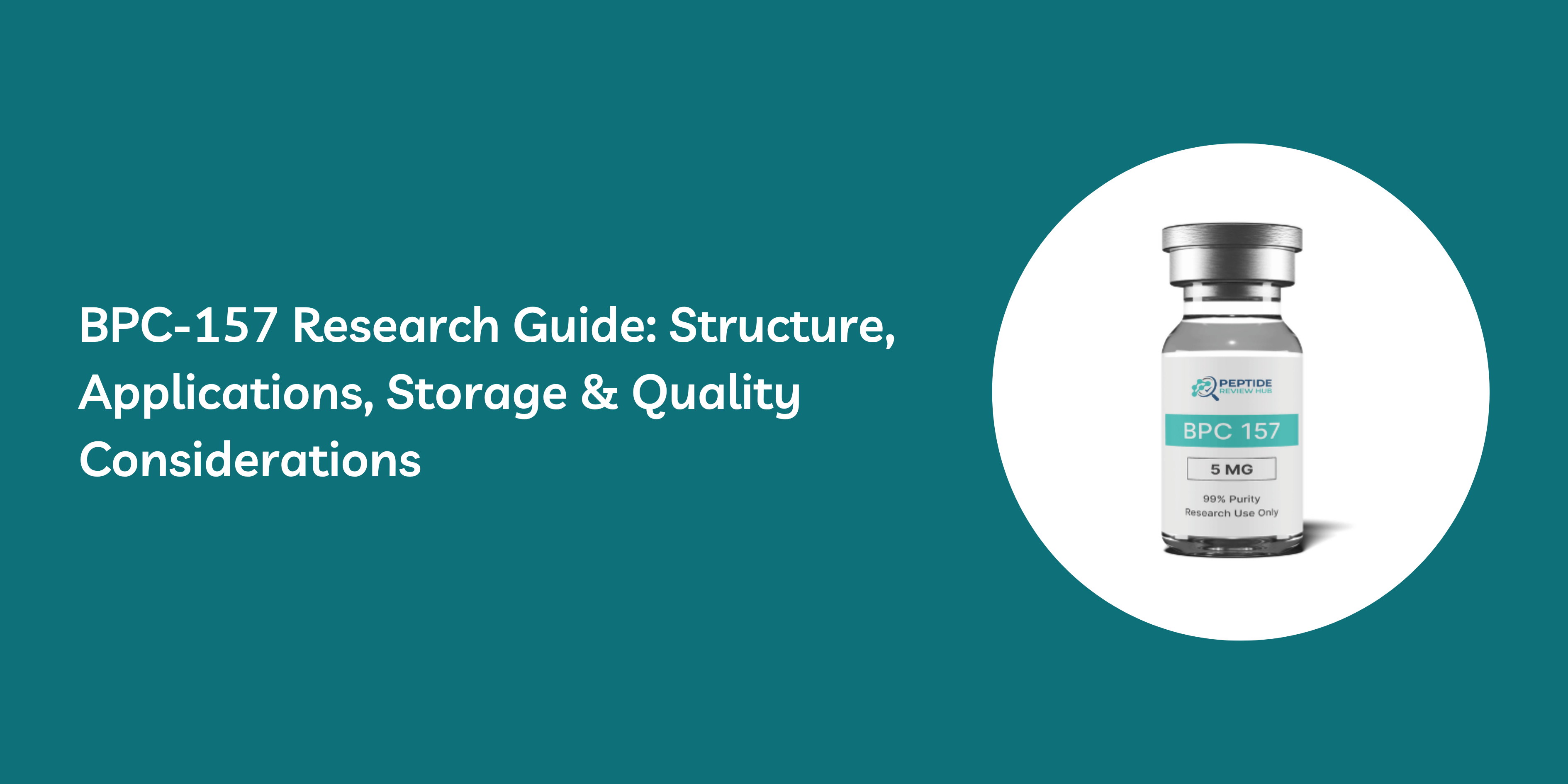
BPC-157 has become one of the more frequently discussed compounds in peptide research, particularly in studies involving tissue repair, inflammation, vascular biology, and musculoskeletal recovery. For researchers exploring the available literature, however, finding reliable information can be difficult because online discussions often mix established findings with claims that have not been demonstrated in humans.
A useful Peptide Product Directory can help researchers identify products and compare available information, but product availability should never be confusing with clinical validation. BPC-157 remains an investigational compound, and much of the scientific evidence comes from laboratory and animal studies rather than large, controlled human trials.
This guide looks at what BPC-157 is, how it has been studied, what researchers should know about its molecular characteristics, and how to evaluate research-grade material.
What Is BPC-157?
BPC-157, commonly referred to as Body Protection Compound-157, is a synthetic Penta decapeptide consisting of 15 amino acids. Its reported sequence is Gly-Glu-Pro-Pro-Pro-Gly-Lys-Pro-Ala-Asp-Asp-Ala-Gly-Leu-Val.
The compound has attracted scientific interest because experimental research has investigated its effects across several biological systems. Research has included models involving gastrointestinal tissue, muscles, tendons, ligaments, blood vessels, inflammatory pathways, and nervous-system function.
A 2025 systematic review of musculoskeletal research identified 36 relevant studies published through 2024. Of those, 35 were preclinical studies and only one was clinical, illustrating an important limitation when interpreting claims about BPC-157.
BPC-157 Molecular Structure and Characteristics
Understanding the basic chemistry of a research compound is important when comparing products or interpreting laboratory findings.
BPC-157 is a 15-amino-acid peptide with the sequence:
Gly-Glu-Pro-Pro-Pro-Gly-Lys-Pro-Ala-Asp-Asp-Ala-Gly-Leu-Val
The product information listed by Peptide Review Hub identifies BPC-157 with the molecular formula C₆₂H₉₈N₁₆O₂₂, a molecular weight of approximately 1,419.56 g/mol, and CAS number 137525-51-0. The listed research material is supplied in lyophilized powder form.
For researchers, these identifiers are useful when checking analytical documentation, comparing supplier specifications, or confirming that a product corresponds to the intended compound.
What Does BPC-157 Research Investigate?
BPC-157 research covers several biological areas, although the strength of evidence varies considerably between them.
Tissue Repair and Wound Research
One of the major areas of interest is tissue repair. Preclinical studies have investigated whether BPC-157 influences processes involved in cellular migration, blood-vessel formation, collagen-related activity, and inflammatory signaling.
Research reviews have reported effects involving angiogenesis, fibroblast activity, nitric oxide signaling, and other pathways associated with tissue recovery. These findings have helped drive interest in further laboratory investigation.
Importantly, positive results in an animal model do not automatically establish that the same effect occurs in humans.
Tendon, Ligament and Muscle Research
Musculoskeletal research is another prominent area.
Experimental studies have examined BPC-157 in models involving tendon injuries, ligament damage, skeletal muscle injury, and bone-related healing. The 2025 systematic review reported improvements in structural, functional, and biomechanical outcomes across several preclinical models.
These findings make BPC-157 particularly interesting to researchers studying connective-tissue biology. At the same time, the limited amount of controlled human evidence means these results should be viewed as a basis for further investigation rather than established treatment outcomes.
Gastrointestinal Research
BPC-157 has also been investigated in gastrointestinal models. Researchers have examined its relationship with mucosal integrity, inflammatory responses, and gastrointestinal tissue protection.
This area has particular historical interest because BPC-157 was originally associated with gastric tissue and has subsequently been investigated in a variety of experimental models.
Inflammation and Cellular Signaling
Another important research direction involves inflammatory and cellular signaling pathways.
Published reviews discuss potential interactions involving nitric oxide pathways, VEGFR-related signaling, ERK pathways, angiogenesis, and inflammatory mediators. However, precise mechanisms remain an active research area rather than a fully established clinical model.
This makes BPC-157 relevant to Advanced Peptide Research, particularly where investigators are examining how peptide compounds influence cellular responses and tissue-level processes.
What Does Human Evidence Show?
This is where researchers need to be especially careful.
BPC-157 has generated extensive preclinical interest, but human evidence remains limited. A recent biopharmaceutical review reported that available clinical data come from fewer than 30 subjects across three uncontrolled pilot studies and noted that no approved pharmaceutical formulation or validated dosing regimen currently exists.
Similarly, the 2025 systematic review found very limited clinical evidence and emphasized the absence of comprehensive human safety data.
Therefore, statements describing BPC-157 as an established therapy should not be treated as equivalent to findings from controlled clinical trials.
Storage and Laboratory Handling Considerations
Researchers working with peptide materials should pay close attention to storage and handling conditions.
Lyophilized peptides are generally easier to store than prepared solutions, but the exact requirements depend on the product's documentation and laboratory protocol. Researchers should review the supplier's certificate of analysis, storage recommendations, lot information, purity data, and any available analytical testing before beginning a study.
Repeated exposure to unsuitable temperatures, moisture, light, or unnecessary freeze-thaw cycles may affect experimental consistency. Maintaining a documented storage and handling process can therefore be just as important as selecting the initial research material.
How to Evaluate BPC-157 Research Material
Price alone is not a reliable way to evaluate research peptide. Before selecting a product, researchers should consider several factors:
Certificate of Analysis: Check whether batch-specific analytical documentation is available.
Purity information: Look for clearly stated analytical methods rather than relying only on a marketing percentage.
Identity confirmation: Confirm that the compound's identity and molecular information correspond with the intended material.
Batch information: Lot numbers make it easier to connect a product with its supporting documentation.
Storage instructions: Verify that handling and storage recommendations are clearly provided.
Supplier transparency: Look for accessible information about testing, documentation, and product specifications.
Research-only labeling: Ensure the material is appropriately represented as a research product rather than a proven medical treatment.
Comparing these details can help create a more reproducible research process and reduce the risk of relying on unsupported product claims.
The Future of BPC-157 Research
The scientific interest surrounding BPC-157 continues to grow, but several important questions remain unanswered. Researchers are still working to understand how the compound behaves in different biological environments and how findings from preclinical models may translate into future research.
Researchers need better information about pharmacokinetics, formulation, long-term safety, appropriate clinical endpoints, and reproducibility in humans. A 2026 review highlighted the gap between extensive preclinical activity and the relatively limited pharmaceutical and clinical development of the compound. When evaluating products for laboratory work, comparing information from Top Peptide Providers can also help researchers examine available documentation, testing information, product specifications, and batch details more carefully.
Future well-designed studies could help determine which experimental findings translate meaningfully to human biology. Until stronger evidence becomes available, BPC-157 is best understood as an investigational research compound rather than an established medical treatment.
Conclusion
BPC-157 remains an interesting subject within peptide research, with studies examining its potential involvement in tissue repair, inflammatory signaling, vascular biology, gastrointestinal research, and musculoskeletal models.
However, the current evidence should be interpreted carefully. Much of the available research is preclinical, while robust human clinical evidence remains limited. Researchers should therefore focus on reliable scientific literature and transparent product documentation when evaluating research materials.
As research continues, further controlled studies will be important for clarifying the compound's mechanisms, pharmacological properties, safety profile, and potential applications. For now, BPC-157 is best approached as an investigational research compound, with conclusions based on the quality and limitations of the available evidence.
Similar Blog Posts
All articles
10/5/2026
How Long Does Bacteriostatic Water Last with Peptides? A Practical Research Guide
Read Article
9/28/2026
AHK-Cu and Hair Follicles: Exploring the Science Behind Copper Peptides
Explore AHK-Cu and its potential role in hair follicle research. Learn how this copper peptide has been studied in dermal papilla cells, follicle growth, cellular signaling, VEGF pathways, and skin biology while understanding the limits of current laboratory evidence.
Read Article
9/7/2026