
Research Use Only. This compound is not intended for human consumption or therapeutic use.
Where to Buy GLOW: Vendor Comparison & Research Info
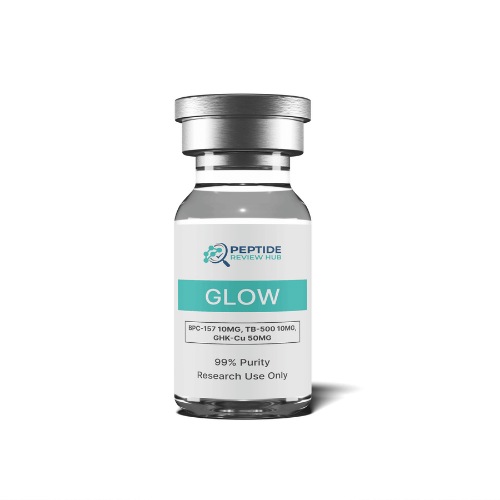
GLOW (60mg) is an experimental peptide research stack combining GHK-Cu, BPC-157, and TB-500 for laboratory studies of cellular signaling, extracellular matrix biology, tissue-response pathways, cell migration, and inflammatory mechanisms.
What is GLOW?
GLOW (60mg) is an experimental peptide research formulation combining GHK-Cu, BPC-157, and TB-500 for laboratory investigation of cellular signaling, extracellular matrix biology, tissue-response pathways, and inflammatory processes. By bringing three distinct research peptides into a single formulation, GLOW provides researchers with a multi-component system for studying interactions between peptide-mediated signaling pathways.
GHK-Cu is a copper-binding peptide investigated in areas of extracellular matrix regulation, cellular signaling, and dermal biology. BPC-157 has been studied in experimental models involving tissue-response pathways, vascular biology, and gastrointestinal research. TB-500 is associated with research into thymosin beta-4-related cellular mechanisms, including cell migration and cytoskeletal processes.
When evaluating GLOW (60mg) for laboratory research, researchers should review documentation covering peptide identity, composition, purity, lot information, analytical testing, and storage specifications. GLOW should be regarded strictly as a research material and is not intended for human consumption, diagnosis, prevention, or treatment of any disease or medical condition.
Vendors Listed
Lowest Price: $—
What is GLOW (60mg)?
GLOW (60mg) is a multi-peptide research formulation containing GHK-Cu, BPC-157, and TB-500. Each component has been investigated independently in experimental research involving different aspects of cellular and tissue biology.
The combination provides a research model for examining multiple peptide-associated pathways within a single formulation. Research interest may include extracellular matrix processes, cellular migration, tissue-response signaling, inflammatory pathways, and mechanisms associated with cellular repair.
Because GLOW combines several experimental compounds, findings associated with individual peptides should not automatically be interpreted as evidence for the effectiveness or safety of the combined formulation.
Overview
GLOW (60mg) is formulated as a research-oriented peptide stack designed for laboratory investigation of complementary biological pathways. The formulation incorporates three peptides with distinct research histories:
GHK-Cu: A copper-binding peptide studied in cellular, dermal, and extracellular matrix research.
BPC-157: An experimental peptide investigated in preclinical studies involving tissue-response and cellular signaling pathways.
TB-500: A peptide associated with research into thymosin beta-4-related mechanisms, including cellular migration and cytoskeletal biology.
The combined formulation can serve as an experimental system for researchers interested in evaluating interactions among different peptide-mediated biological pathways. Research findings should be interpreted based on the specific experimental model, concentration, formulation, and analytical conditions used.
Molecular Characteristics
GLOW (60mg) is a multi-component formulation rather than a single molecular entity. Its molecular characteristics depend on the individual peptides included in the stack:
GHK-Cu: Glycyl-L-histidyl-L-lysine complexed with copper ions; commonly studied as a copper-binding tripeptide.
BPC-157: Experimental peptide consisting of 15 amino acids and investigated in various preclinical research models.
TB-500: Research peptide associated with thymosin beta-4-related biological mechanisms and cellular processes.
Total Formulation: 60mg combined peptide content, with the precise quantity of each component determined by the product formulation.
Formulation Type: Multi-peptide research compound.
Research Classification: Experimental laboratory material.
Because the formulation contains multiple peptides, researchers should consult the product-specific certificate of analysis for exact composition, individual peptide quantities, purity measurements, and batch information.
Research Applications
GLOW (60mg) may be investigated in laboratory and preclinical research involving:
Extracellular Matrix Research: Studying pathways associated with extracellular matrix organization and cellular signaling.
Cellular Signaling: Examining peptide-mediated signaling mechanisms in experimental cell systems.
Tissue Biology: Investigating cellular responses associated with tissue-maintenance pathways.
Inflammatory Research: Exploring signaling pathways involved in experimental inflammatory models.
Cell Migration: Studying mechanisms associated with cellular movement and migration.
Dermal Biology: Investigating GHK-Cu-related pathways in experimental skin and connective-tissue models.
Regenerative Biology: Exploring cellular mechanisms involved in tissue-response and repair-associated research.
Peptide Interaction Studies: Evaluating biological responses to a multi-peptide experimental formulation.
These applications represent areas of scientific investigation and should not be interpreted as established therapeutic applications.
Mechanism of Research Interest
The research interest in GLOW comes from the different biological pathways associated with its three peptide components.
GHK-Cu is a naturally occurring copper-binding peptide that has been investigated for its relationship with extracellular matrix components, cellular signaling, and tissue-associated biological processes. Its copper-binding characteristics make it relevant to research involving peptide–metal interactions and cellular biology.
BPC-157 is an experimental peptide investigated primarily in preclinical research. Studies have examined its relationship with cellular signaling, vascular-associated processes, and tissue-response pathways.
TB-500 is associated with research surrounding thymosin beta-4-related mechanisms. Thymosin beta-4 has been investigated in connection with actin regulation, cell migration, and cytoskeletal biology.
The combination of these components makes GLOW useful as a research formulation for examining how multiple peptide-associated pathways may interact within experimental systems. However, the biological activity of the combined formulation must be evaluated independently rather than inferred solely from studies of its individual components.
Preclinical Research
The individual components of GLOW have been investigated in different experimental and preclinical research settings.
GHK-Cu research has explored cellular and extracellular matrix processes, while BPC-157 has been examined in various animal and laboratory models involving tissue-response and signaling pathways. Research involving thymosin beta-4 and related peptides has examined mechanisms associated with cell migration, cytoskeletal regulation, and tissue biology.
The evidence base for these compounds varies considerably by peptide, experimental model, and research endpoint. Preclinical observations cannot automatically be translated into established effects in humans.
GLOW itself, as a combined formulation, should therefore be evaluated according to product-specific analytical data and experimental evidence rather than assuming that findings from individual components apply directly to the finished stack.
Product Quality & Analytical Testing
Research-grade GLOW (60mg) should be evaluated using appropriate analytical methods to confirm peptide identity, purity, composition, and batch consistency. Depending on the laboratory application, quality assessment may include:
HPLC: Evaluation of peptide purity and related impurities.
Mass Spectrometry: Verification of molecular mass and peptide identity.
Chromatographic Testing: Assessment of individual peptide components and potential degradation products.
Peptide Mapping: Additional characterization of peptide composition where appropriate.
Copper-Complex Analysis: Evaluation of GHK-Cu composition and copper association where applicable.
Batch Testing: Comparison of analytical characteristics across production lots.
Stability Testing: Monitoring peptide integrity under defined storage conditions.
Researchers should review the certificate of analysis (COA), batch number, stated purity, analytical methodology, individual peptide composition, and storage information before using a GLOW formulation in laboratory research.
Research Use Only: GLOW (60mg), containing GHK-Cu, BPC-157, and TB-500, is an experimental research formulation and is not an approved medication, dietary supplement, or established medical treatment. It should not be presented as a treatment for wound healing, inflammation, skin conditions, injury recovery, or any other medical condition. Research materials should be handled according to applicable laboratory procedures, institutional requirements, manufacturer specifications, and relevant regulations. Independent verification of identity, composition, purity, and analytical documentation is recommended before research use.
Where to Buy GLOW Online
| Action | ||||||
|---|---|---|---|---|---|---|
1 |  Pro Nova Peptides Verified | 9.0/10 Editorial Rating | $134.99 10mg vial | $13.50/mg | In Stock | Visit Site |
2 | 8.3/10 Editorial Rating | $88.00 70mg vial | $1.26/mg | In Stock | Visit Site | |
3 | 7.8/10 Editorial Rating | $54.99 65mg vial | $0.85/mg | In Stock | Visit Site | |
4 | 7.6/10 Editorial Rating | $99.00 70mg vial | $1.41/mg | In Stock | Visit Site | |
5 | N/A/10 Editorial Rating | $108.00 70mg vial | $1.54/mg | In Stock | Visit Site | |
6 | N/A/10 Editorial Rating | $89.00 10mg vial | $8.90/mg | In Stock | Visit Site | |
7 | N/A/10 Editorial Rating | $99.00 10mg vial | $9.90/mg | In Stock | Visit Site | |
8 | N/A/10 Editorial Rating | $144.99 10mg vial | $14.50/mg | In Stock | Visit Site | |
9 | N/A/10 Editorial Rating | $129.99 10mg vial | $13.00/mg | In Stock | Visit Site | |
10 | N/A/10 Editorial Rating | $550.00 10mg vial | $55.00/mg | In Stock | Visit Site | |
11 | N/A/10 Editorial Rating | $109.99 70mg vial | $1.57/mg | In Stock | Visit Site | |
12 | N/A/10 Editorial Rating | $530.00 70mg vial | $7.57/mg | In Stock | Visit Site | |
13 | N/A/10 Editorial Rating | $59.99 50mg vial | $1.20/mg | In Stock | Visit Site | |
14 | N/A/10 Editorial Rating | $179.19 10mg vial | $17.92/mg | In Stock | Visit Site | |
15 | N/A/10 Editorial Rating | $280.00 70mg vial | $4.00/mg | In Stock | Visit Site | |
16 | N/A/10 Editorial Rating | $272.29 70mg vial | $3.89/mg | In Stock | Visit Site | |
17 | N/A/10 Editorial Rating | $104.79 70mg vial | $1.50/mg | In Stock | Visit Site | |
18 | N/A/10 Editorial Rating | $85.00 70mg vial | $1.21/mg | In Stock | Visit Site | |
19 | N/A/10 Editorial Rating | $78.00 50mg vial | $1.56/mg | In Stock | Visit Site | |
20 |  RIVN Peptides Verified | N/A/10 Editorial Rating | $89.99 70mg vial | $1.29/mg | In Stock | Visit Site |
21 |  Blue Line Research Verified | N/A/10 Editorial Rating | $119.00 mg vial | $/mg | In Stock | Visit Site |
22 | N/A/10 Editorial Rating | $110.00 70mg vial | $1.57/mg | In Stock | Visit Site |


















Top-Ranked Vendor
Pro Nova Peptides:
Introduction to Pro Nova Peptides
Pro Nova Peptides is an online supplier of research-grade peptides and related biochemical compounds intended for scientific and laboratory research. The company operates through its official website, pronovapeptides.com, where customers can explore product listings, review advertised prices, and access information about quality standards, laboratory testing, shipping, and customer service policies.
The company focuses on providing compounds used in experimental research involving molecular biology, cellular signalling, biochemical pathways, and other scientific disciplines. Its website emphasizes product purity, laboratory documentation, and convenient online ordering for researchers and organizations seeking specialized research materials.
Company Background and Business Model
Pro Nova Peptides operates through an online retail platform that features a catalogue of individual research compounds and multi-ingredient formulations. Its business model centers on supplying research materials to customers involved in scientific investigations, laboratory experiments, and related research activities.
The company identifies research laboratories, academic institutions, biotechnology organizations, and scientific professionals as potential customers. Its website highlights product availability, quality-control procedures, and supporting documentation as important aspects of its service.
Although the website provides information about its products and operating policies, its claims about business operations, testing procedures, and product quality should be independently verified before being relied upon.
Product Range and Categories
The Pro Nova Peptides catalogue includes a variety of peptides and related biochemical compounds associated with different areas of experimental research.
Growth-Hormone-Related Research Peptides
The catalogue includes compounds such as CJC-1295 and Ipamorelin, which are investigated in research concerning growth-hormone signalling and related biological pathways. These compounds are studied in specific experimental contexts, but their availability through a research supplier does not establish that they are approved or appropriate for human treatment.
BPC-157 and Experimental Peptides
BPC-157 is another compound listed by the company. It has attracted interest in preclinical research involving tissue-related biological processes. However, the available evidence must be evaluated carefully, and findings from laboratory or animal studies should not be interpreted as proof of safety or effectiveness in humans.
Copper Peptides and Related Formulations
GHK-Cu is a copper-binding peptide investigated in various biological and skin-related research areas. The website also lists multi-ingredient formulations containing several research compounds. Each ingredient and combination requires separate scientific evaluation because the presence of multiple substances does not automatically establish a beneficial or predictable effect.
Metabolism-Related Research Compounds
The catalogue includes compounds such as AOD 9604 and AICAR, which are associated with different areas of biochemical and metabolic investigation. Research interest in these compounds does not necessarily indicate established clinical benefits or regulatory approval for medical applications.
Other Research Compounds and Blends
Additional listings include Epitalon, DSIP, and various amino acid or multi-ingredient formulations. These products are associated with different experimental research topics. Their scientific relevance depends on the particular compound, available evidence, research methodology, and intended application.
Product Purity and Quality Control
Product purity is one of the principal quality claims emphasized by Pro Nova Peptides. According to its website, the company advertises research peptides with purity levels of 98% or higher and describes laboratory testing intended to support product identity and quality.
Purity measurements can provide useful information about the composition of a research material. However, a reported purity percentage does not independently establish the accuracy of the labelled quantity, sterility, absence of every contaminant, or suitability for human use.
Researchers should assess the analytical methods used, the reliability of the testing laboratory, the reference standards applied, and the relevance of the results to the specific product batch.
Third-Party Laboratory Testing and Certificates of Analysis
The company describes third-party laboratory testing and Certificates of Analysis, commonly known as COAs, as part of its quality-control approach.
A Certificate of Analysis is a document that reports analytical results for a particular sample or batch. Depending on the material and testing procedures, it may include the product name, batch number, reported purity, analytical methods, test date, and information about the laboratory responsible for the analysis.
For reliable verification, customers should confirm that the documentation corresponds to the exact product and batch being offered. The laboratory's identity and independence should also be established, and the reported results should be checked against the product's stated specifications.
The availability of a certificate alone does not guarantee product quality. Its reliability depends on the authenticity of the document, the validity of the analytical methods, and the credibility of the testing process.
Product Formulation, Packaging, and Storage
Pro Nova Peptides describes its products as including lyophilized, or freeze-dried, materials supplied in sealed vials. Lyophilization is a processing technique that removes moisture under controlled conditions and may improve the storage stability of suitable compounds.
The actual stability of a peptide depends on its molecular structure, formulation, packaging, environmental conditions, and storage requirements. Different compounds may require different handling procedures, and general storage statements should not be assumed to apply equally to every product.
Sealed packaging and freeze-drying do not, by themselves, establish sterility or suitability for administration to humans. Research materials should be evaluated according to the specifications and safety requirements relevant to their intended laboratory use.
Online Ordering and Customer Service
The company's website provides an online shopping platform through which customers can browse available products, review prices, select listed options, and place orders.
The website also describes shipping arrangements, order tracking, and policies covering certain product-quality or delivery issues. Refund, replacement, and return conditions are subject to the company's published terms and any applicable limitations.
Customers should review these policies before purchasing, particularly when ordering internationally. Shipping availability, delivery timelines, payment protections, customs requirements, and eligibility for refunds may vary according to the destination and circumstances of the order.
Advertised prices and product availability can change over time. Current details should therefore be confirmed directly through the official website.
Intended Customers and Research Applications
Pro Nova Peptides presents its products as materials for scientific and laboratory research. Potential customers may include research institutions, biotechnology organizations, academic laboratories, and other qualified scientific professionals.
Research peptides can be investigated in controlled experiments involving cellular signalling, molecular interactions, biochemical pathways, and other biological processes. The relevance of a compound depends on the research question, experimental design, material quality, and available scientific evidence.
The suitability of any product should be determined by the requirements of the particular investigation rather than by marketing claims alone. Research institutions should also apply appropriate purchasing procedures, quality-control standards, and laboratory safety practices.
Research-Use-Only Disclaimer
An important consideration is that Pro Nova Peptides identifies its products as intended for research and laboratory use rather than human or veterinary consumption. The website also states that its products are not approved by the United States Food and Drug Administration to diagnose, treat, cure, or prevent disease.
A research-use designation does not automatically establish that a compound is safe, legally available for every purpose, or suitable for medical use. Online availability should not be confused with regulatory approval or evidence of clinical effectiveness.
Laboratory purity does not establish human safety, and experimental findings do not necessarily translate into effective treatments. Individuals should not use research-grade peptides as substitutes for approved medicines or professional medical care.
Regulatory and Import Considerations
Customers purchasing research compounds internationally should evaluate the relevant laws and regulations before placing an order. Requirements may differ according to the substance, product classification, intended use, destination country, and applicable import restrictions.
For customers in India, relevant considerations may include customs procedures, import documentation, applicable drug regulations, and restrictions on particular compounds. The legal status of a product should be verified individually rather than inferred from the fact that a foreign website offers it for sale.
The supplier's own research-use disclaimer does not determine whether a particular import or use is permitted under local law.
Evaluating the Company's Credibility
Assessing the credibility of a research-material supplier requires more than reviewing its website design, product descriptions, or advertised purity levels.
Important factors include the transparency of the company's legal identity, the availability of verifiable contact information, the authenticity of its laboratory documentation, and the traceability of individual product batches. Independent customer experiences and evidence of consistent order fulfilment can also help establish a more complete picture of the business.
Claims about third-party testing should be supported by documentation that can be verified independently. Similarly, published shipping and refund policies should be reviewed in full before customers rely on them.
The website provides information about its catalogue, advertised quality standards, and purchasing policies, but these statements alone are insufficient to establish that every product meets its stated specifications or that the business is independently verified as reliable.
Advantages and Points Requiring Verification
Advertised Advantages
Pro Nova Peptides presents several features intended to appeal to research customers, including a specialized product catalogue, published product prices, stated purity standards, laboratory documentation, and online ordering facilities.
Its website also describes customer service policies and shipping arrangements designed to support the purchasing process.
Points Requiring Further Verification
The company's claims about purity, laboratory testing, product identity, and batch documentation should be checked against authentic, independently verifiable records. Its legal business identity, operating details, and history of customer fulfilment should also be evaluated.
Product-specific evidence is particularly important because the quality and scientific relevance of one compound cannot be assumed to apply to other products sold by the same supplier.
These considerations do not establish that the company is fraudulent or unreliable. They identify the evidence needed to make a more informed assessment.
Conclusion
Pro Nova Peptides presents itself as an online supplier of research-grade peptides and related biochemical compounds for scientific and laboratory applications. Its catalogue includes a range of experimental peptides, metabolism-related compounds, copper peptides, and multi-ingredient formulations.
The company emphasizes product purity, third-party laboratory testing, Certificates of Analysis, packaging, and online purchasing convenience. These features may be relevant to researchers evaluating potential suppliers, but the associated claims should be supported by independent verification.
A thorough assessment should include examination of batch-specific laboratory reports, confirmation of testing-laboratory credentials, review of the company's legal and business information, and verification of applicable purchasing and import requirements.
Overall, Pro Nova Peptides provides an online catalogue and describes quality-control procedures intended for research customers. However, its website alone does not establish independent proof of product quality, business legitimacy, or clinical safety. Careful evaluation of documentation, supplier credentials, and the intended research application remains essential before relying on the company as a source of laboratory materials.
Chemical Properties & Handling
Standard storage protocols for lyophilized peptides generally apply unless otherwise specified.
- Lyophilized (Powder): Store at -20°C for up to 3 years. Keep away from direct light and moisture.
- Reconstituted (Liquid): Store at 2-8°C (refrigerated) and use within 20-30 days to maintain stability.
Research Reviews
No Research Reviews Yet
Be the first to share your research protocol and vendor experience with GLOW.
Best GLOW Vendors & Price Comparison
GLOW (60mg) is a multi-peptide research formulation that combines GHK-Cu, BPC-157, and TB-500 into a single experimental peptide stack. Researchers have shown interest in GLOW because it brings together three peptides associated with different areas of cellular signaling, extracellular matrix biology, tissue-response pathways, and regenerative research.
As the popularity of peptide stacks continues to grow, researchers are increasingly looking for reputable vendors that provide transparent testing, detailed Certificates of Analysis (COAs), competitive pricing, and reliable product quality.
This GLOW Vendor Price Comparison Guide helps researchers compare suppliers based on:
Product Pricing
Cost Per Milligram
Third-Party Testing
Purity Standards
Certificate of Analysis (COA)
Vendor Reputation
Customer Reviews
Shipping Performance
Product Availability
Overall Value
Whether you're searching for the most affordable GLOW vendor, the highest-rated supplier, or vendors with rigorous quality testing standards, this comparison guide is designed to simplify your research.
Explore GLOW Vendors by Criteria
Most Popular GLOW Vendors
Discover peptide suppliers that have gained significant attention among researchers and peptide buyers.
Highest Reviewed GLOW Vendors
Compare vendors with strong customer feedback, positive reviews, and established reputations.
Lowest Price GLOW Vendors
Find suppliers offering competitive pricing on GLOW peptide formulations.
Highest Purity GLOW Vendors
Review vendors providing comprehensive purity reports and quality documentation.
Best Value GLOW Vendors
Compare vendors based on price, testing standards, purity data, customer service, and overall reliability.
Fastest Shipping GLOW Vendors
Evaluate fulfillment speed, shipping options, order tracking, and delivery performance.
Newly Listed GLOW Vendors
Explore recently launched peptide vendors offering GLOW formulations.
What Is GLOW (60mg)?
Overview
GLOW (60mg) is a multi-peptide research stack containing:
GHK-Cu
BPC-157
TB-500
Each peptide has been investigated independently in experimental research involving cellular biology, tissue-response mechanisms, extracellular matrix processes, and signaling pathways.
The purpose of combining these peptides into a single formulation is to provide researchers with a model for studying interactions between multiple peptide-mediated biological systems.
Because GLOW is a combination formulation, observations from individual peptides should not automatically be interpreted as evidence for the combined product.
Understanding the Components of GLOW
GHK-Cu
GHK-Cu is a naturally occurring copper-binding peptide composed of glycyl-L-histidyl-L-lysine complexed with copper ions.
Researchers have investigated GHK-Cu in areas involving:
Cellular signaling
Extracellular matrix regulation
Connective tissue biology
Dermal biology
Peptide-metal interactions
BPC-157
BPC-157 is an experimental peptide consisting of 15 amino acids.
Research involving BPC-157 has explored:
Cellular signaling pathways
Tissue-response mechanisms
Vascular biology
Gastrointestinal research
Experimental regenerative processes
TB-500
TB-500 is a synthetic peptide associated with thymosin beta-4-related biological mechanisms.
Research interest includes:
Cell migration
Cytoskeletal organization
Cellular movement pathways
Tissue biology
Experimental regeneration studies
Why Researchers Compare GLOW Vendors
Not all peptide suppliers follow identical manufacturing, testing, and quality-control standards.
Differences can include:
Purity percentages
Analytical testing procedures
COA availability
Batch consistency
Storage conditions
Product composition verification
Shipping practices
Choosing a vendor based solely on price may overlook important quality indicators that affect research consistency and reproducibility.
How We Compare GLOW Vendors
Third-Party Laboratory Testing
Independent laboratory testing remains one of the most important quality indicators when evaluating peptide vendors.
Researchers should prioritize suppliers that provide:
Batch-specific testing
Identity verification
Purity confirmation
Recent laboratory reports
Certificate of Analysis (COA)
A Certificate of Analysis provides valuable information regarding product testing and quality verification.
Researchers should review:
Lot numbers
Testing dates
Purity values
Composition data
Testing methodologies
Product Composition Verification
Because GLOW contains multiple peptides, vendors should provide clear documentation regarding:
Individual peptide components
Total peptide content
Formulation specifications
Analytical verification
Cost Per Milligram
Comparing only vial prices can be misleading.
Cost Per Milligram Formula
Product Price ÷ Total Peptide Content (mg) = Cost Per Milligram
This allows for more accurate vendor comparisons.
Customer Reviews
Customer feedback can provide insight into:
Product consistency
Order fulfillment
Packaging quality
Support responsiveness
Overall purchasing experience
Vendor Reputation
Established suppliers often demonstrate stronger operational reliability through:
Long-term industry presence
Transparent testing practices
Inventory consistency
Customer satisfaction
Research Applications of GLOW
GLOW may be investigated in laboratory and preclinical research involving multiple biological systems.
Extracellular Matrix Research
Researchers may evaluate pathways involved in extracellular matrix organization and signaling processes.
Cellular Signaling Research
The peptide stack can be used to investigate peptide-mediated signaling mechanisms within experimental systems.
Tissue Biology Research
Studies may focus on cellular responses associated with tissue-maintenance pathways.
Cell Migration Research
Researchers may explore mechanisms related to cellular movement and migration.
Dermal Biology Research
GLOW includes GHK-Cu, which has been studied in experimental dermal and connective tissue models.
Regenerative Biology Research
Experimental investigations may examine signaling pathways involved in tissue-response and repair-associated biological processes.
Multi-Peptide Interaction Studies
GLOW provides researchers with a model for evaluating potential interactions among multiple peptide-associated pathways.
Product Quality & Analytical Testing
Importance of Analytical Testing
Research-grade GLOW products should undergo appropriate analytical testing to verify:
Identity
Purity
Composition
Consistency
Stability
Common Testing Methods
High-Performance Liquid Chromatography (HPLC)
Used to assess peptide purity and identify impurities.
Mass Spectrometry
Used to verify peptide identity and molecular mass.
Chromatographic Analysis
Used to evaluate component separation and composition.
Peptide Mapping
Provides additional confirmation of peptide structure and composition.
Batch Consistency Testing
Used to compare analytical results across production lots.
Stability Testing
Assesses product integrity under specified storage conditions.
Understanding GLOW Pricing
Several factors can influence the pricing of GLOW formulations.
Multi-Peptide Formulation Complexity
Stacked formulations often require additional manufacturing and verification procedures.
Third-Party Testing Requirements
Comprehensive testing may increase costs but improve transparency.
Product Composition Verification
Multi-component products often require more analytical validation than single-peptide formulations.
Packaging and Storage
Storage specifications and packaging requirements can affect pricing.
Vendor Reputation
Suppliers with strong reputations and extensive testing programs may command premium pricing.
GLOW Vendor Evaluation Checklist
Quality Standards
✅ Third-party testing available
✅ Certificate of Analysis provided
✅ Composition verification documented
✅ Purity information disclosed
✅ Batch-specific testing available
Vendor Reliability
✅ Positive customer reviews
✅ Responsive customer support
✅ Consistent inventory availability
✅ Transparent business information
Purchasing Experience
✅ Secure payment methods
✅ Order tracking available
✅ Reasonable shipping times
✅ Clear refund and return policies
Red Flags When Comparing GLOW Vendors
Testing Concerns
❌ No third-party testing
❌ Missing COAs
❌ Outdated analytical reports
❌ Unverified composition claims
Transparency Issues
❌ No batch information
❌ Hidden purity specifications
❌ Limited product documentation
❌ Lack of contact information
Service Concerns
❌ Recurring negative customer reviews
❌ Frequent inventory shortages
❌ Poor communication
❌ Unclear shipping policies
How to Choose the Best GLOW Vendor
Prioritize Quality
Choose vendors that provide transparent testing data, batch-specific COAs, and composition verification.
Compare Overall Value
Balance pricing against testing standards, product documentation, and vendor reliability.
Review Analytical Documentation
Because GLOW contains multiple peptides, composition verification becomes especially important.
Evaluate Vendor Reputation
Customer reviews and long-term marketplace presence can provide valuable quality signals.
Frequently Asked Questions
What is GLOW (60mg)?
GLOW (60mg) is a multi-peptide research formulation containing GHK-Cu, BPC-157, and TB-500, designed for laboratory investigation of cellular signaling, extracellular matrix biology, tissue-response pathways, and peptide interaction mechanisms.
Why compare GLOW vendors?
Supplier quality, testing standards, purity verification, and pricing can vary significantly between vendors.
What should I look for when buying GLOW?
Researchers should review:
Third-party testing
COA availability
Product composition
Vendor reputation
Customer reviews
Pricing transparency
Why is third-party testing important?
Independent testing helps verify identity, purity, and product consistency.
What is a Certificate of Analysis?
A COA is a laboratory document that contains analytical testing information regarding a specific product batch.
Is the lowest-priced GLOW vendor always the best choice?
Not necessarily. Product quality, testing transparency, composition verification, and supplier reliability are often more important considerations.
How often should GLOW vendor comparisons be updated?
Because pricing, product availability, testing documentation, and vendor policies can change frequently, vendor comparisons should be reviewed regularly.
Final Thoughts
The growing popularity of multi-peptide formulations has increased demand for transparent and reliable GLOW suppliers. Researchers should prioritize vendors that provide comprehensive analytical testing, detailed Certificates of Analysis, composition verification, and strong customer support.
By comparing GLOW vendors using objective criteria such as testing standards, purity documentation, pricing, and reputation, researchers can identify suppliers that best align with their laboratory and research requirements.
Current Research & Evidence
Research evidence for GLOW has not yet been added.
Key Findings on GLOW Use
Key findings for GLOW have not yet been added.
Related Peptides in Peptide
BPC 157
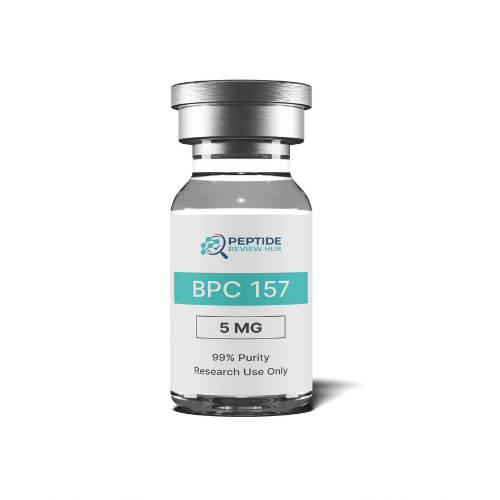
In the stomach of every man lies a substance more powerful than he knows. BPC-157 derives from this source - gastric juice, that most unpoetic of origins for what may prove a considerable discovery. The synthetic version contains fifteen amino acids arranged with the precision nature reserves for her most essential works. It endures where other peptides fail.
MOTS-c
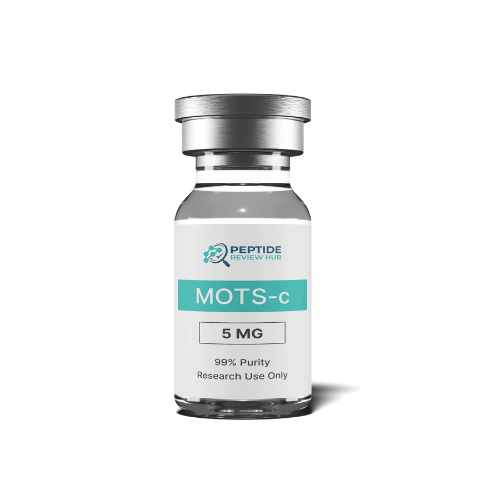
The Mitochondrial-Derived Peptide MOTS-c promotes metabolic homeostasis and longevity, improves exercise capacity, reduces obesity, insulin resistance and other disease processes such as osteoporosis .
GHK-Cu
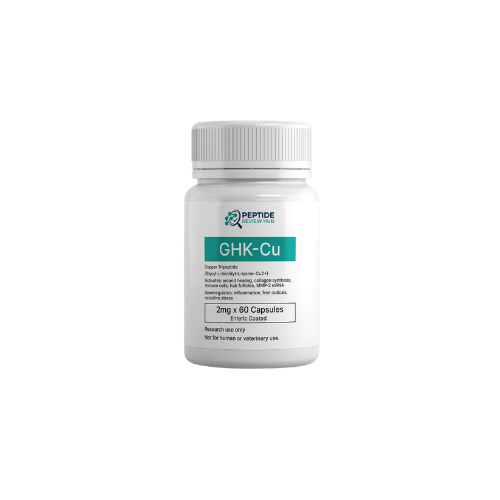
(2mg x 60 Capsules) (Copper Tripeptide) GHK-Cu is a small, naturally occurring peptide with the ability to attenuate inflammation, improve antioxidant responses, and improve gene expression on a large scale. Research shows that this copper-chelating peptide may be of critical importance both in the prevention of neurodegenerative disease and as a tool for exploring pathophysiological mechanisms. Studies in mice have revealed that GHK-Cu can protect against neurological insults, improve wound healing, reduce rates of infection, and boost blood vessel growth.
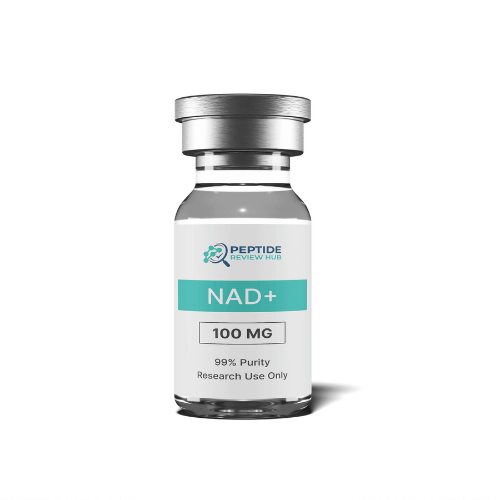
NAD+
NAD+ is a research-grade cellular coenzyme involved in redox reactions, mitochondrial energy metabolism, DNA repair, and NAD+-dependent signaling pathways. It is widely studied in research involving cellular aging, metabolic function, mitochondrial biology, genomic stability, and neuronal physiology.