
Research Use Only. This compound is not intended for human consumption or therapeutic use.
Where to Buy Enclomiphene: Vendor Comparison & Research Info
Enclomiphene is a selective estrogen receptor modulator (SERM) studied in reproductive endocrinology and hormone-signaling research. It is primarily investigated for its effects on estrogen receptor activity, HPG-axis regulation, gonadotropin signaling, and reproductive biology in controlled research models.
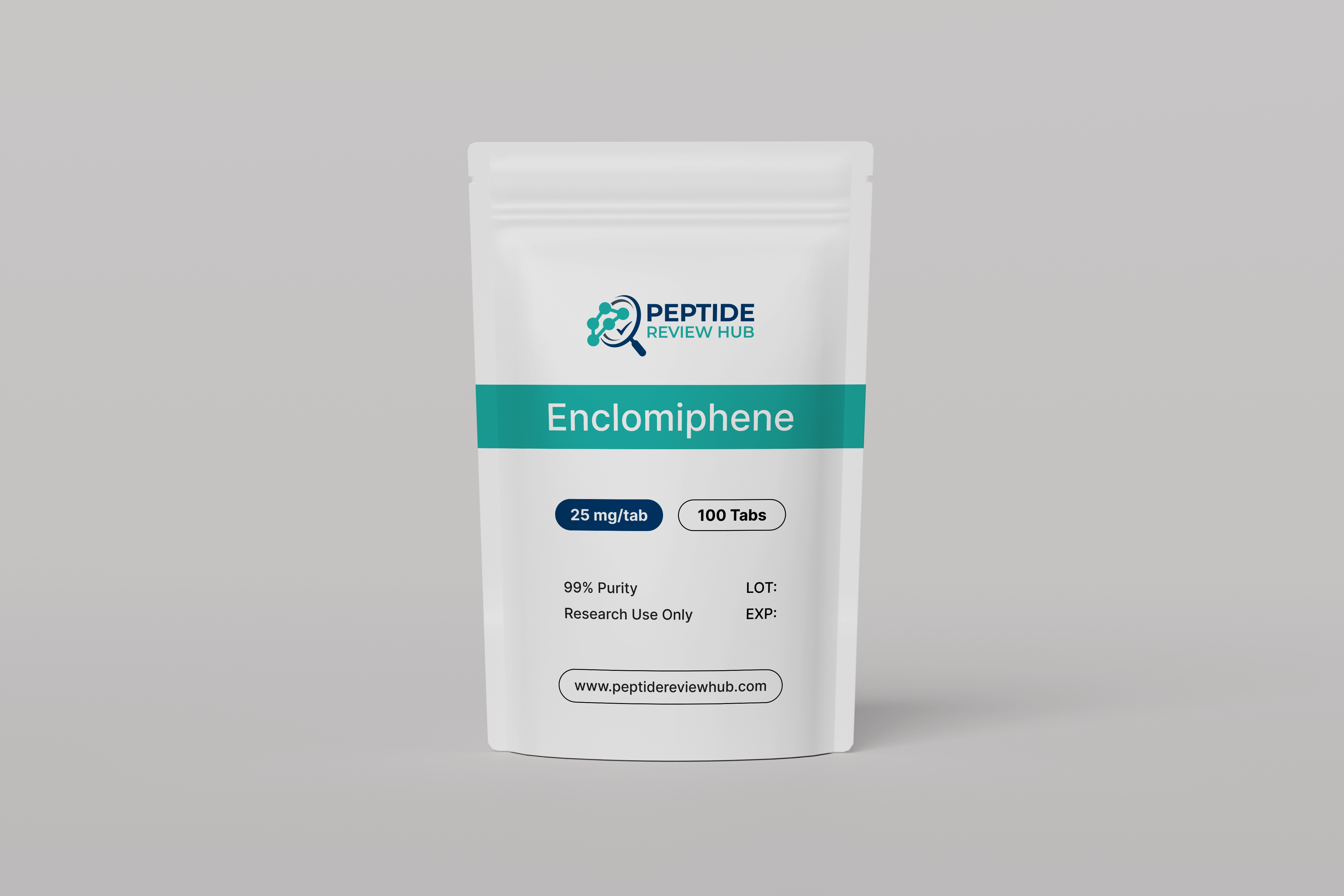
What is Enclomiphene?
Enclomiphene is the trans-isomer of clomiphene and a selective estrogen receptor modulator (SERM) investigated primarily in reproductive endocrinology and hormone-signaling research. Its selective interaction with estrogen receptors makes it useful for studying hypothalamic-pituitary-gonadal (HPG) axis regulation, gonadotropin signaling, and endogenous reproductive hormone pathways in controlled research models.
Overview
Enclomiphene is studied for its ability to act as an estrogen receptor antagonist within the hypothalamic and pituitary pathways. By modifying estrogen-mediated negative feedback, researchers can investigate changes in gonadotropin-releasing hormone (GnRH), luteinizing hormone (LH), and follicle-stimulating hormone (FSH) signaling.
Unlike clomiphene citrate, which contains both enclomiphene and zuclomiphene isomers, enclomiphene represents the trans-isomer specifically. This distinction makes it a useful research tool for examining the individual contribution of estrogen receptor antagonism to endocrine signaling.
Molecular Characteristics
Chemical Identity: Enclomiphene citrate (trans-clomiphene)
Molecular Formula: C₂₆H₂₈ClNO · C₆H₈O₇
Molecular Weight: 598.1 g/mol (as citrate salt)
Form: Crystalline or powder form
Purity: Subject to analytical verification
Research Applications
Enclomiphene is investigated across several scientific fields, including:
HPG Axis Research: Studying LH and FSH secretion and endocrine feedback mechanisms.
Reproductive Biology: Investigating gonadotropin signaling and spermatogenic pathways.
Estrogen Receptor Research: Examining selective estrogen receptor antagonism.
Endocrine Signaling: Studying hypothalamic and pituitary hormone regulation.
Bone Biology: Investigating estrogen signaling and bone-related pathways.
Metabolic Research: Examining relationships between sex hormones and metabolic processes.
Oncology Research: Studying estrogen-sensitive cellular signaling in experimental models.
Mechanism of Research Interest
The principal research interest in enclomiphene involves its interaction with estrogen receptors in the hypothalamic-pituitary system. Estrogen normally contributes to negative feedback regulation of GnRH signaling. Experimental estrogen receptor antagonism can therefore be used to study downstream changes in gonadotropin activity.
Researchers investigate pathways involving:
GnRH signaling
LH and FSH secretion
Estrogen receptor antagonism
Leydig cell signaling
Sertoli cell function
Spermatogenesis-related pathways
Endocrine feedback mechanisms
Reproductive Endocrinology Research
Enclomiphene is studied in experimental models of reproductive hormone regulation and secondary hypogonadism. Researchers examine how selective estrogen receptor modulation influences endogenous gonadotropin signaling and testosterone-related pathways without directly supplying exogenous androgens.
Spermatogenesis Research
Because gonadotropins play important roles in testicular function, enclomiphene is also investigated in studies examining Sertoli cell activity, germ-cell development, and spermatogenic signaling. These studies help researchers better understand the relationship between estrogen feedback, gonadotropins, and male reproductive biology.
Estrogen Signaling and Oncology Research
Enclomiphene has also been investigated in experimental models involving estrogen-sensitive tissues. Researchers use selective estrogen receptor modulation to examine receptor activity, coregulator interactions, and downstream gene-expression pathways relevant to endocrine biology.
Analytical Quality
Research-grade enclomiphene should undergo appropriate analytical testing to establish identity, purity, and batch consistency. Common methods include:
High-Performance Liquid Chromatography (HPLC)
Mass Spectrometry (MS)
Chemical identity verification
Purity analysis
Batch consistency testing
Research Use Only: This product is intended exclusively for laboratory and scientific research. It is not intended for human consumption, therapeutic use, diagnostic applications, or veterinary use.
Where to Buy Enclomiphene Online
| Rank | Vendor | Trust Score | Vial Size | Price / mg | Status | Action |
|---|---|---|---|---|---|---|
1 | 9.3/10 Editorial Rating | $49.99 10mg vial | $5.00/mg | In Stock | Visit Site | |
2 |  Dragon Peptides Verified | 9.0/10 Editorial Rating | $100.00 25mg vial | $4.00/mg | In Stock | Visit Site |
3 | 7.6/10 Editorial Rating | $149.00 25mg vial | $5.96/mg | In Stock | Visit Site |

Top-Ranked Vendor

Overall Score
Category Scores
COA Transparency: 8.5/10
Reputation: 8.0/10
Pricing: 9.0/10
Policies: 8.0/10
Shipping: 8.5/10
Catalog: 9.5/10
Overall Score: 8.6/10
Calculation
(8.5 + 8.0 + 9.0 + 8.0 + 8.5 + 9.5) ÷ 6 = 8.58/10
COA Transparency
Score: 8.5/10
Analysis
Soma Chems places significant emphasis on product verification and quality assurance. The company promotes third-party testing and indicates that products are supported by Certificates of Analysis (COAs). Public information suggests that laboratory testing includes purity verification and analytical review of products before release.
The supplier also highlights quality-tested research compounds and publishes documentation supporting product verification. Compared with many research-peptide vendors, Soma Chems demonstrates a stronger commitment to transparency by referencing laboratory testing and quality-control procedures throughout its catalog.
However, the depth and consistency of publicly available COA documentation appear to vary among products. A larger archive of standardized batch-specific reports and easier access to historical testing data would further improve transparency.
Overall, Soma Chems performs well in this category and demonstrates an above-average focus on quality verification.
Reputation
Score: 8.0/10
Analysis
Soma Chems has established a growing reputation within the research-peptide industry and has received positive attention from several peptide-review platforms. Customer feedback commonly highlights fast shipping, competitive pricing, product quality, and responsive customer service.
Available reviews often praise the overall purchasing experience, reliable product availability, and communication during the ordering process. Several customers also reference repeat purchases and positive long-term experiences with the company.
Although the company does not yet have the same level of mainstream recognition as the largest peptide suppliers, its reputation profile appears to be steadily improving. Some customers have reported occasional shipping delays, but these complaints appear relatively limited compared with the volume of positive feedback.
Overall, Soma Chems maintains a positive reputation and favorable customer sentiment.
Pricing
Score: 9.0/10
Analysis
Pricing is one of Soma Chems' strongest competitive advantages. The supplier offers a large selection of peptides, sprays, amino products, blends, and specialty research compounds at pricing that is frequently lower than many premium competitors.
The company appears particularly focused on affordability without sacrificing product diversity. In addition to traditional peptide formats, Soma Chems offers oral formulations, sprays, and specialty blends that help differentiate its inventory from many competing suppliers.
Discounts, promotional offers, and value-oriented pricing further contribute to the company's appeal. Researchers seeking broad product availability at accessible pricing levels may find Soma Chems particularly attractive.
Overall, Soma Chems delivers excellent value for money and performs exceptionally well in the pricing category.
Policies
Score: 8.0/10
Analysis
Soma Chems provides clear research-use disclaimers and explains that its products are intended exclusively for analytical and scientific research purposes. The company also communicates that it is not a compounding pharmacy and provides policy information regarding privacy and data handling.
The supplier maintains accessible customer-service channels and basic ordering information, helping customers understand purchasing requirements and product restrictions.
While the company demonstrates above-average policy transparency compared with many peptide vendors, additional public detail regarding returns, refunds, exchanges, and shipment claims would strengthen the customer experience further.
Overall, policy information is professional, clear, and suitable for research-focused customers.
Shipping
Score: 8.5/10
Analysis
Shipping is frequently cited as a strength of the Soma Chems operation. Customer feedback often highlights fast fulfillment, prompt delivery, and reliable order processing.
The company appears focused on maintaining customer satisfaction through efficient shipping workflows and responsive communication. Review-platform feedback suggests that most customers experience timely deliveries and accurate order fulfillment.
Although isolated complaints regarding delayed shipments exist, they appear to represent exceptions rather than common experiences. The company also benefits from straightforward payment options that can simplify the ordering process for many customers.
Overall, shipping performance appears reliable and supports a positive customer experience.
Catalog
Score: 9.5/10
Analysis
Catalog depth is one of Soma Chems' most impressive strengths. The company offers more than 100 research products spanning peptides, amino compounds, sprays, liquids, blends, and specialty formulations.
Recovery and Regenerative Peptides
Examples
BPC-157
TB-500
GHK-Cu
LL-37
Growth and Performance Peptides
Examples
CJC-1295
Ipamorelin
Tesamorelin
IGF-LR3
Metabolic Research Compounds
Examples
AOD-9604
MOTS-C
Cagrilintide
Weight-management blends
Cognitive Research Compounds
Examples
Semax
Selank
Pinealon
P21
Specialty Products
Examples
Sprays
Amino formulations
Multi-peptide blends
NAD+
Melanotan products
The combination of variety, organization, and specialty offerings makes Soma Chems one of the broader catalogs currently available within this market segment.
What We Like
Positive Highlights
Large peptide and research-compound catalog.
Third-party testing emphasis.
COA availability.
Competitive pricing.
Strong product diversity.
Positive customer feedback.
Fast shipping reputation.
Availability of sprays and alternative formulations.
What Could Be Better
Areas for Improvement
More consistent public COA documentation.
Expanded historical testing archives.
Greater transparency regarding laboratory partners.
More detailed refund and return policies.
Increased mainstream review-platform presence.
Additional educational content for new researchers.
Online Ratings & Reviews
Trustpilot
Rating
Information Not Publicly Available.
Review Count
Information Not Publicly Available.
Key Positive Themes
Information Not Publicly Available.
Key Negative Themes
Information Not Publicly Available.
Finnrick
Rating
Information Not Publicly Available.
Key Findings
No verified Finnrick rating identified.
Limited supplier-specific analytical coverage available.
Notable Observations
Independent review activity is stronger on peptide-focused platforms.
Other Review Sources
Peptide Review Platforms
Rating
Approximately 4.7/5
Review Count
More than 20 publicly available reviews.
Key Findings
Positive comments regarding product quality.
Frequent praise for shipping speed.
Strong customer-service feedback.
Competitive pricing repeatedly highlighted.
Vendor Analysis Platforms
Key Findings
Large product inventory.
Competitive market positioning.
Strong value-oriented approach.
Broad availability of oral and spray formulations.
Community Discussions
Key Findings
Positive reception for affordability.
Appreciation for product diversity.
Growing visibility within the peptide community.
Overall Public Sentiment
Most Common Praise
Fast shipping.
Competitive pricing.
Product quality.
Large inventory.
Responsive customer support.
Easy ordering process.
Most Common Complaints
Occasional shipping delays.
Variability in COA depth.
Limited mainstream review coverage.
Relatively modest brand recognition compared with industry leaders.
Public Sentiment Summary
Overall sentiment is positive. Customers frequently praise Soma Chems for affordability, shipping speed, product availability, and quality. Most criticisms are relatively minor and relate to transparency enhancements or isolated logistical issues rather than product concerns.
Brand Overview
Company Name
Soma Chems
Website
Industry
Research Peptides and Research Compounds
Main Products
BPC-157
TB-500
GHK-Cu
CJC-1295
Ipamorelin
Tesamorelin
AOD-9604
MOTS-C
Semax
Selank
Pinealon
Melanotan products
Headquarters
Information Not Publicly Available
Shipping Regions
Information Not Publicly Available
Payment Methods
Credit Cards
Company Summary
Soma Chems is a research-peptide supplier focused on providing peptides, amino products, sprays, liquids, blends, and specialty research compounds. The company has developed a reputation for combining product diversity with competitive pricing, making it attractive to researchers seeking a broad range of compound options.
One of the company's strongest assets is its extensive catalog, which spans metabolic peptides, regenerative compounds, cognitive products, performance-focused peptides, and specialty formulations. The availability of sprays and alternative delivery formats further differentiates the supplier from many competitors.
Soma Chems also emphasizes quality verification through third-party testing and COA-supported products. These initiatives contribute positively to transparency and customer confidence. Customer reviews frequently highlight reliable fulfillment, affordable pricing, and responsive support.
While the company could strengthen transparency through a more extensive public archive of laboratory reports, it already provides many of the trust signals researchers seek when evaluating suppliers.
Overall, Soma Chems presents a strong profile supported by broad inventory depth, favorable pricing, quality-focused operations, and positive customer sentiment.
Final Verdict
Is Soma Chems Worth Considering?
Soma Chems appears best suited for researchers seeking a supplier that combines affordability, inventory depth, and product variety. The company's strongest advantages include competitive pricing, a large peptide catalog, positive customer feedback, and a growing reputation within the research-compound market.
The supplier performs especially well in categories related to product selection and value. Researchers can access a diverse range of compounds, including popular peptides, specialty blends, cognitive compounds, sprays, and amino-based formulations. This breadth makes the platform appealing for buyers who prefer sourcing from a single vendor.
Quality assurance also contributes positively to the company's profile. The supplier promotes laboratory testing and COA-backed products, helping support confidence in product quality and consistency. Customer feedback further reinforces strengths related to fulfillment and customer service.
The primary opportunities for improvement involve expanding public testing archives and providing greater transparency regarding laboratory partners and quality-control practices.
Overall, Soma Chems presents a positive profile characterized by excellent product diversity, strong value, and a growing reputation for quality and service. For many research-focused buyers, it represents a competitive option within the peptide marketplace.
Final Verdict Score: 8.6/10
Chemical Properties & Handling
Standard storage protocols for lyophilized peptides generally apply unless otherwise specified.
- Lyophilized (Powder): Store at -20°C for up to 3 years. Keep away from direct light and moisture.
- Reconstituted (Liquid): Store at 2-8°C (refrigerated) and use within 20-30 days to maintain stability.
Research Reviews
No Research Reviews Yet
Be the first to share your research protocol and vendor experience with Enclomiphene.
Best Enclomiphene Vendors & Price Comparison
Enclomiphene, also known as Enclomiphene Citrate or trans-clomiphene, is a selective estrogen receptor modulator (SERM) investigated primarily in reproductive endocrinology, estrogen receptor biology, and hypothalamic-pituitary-gonadal (HPG) axis research. Researchers study enclomiphene because of its ability to influence estrogen-mediated feedback mechanisms and regulate pathways associated with gonadotropin signaling and endogenous hormone production.
As interest in endocrine regulation, reproductive biology, and hormonal signaling research continues to grow, researchers frequently compare Enclomiphene suppliers based on purity, analytical testing, manufacturing standards, pricing, and supplier transparency.
This Enclomiphene Vendor Price Comparison Guide helps researchers evaluate suppliers using objective criteria including:
Product Pricing
Cost Per Milligram
Product Purity
Third-Party Testing
Certificate of Analysis (COA)
Vendor Reputation
Customer Reviews
Shipping Performance
Product Availability
Overall Value
Whether you're searching for the lowest-priced Enclomiphene supplier, the highest-purity research material, or vendors offering extensive analytical verification, this guide provides a structured framework for comparing research-compound suppliers.
Explore Enclomiphene Vendors by Criteria
Most Popular Enclomiphene Vendors
Compare suppliers frequently selected by endocrine and reproductive-biology researchers.
Highest Reviewed Vendors
Discover suppliers with strong customer satisfaction and positive marketplace reputations.
Lowest Price Vendors
Identify suppliers offering competitive pricing and favorable cost-per-milligram value.
Highest Purity Vendors
Review suppliers providing transparent purity verification and analytical documentation.
Best Value Vendors
Compare pricing, testing standards, quality-control systems, and customer support.
Fastest Shipping Vendors
Evaluate shipping reliability, packaging quality, and fulfillment speed.
Newly Listed Vendors
Explore recently added suppliers offering Enclomiphene research compounds.
What Is Enclomiphene?
Overview
Enclomiphene is the trans-isomer of clomiphene and functions as a selective estrogen receptor modulator (SERM).
Researchers investigate Enclomiphene because of its relationship with:
Estrogen receptor antagonism
HPG axis signaling
Gonadotropin regulation
Reproductive endocrinology
GnRH signaling
LH production
FSH secretion
Endocrine feedback mechanisms
Unlike clomiphene citrate, which contains a mixture of enclomiphene and zuclomiphene isomers, enclomiphene allows researchers to investigate the effects of the trans-isomer independently.
Molecular Characteristics
Compound Information
Researchers evaluating Enclomiphene products should carefully review analytical documentation and molecular specifications.
Chemical Identity
Enclomiphene Citrate (trans-clomiphene)
Classification
Selective Estrogen Receptor Modulator (SERM)
Research Category
Endocrine & Reproductive Biology Research
Molecular Formula
C₂₆H₂₈ClNO · C₆H₈O₇
Molecular Weight
598.1 g/mol (Citrate Salt)
Physical Form
Crystalline or Powder Form
Typical Purity
Subject to Analytical Verification
Product Format
Research-Grade Compound
Why Researchers Study Enclomiphene
Enclomiphene has generated significant scientific interest because of its role in estrogen receptor signaling and endocrine regulation.
Researchers investigate pathways involving:
Estrogen receptor modulation
Gonadotropin secretion
Reproductive signaling
Hormonal communication
Endocrine feedback loops
Testicular physiology
Spermatogenic signaling
Metabolic regulation
These remain active areas of reproductive and endocrine research.
Mechanism of Action Research
Estrogen Receptor Antagonism
The primary scientific interest surrounding Enclomiphene involves its interaction with estrogen receptors in the hypothalamic-pituitary system.
Researchers investigate pathways involving:
Estrogen receptor signaling
Hormonal feedback regulation
Endocrine communication
Receptor-mediated signaling
Cellular adaptation
This remains one of the most important areas of Enclomiphene research.
Endocrine Feedback Research
Researchers continue examining:
Negative-feedback mechanisms
Hormonal regulation
Signal transduction
Neuroendocrine communication
Gonadotropin signaling
Further investigation remains ongoing.
Enclomiphene & HPG Axis Research
Hypothalamic-Pituitary-Gonadal Axis Research
One of the largest applications of Enclomiphene research involves investigation of the HPG axis.
Researchers study pathways involving:
GnRH signaling
LH secretion
FSH secretion
Hormonal communication
Endocrine adaptation
This remains a foundational area of investigation.
Gonadotropin Research
Scientists continue studying:
Gonadotropin regulation
Hormonal signaling pathways
Receptor communication
Neuroendocrine regulation
Physiological adaptation
Hormonal Feedback Research
Researchers investigate:
Endocrine homeostasis
Hormonal regulation
Reproductive signaling
Pituitary communication
Neuroendocrine responses
Enclomiphene & Reproductive Biology Research
Reproductive Endocrinology Research
Researchers investigate pathways involving:
Endocrine physiology
Reproductive signaling
Hormone regulation
Cellular communication
Gonadal biology
This remains one of the most studied areas of Enclomiphene research.
Leydig Cell Research
Scientists continue examining pathways involving:
Leydig-cell signaling
Hormonal regulation
Cellular responses
Endocrine communication
Reproductive physiology
Sertoli Cell Research
Research includes pathways involving:
Sertoli-cell function
Testicular signaling
Cellular regulation
Reproductive biology
Endocrine adaptation
Enclomiphene & Spermatogenesis Research
Germ-Cell Development Research
Researchers investigate pathways involving:
Spermatogenic signaling
Testicular physiology
Cellular differentiation
Hormonal regulation
Reproductive pathways
Reproductive Function Models
Scientists continue studying:
Gonadotropin-dependent signaling
Testicular communication
Reproductive-cell biology
Hormonal adaptation
Physiological regulation
Fertility-Related Research
Researchers investigate:
Spermatogenesis pathways
Endocrine regulation
Cellular signaling
Reproductive mechanisms
Hormonal feedback systems
Enclomiphene & Estrogen Receptor Research
Selective Estrogen Receptor Modulation
Researchers frequently use Enclomiphene to investigate:
Estrogen receptor antagonism
Receptor signaling pathways
Cellular adaptation
Hormonal communication
Gene-expression regulation
This remains one of the most important areas of study.
Receptor Biology Research
Scientists continue examining:
Estrogen receptor interactions
Signal transduction
Regulatory proteins
Cellular responsiveness
Endocrine communication
Enclomiphene & Bone Biology Research
Estrogen Signaling in Bone
Researchers investigate pathways involving:
Bone remodeling
Estrogen-responsive signaling
Skeletal physiology
Cell communication
Structural maintenance
Skeletal Research
Studies frequently examine:
Bone-cell regulation
Mineral homeostasis
Tissue adaptation
Cellular signaling
Bone metabolism
Enclomiphene & Metabolic Research
Endocrine-Metabolic Signaling
Researchers investigate relationships involving:
Hormonal regulation
Metabolic communication
Cellular adaptation
Energy metabolism
Physiological responses
Sex Hormone Research
Scientists continue studying:
Hormone-mediated signaling
Endocrine pathways
Metabolic regulation
Cellular communication
Tissue responsiveness
Enclomiphene & Oncology Research
Estrogen-Sensitive Tissue Research
Researchers investigate pathways involving:
Estrogen-responsive tissues
Hormonal communication
Receptor modulation
Signal transduction
Gene-expression pathways
Cellular Signaling Research
Studies frequently examine:
Receptor-coregulator interactions
Molecular signaling
Cellular adaptation
Regulatory proteins
Endocrine biology
Why Researchers Compare Enclomiphene Vendors
Research reproducibility depends heavily on compound quality and manufacturing consistency.
Differences among suppliers may include:
Product purity
Analytical verification
Stability testing
Batch consistency
Manufacturing standards
Product documentation
Storage procedures
Quality-control systems
Careful vendor evaluation helps improve consistency across laboratory studies.
How We Compare Enclomiphene Vendors
Third-Party Laboratory Testing
Researchers should prioritize suppliers offering:
✅ Third-party testing
✅ Identity verification
✅ Purity confirmation
✅ Batch-specific reports
✅ Analytical documentation
Certificate of Analysis (COA)
A quality COA should contain:
Batch number
Testing date
Purity percentage
Identity verification
Testing methodology
Product Purity
Purity remains one of the most important variables when evaluating research compounds.
Higher-purity products generally contribute to improved reproducibility and consistency.
Cost Per Milligram
Comparing product prices alone may not accurately reflect value.
Cost Per Milligram Formula
Product Price ÷ Total Milligrams = Cost Per Milligram
This metric standardizes vendor comparisons.
Customer Reviews
Customer experiences often provide insight regarding:
Product consistency
Packaging quality
Shipping reliability
Customer support
Purchasing experience
Vendor Reputation
Established suppliers often demonstrate:
Transparent testing procedures
Reliable quality-control systems
Positive customer feedback
Consistent inventory availability
Quality & Analytical Testing
Why Testing Matters
Research-grade Enclomiphene should undergo testing to verify:
Identity
Purity
Molecular integrity
Stability
Batch consistency
Common Testing Methods
High-Performance Liquid Chromatography (HPLC)
Used to assess purity and detect impurities.
Mass Spectrometry (MS)
Used to verify molecular identity and composition.
Identity Verification
Confirms compound authenticity.
Batch Consistency Analysis
Measures reproducibility between manufacturing lots.
Stability Testing
Evaluates product integrity during storage and transport.
Storage & Handling
Researchers should follow validated laboratory procedures.
Best practices include:
✅ Protect from moisture
✅ Protect from excessive heat
✅ Minimize direct light exposure
✅ Follow manufacturer storage recommendations
✅ Review batch-specific analytical reports
✅ Maintain laboratory records
✅ Utilize proper laboratory handling procedures
Proper storage helps preserve product quality and experimental consistency.
Understanding Enclomiphene Pricing
Several factors influence supplier pricing.
Product Purity
Higher-purity materials generally command premium pricing.
Manufacturing Standards
Advanced synthesis, isolation, and purification processes contribute to production costs.
Analytical Verification
Comprehensive testing improves transparency while increasing manufacturing expenses.
Research Demand
Growing interest in endocrine and reproductive research contributes to market demand.
Vendor Reputation
Established suppliers often command higher pricing because of rigorous quality-control systems.
Enclomiphene Vendor Evaluation Checklist
Quality Verification
✅ Third-party testing available
✅ Certificate of Analysis provided
✅ Identity verification documented
✅ Purity information disclosed
✅ Stability testing available
✅ Batch-specific reports available
Vendor Reliability
✅ Positive customer reviews
✅ Transparent company information
✅ Responsive customer support
✅ Reliable inventory availability
Purchasing Experience
✅ Secure checkout process
✅ Shipment tracking available
✅ Clear return policies
✅ Reliable order fulfillment
Frequently Asked Questions
What is Enclomiphene?
Enclomiphene is the trans-isomer of clomiphene and a selective estrogen receptor modulator (SERM) studied for its effects on estrogen-mediated endocrine signaling and HPG-axis regulation.
What is Enclomiphene used for in research?
Researchers investigate Enclomiphene in studies involving GnRH signaling, LH and FSH secretion, reproductive endocrinology, spermatogenesis, estrogen receptor antagonism, endocrine feedback mechanisms, and hormonal regulation.
What receptor does Enclomiphene target?
Enclomiphene primarily interacts with estrogen receptors, particularly within the hypothalamic-pituitary endocrine system.
Why compare Enclomiphene vendors?
Purity, analytical verification, stability testing, batch consistency, and supplier transparency can vary significantly between vendors.
What should researchers review before purchasing?
Researchers should evaluate:
Certificate of Analysis (COA)
Third-party testing
HPLC purity verification
Mass spectrometry confirmation
Identity verification
Vendor reputation
Is Enclomiphene a peptide?
No. Enclomiphene is a small-molecule Selective Estrogen Receptor Modulator (SERM) rather than a peptide. However, it is frequently sold by peptide and research-compound suppliers and commonly appears within peptide vendor comparison platforms.
Final Thoughts
Enclomiphene Citrate remains an important research compound due to its role in estrogen receptor antagonism, reproductive endocrinology, gonadotropin regulation, and HPG-axis signaling. Researchers continue utilizing Enclomiphene to investigate endocrine feedback mechanisms, reproductive hormone pathways, spermatogenic signaling, and estrogen-receptor-mediated cellular communication.
When comparing Enclomiphene vendors, researchers should prioritize purity verification, third-party analytical testing, Certificate of Analysis availability, HPLC validation, mass spectrometry confirmation, supplier reputation, and overall value rather than focusing exclusively on price. A structured vendor-comparison process can help identify suppliers capable of meeting rigorous research-quality standards.
Current Research & Evidence
Research evidence for Enclomiphene has not yet been added.
Key Findings on Enclomiphene Use
Key findings for Enclomiphene have not yet been added.
Related Peptides in SARMs
GWS501516
GWS501516 (GW-501516) is an experimental small-molecule PPARδ agonist studied in research involving lipid metabolism, fatty-acid oxidation, energy regulation, and metabolic signaling. It is used strictly as a research compound and is not approved for human consumption or medical treatment.
S4
S4 (Andarine) is an experimental non-steroidal SARM studied for androgen receptor activity, tissue-selective pharmacology, skeletal muscle and bone biology, receptor signaling, and preclinical research. It is intended strictly for laboratory research.
YK 11
YK-11 is an experimental androgen receptor–active compound studied for its potential effects on androgen signaling, follistatin expression, myostatin-related pathways, and skeletal muscle biology. Research remains primarily preclinical, making YK-11 a subject of interest for controlled studies of muscle-cell signaling and differentiation.
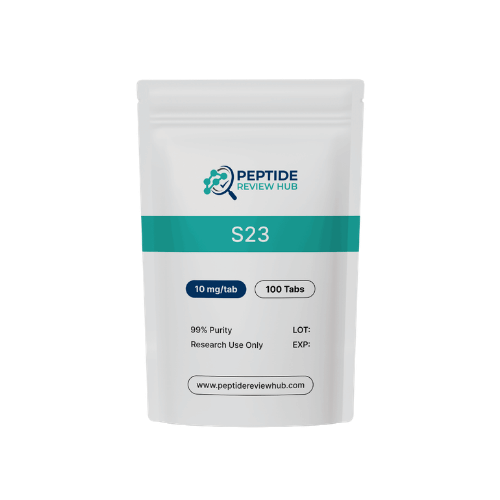
S23
S-23 is an experimental selective androgen receptor modulator (SARM) studied for its high-affinity interaction with androgen receptors and effects on skeletal muscle, bone, and endocrine signaling. Research has also examined S-23 in reproductive biology and gonadotropin regulation, making it a compound of interest for controlled preclinical investigations.