
Research Use Only. This compound is not intended for human consumption or therapeutic use.
Where to Buy Decapeptide-12: Vendor Comparison & Research Info
This PRODUCT IS INTENDED AS A RESEARCH CHEMICAL ONLY. This designation allows the use of research chemicals strictly for in vitro testing and laboratory experimentation only. All product information available on this website is for educational purposes only.
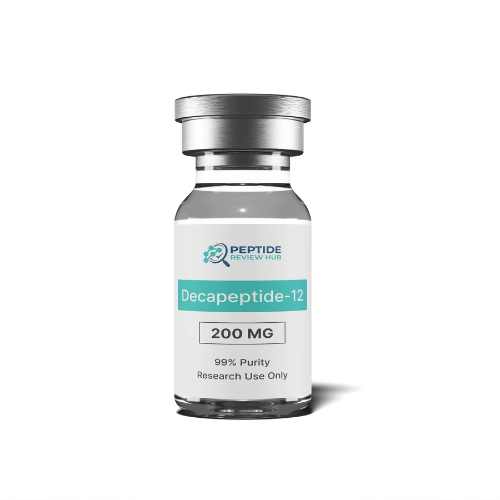
What is Decapeptide-12?
This PRODUCT IS INTENDED AS A RESEARCH CHEMICAL ONLY. This designation allows the use of research chemicals strictly for in vitro testing and laboratory experimentation only. All product information available on this website is for educational purposes only. Bodily introduction of any kind into humans or animals is strictly forbidden by law. This product should only be handled by licensed, qualified professionals. This product is not a drug, food, or cosmetic and may not be misbranded, misused or mislabled as a drug, food or cosmetic.
Decapeptide-12 200mg
Decapeptide-12 is an oligopeptide with well-known anti-tyrosinase activity. It is under active investigation for its ability to help improve both skin tone and skin texture. Tyrosinase is a copper-containing enzyme found widely in plant and animal tissues. It catalyzes the production of melanin and other pigments. By interfering with tyrosinase, decapeptide-12 is able to lighten skin tone in animal models.
Sequence (Three-Letter Code): Tyr-Arg-Ser-Aar-Lysd-Tyr-Ser-Ser-Trp-Tyr Molecular formula: C65H90N18O17 Molecular weight: 1311.46 g/mol
Research Application:
Tyrosinase is an enzyme essential to the production of melanin and other pigments. A deficiency of tyrosinase results in type I oculocutaneous albinism while any mutation that causes tyrosinase to be overactive will lead to hyperpigmentation of the skin secondary to melanin production [1]. Both the medical and cosmetics industries are interested in tyrosinase inhibitors, like decapeptide-12, as both therapeutics and to help better clarify how the enzyme cascade of pigment production works.
The food industry has also investigated decapeptide-12 as a potential preservative and flavor enhancer. Tyrosinase catalyzes the oxidation of phenolic compounds found in fruits and vegetables (it is what turns potatoes black after they are cut) to quinones. This conversion gives food an unpleasant taste and color. It also makes it harder for certain proteins to be digested and thus decreases the nutritional value of food.
Tyrosinase has a number of unique roles in the insect world. It can affect wound healing, parasite encapsulation, and the formation of an insect's hard exosekleton. Inhibitors of tyrosinase, like decapeptide-12, have been studied as potential insecticides.
What Is Decapeptide-12?
Decapeptide-12 is a small oligopeptide made of just twelve amino acids (Tyr-Arg-Ser-Aar-Lysd-Tyr-Ser-Ser-Trp-Tyr). It is primarily known for its ability to inhibit activity of the tyrosinase enzyme responsible for producing melanin.
What Does Decapeptide-12 Do?
Decapeptide-12 reversibly binds to tyrosinase, an enzyme found in a number of different pigment-producing cells. It prevents tyrosinase from catalyzing the oxidation of phenols, the first step in melanin production. In mammals, tyrosinase is found only in melanosomes, special compartments within pigment-producing cells. Tyrosinase is not preserved across species and, in fact, can differ drastically in structure even among closely-related species. In humans, differences in the efficiency of tyrosinase determine skin color and are the result of slight modifications in the TYR gene found on chromosome 11.
Decapeptide-12 Research and the Lightening of skin Tone
A prospective animal study study looking at the safety and efficacy of topical decapeptide-12 in photodamage found that decapeptide-12 reduces skin pigmentation dramatically. In fact, nearly 40% of subjects in the study achieved baseline skin tone (100% reduction in hyperpigmentation) and 15% moved from grade 3 photodamage to grade 1 photodamage. Those with the most severe photodamage (grade 4) experienced only moderate improvement to grade 3 after twelve weeks of use.
In a split-face (one side of the face is given one product and the other side is given another product), randomized, double-blind and placebo controlled pilot study, statistically significant changes in skin tone were seen in 100% of subjects suffering from melasma (photdamage) .
Decapeptide-12 is approximately 17 times more potent than previous treatments for hyperpigmentation, including hydroquinone. Studies in cultured melanocytes over 7 days demonstrated a 27%-43% reduction in melanin content. Decapeptide-12 has undergone multiple animal trials and may eventually be included in commercial products for treating hyperpigmentation.
Where to Buy Decapeptide-12 Online
| Rank | Vendor | Trust Score | Vial Size | Price / mg | Status | Action |
|---|---|---|---|---|---|---|
| No vendors currently tracking this product. Check back soon. | ||||||
Chemical Properties & Handling
Standard storage protocols for lyophilized peptides generally apply unless otherwise specified.
- Lyophilized (Powder): Store at -20°C for up to 3 years. Keep away from direct light and moisture.
- Reconstituted (Liquid): Store at 2-8°C (refrigerated) and use within 20-30 days to maintain stability.
Research Reviews
No Research Reviews Yet
Be the first to share your research protocol and vendor experience with Decapeptide-12.
Related Peptides in Peptide
Tesamorelin
Tesamorelin 5mg is a synthetic GHRH analog studied for its interaction with the GHRH–GH–IGF-1 signaling pathway. It is researched in areas including visceral adipose tissue, lipid metabolism, endocrine signaling, glucose regulation, and metabolic health. Supplied as a lyophilized peptide, Tesamorelin 5mg is intended strictly for controlled laboratory and preclinical research.
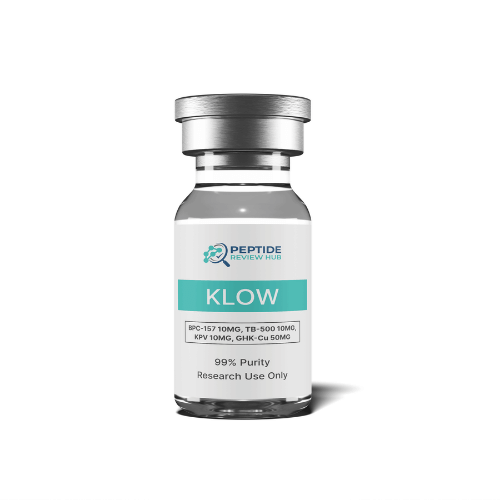
Klow Blend
The Klow Blend combines BPC-157, TB-500, KPV, and GHK-Cu in an 80mg lyophilized peptide formulation designed for laboratory research. The four peptides are studied across areas including inflammatory signaling, cellular migration, angiogenesis, tissue repair, and extracellular-matrix research. Supplied as a research-use-only formulation, it offers researchers a convenient way to investigate multiple peptide pathways within a single blend.
Glow Blend
BPC-157 + TB-500 + GHK-Cu 70mg Blend is a multi-peptide research formulation combining three compounds studied for their roles in cellular signaling, vascular biology, inflammation, and extracellular matrix research. With 10mg BPC-157, 10mg TB-500, and 50mg GHK-Cu in a lyophilized format, it provides a convenient model for controlled laboratory investigations into tissue remodeling and regenerative pathways.
Cagrilintide
Cagrilintide potently mimics endogenous amylin—delaying gastric emptying, suppressing postprandial glucagon secretion, and activating central nervous system satiety pathways. Preclinical and clinical models demonstrate its exceptional efficacy in driving weight loss, improving glycemic control ($HbA_{1c}$), and exhibiting synergistic metabolic effects when paired with GLP-1 receptor agonists. Supplied as a stable, lyophilized powder, it is ideal for in vitro and laboratory studies investigating obesity, type 2 diabetes, and neurodegenerative pathways.