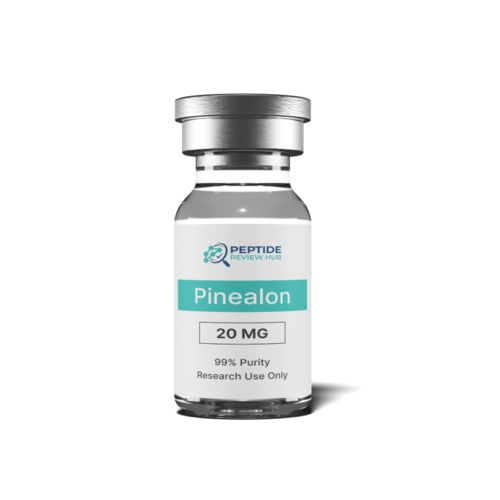
Pinealon is a synthetic tripeptide bioregulator consisting of three amino acids that has attracted research interest in neuroscience, gene-expression biology, healthy aging research, circadian-rhythm regulation, and cellular stress-response pathways. Unlike many peptides that exert effects through cell-surface receptors, Pinealon has been investigated for its potential interaction with intracellular and nuclear pathways involved in gene regulation.
As interest in peptide bioregulators continues to expand, researchers frequently compare Pinealon suppliers based on purity, analytical testing, manufacturing standards, pricing, and supplier transparency.
This Pinealon Vendor Price Comparison Guide helps researchers evaluate suppliers using objective criteria including:
Whether you're searching for the lowest-priced Pinealon supplier, the highest-purity research-grade material, or vendors offering extensive laboratory verification, this guide provides a framework for comparing research peptide suppliers.
Explore Pinealon Vendors by Criteria
Most Popular Pinealon Vendors
Compare suppliers frequently selected by neuroscience and longevity researchers.
Highest Reviewed Pinealon Vendors
Discover peptide suppliers with strong customer satisfaction and positive marketplace reputations.
Lowest Price Pinealon Vendors
Identify vendors offering competitive pricing and attractive cost-per-milligram value.
Highest Purity Pinealon Vendors
Review suppliers providing transparent purity verification and analytical testing.
Best Value Pinealon Vendors
Compare pricing, product quality, testing standards, and customer support.
Fastest Shipping Pinealon Vendors
Evaluate shipping reliability, packaging quality, and fulfillment performance.
Newly Listed Pinealon Vendors
Explore recently added suppliers offering Pinealon research peptides.
What Is Pinealon?
Overview
Pinealon is a short synthetic peptide bioregulator composed of only three amino acids.
Researchers investigate Pinealon because of its relationship with:
Gene-expression regulation
Neuronal biology
Cellular stress responses
Circadian-rhythm regulation
Healthy aging research
Neuroprotection pathways
Pineal-gland biology
Cognitive-function research
Pinealon is one of several peptide bioregulators studied for its potential interaction with intracellular signaling and gene-regulation mechanisms.
Molecular Characteristics
Peptide Information
Researchers evaluating Pinealon products should carefully review analytical documentation and product specifications.
Peptide Name
Pinealon
Alternative Names
Glutamylaspartylarginine
T-33 Peptide
Amino Acid Sequence
Glu-Asp-Arg
Molecular Formula
C15H26N6O8
Molecular Weight
418.407 g/mol
PubChem CID
18220191
Classification
Peptide Bioregulator
Research Category
Neuroscience & Gene-Expression Research
Why Researchers Compare Pinealon Vendors
Research reproducibility depends heavily on peptide quality and manufacturing consistency.
Differences among suppliers may include:
Product purity
Batch consistency
Stability testing
Manufacturing standards
Analytical verification
Product documentation
Storage procedures
Quality-control systems
Careful supplier evaluation can improve consistency and reliability across research projects.
How We Compare Pinealon Vendors
Third-Party Laboratory Testing
Independent testing remains one of the strongest indicators of peptide quality.
Researchers should prioritize suppliers offering:
Third-party testing
Identity verification
Purity analysis
Batch-specific reports
Certificate of Analysis (COA)
A quality COA should include:
Batch number
Testing date
Purity percentage
Identity confirmation
Analytical methodology
Product Purity
Purity remains one of the most important criteria when evaluating research peptides.
Higher-purity products generally contribute to improved reproducibility and experimental consistency.
Cost Per Milligram
Comparing vial prices alone may not accurately represent overall value.
Cost Per Milligram Formula
Product Price ÷ Total Milligrams = Cost Per Milligram
This metric allows researchers to compare suppliers more effectively.
Customer Reviews
Customer feedback often provides insight regarding:
Product consistency
Packaging quality
Shipping reliability
Customer support
Purchasing experience
Vendor Reputation
Established suppliers often demonstrate:
Transparent quality-control standards
Reliable analytical testing
Strong inventory management
Positive marketplace reputation
Current Research & Evidence
Gene Expression Research
One of the most unique aspects of Pinealon research involves its potential interaction with gene-expression pathways.
Researchers continue investigating:
This remains a defining area of Pinealon research.
Peptide Bioregulator Research
Pinealon belongs to a class of compounds often referred to as peptide bioregulators.
Researchers investigate:
This remains an active area of scientific exploration.
Key Areas of Pinealon Research
Healthy Aging Research
Researchers continue investigating Pinealon because of its relationship with:
Biological aging pathways
Cellular resilience
Oxidative-stress responses
Longevity-associated mechanisms
Age-related cellular changes
This remains one of the most commonly discussed areas of research.
Neuroscience Research
Scientists continue studying pathways involving:
Additional studies remain ongoing.
Oxidative Stress Research
Research has examined pathways involving:
Reactive oxygen species
Cellular protection mechanisms
Stress-response signaling
Cellular adaptation pathways
Neuronal resilience
These remain important areas of investigation.
Hypoxia Research
Researchers investigate relationships involving:
Further research continues in this field.
Cognitive Function Research
Experimental studies have explored pathways associated with:
Additional investigations remain ongoing.
Serotonin-Related Research
Researchers continue examining mechanisms involving:
This remains an emerging area of interest.
Circadian Rhythm Research
Because of its association with pineal biology, Pinealon is frequently studied in relation to:
Circadian-rhythm regulation
Sleep-wake patterns
Biological timing systems
Neuroendocrine signaling
Circadian adaptation mechanisms
This remains a distinctive aspect of Pinealon research.
Cell Survival & Apoptosis Research
Researchers continue investigating pathways involving:
Further studies remain ongoing.
Why Researchers Study Pinealon
Pinealon remains a popular peptide bioregulator because it spans several important fields of research.
Common research applications include:
Neuroscience
Cognitive biology
Healthy aging research
Circadian-rhythm studies
Gene-expression research
Neuroprotection
Cellular adaptation
Molecular biology
Its unusually small size and unique biological profile continue to attract scientific interest.
Research Limitations
Most findings involving Pinealon originate from:
Additional studies remain necessary to fully characterize biological mechanisms and long-term effects.
Research findings should not be interpreted as evidence of approved therapeutic applications.
Product Quality & Analytical Testing
Why Testing Matters
Research-grade Pinealon products should undergo testing to verify:
Identity
Purity
Stability
Composition
Batch consistency
Common Testing Methods
High-Performance Liquid Chromatography (HPLC)
Used to evaluate purity and identify impurities.
Mass Spectrometry (MS)
Used to verify molecular identity and molecular mass.
Identity Verification Testing
Confirms peptide authenticity.
Stability Testing
Measures peptide integrity under storage conditions.
Batch Consistency Testing
Evaluates manufacturing reproducibility between lots.
Understanding Pinealon Pricing
Several variables influence pricing among peptide suppliers.
Product Purity
Higher-purity products often command premium pricing.
Analytical Verification
Comprehensive testing improves transparency while increasing production costs.
Manufacturing Standards
Strict quality-control systems can significantly influence pricing.
Research Demand
Growing interest in peptide bioregulators and neuroscience research contributes to demand.
Vendor Reputation
Trusted suppliers often charge more due to established quality-assurance standards.
Pinealon Vendor Evaluation Checklist
Quality Verification
✅ Third-party testing available
✅ Certificate of Analysis provided
✅ Identity verification documented
✅ Purity information disclosed
✅ Batch-specific testing available
✅ Stability information available
Vendor Reliability
✅ Positive customer reviews
✅ Transparent company information
✅ Responsive customer support
✅ Reliable inventory availability
Purchasing Experience
✅ Secure checkout process
✅ Shipment tracking available
✅ Clear return policies
✅ Reliable order fulfillment
Red Flags When Comparing Vendors
Testing Concerns
❌ No third-party testing
❌ Missing COAs
❌ Unverified purity claims
❌ Missing identity verification
❌ Outdated laboratory reports
Transparency Issues
❌ Missing peptide specifications
❌ No batch information
❌ Limited laboratory documentation
❌ No supplier contact information
Service Problems
❌ Frequent out-of-stock issues
❌ Poor communication
❌ Negative customer reviews
❌ Unclear shipping policies
Frequently Asked Questions
What is Pinealon?
Pinealon is a synthetic tripeptide bioregulator composed of the amino-acid sequence Glu-Asp-Arg and investigated in neuroscience, gene-expression, circadian-rhythm, and healthy-aging research.
What is Pinealon used for in research?
Researchers investigate Pinealon in studies involving neuronal biology, gene-expression regulation, oxidative stress, hypoxia responses, circadian rhythms, cognitive function, and cellular adaptation pathways.
Why compare Pinealon vendors?
Purity, analytical testing, documentation quality, pricing, and supplier reliability can vary significantly among peptide suppliers.
What should researchers review before purchasing?
Researchers should evaluate:
Why is third-party testing important?
Independent laboratory testing helps verify peptide identity, purity, and batch consistency while improving transparency and reproducibility.
Is the cheapest supplier always the best option?
No. Product quality, identity verification, laboratory testing, and supplier reliability are often more important than price alone.
How often should vendor comparisons be updated?
Pricing, inventory availability, testing reports, and supplier policies can change frequently and should be reviewed regularly.
Final Thoughts
Pinealon remains one of the most distinctive peptide bioregulators in modern research because of its association with gene-expression pathways, neuronal biology, circadian-rhythm regulation, cognitive function, cellular stress responses, and healthy-aging science. Despite being only three amino acids long, it continues to generate scientific interest across multiple disciplines of molecular and cellular biology.
When comparing Pinealon vendors, researchers should prioritize purity verification, third-party analytical testing, Certificate of Analysis availability, supplier reputation, and overall value rather than focusing solely on price. A structured vendor-comparison approach can help identify suppliers capable of meeting rigorous research-quality standards.