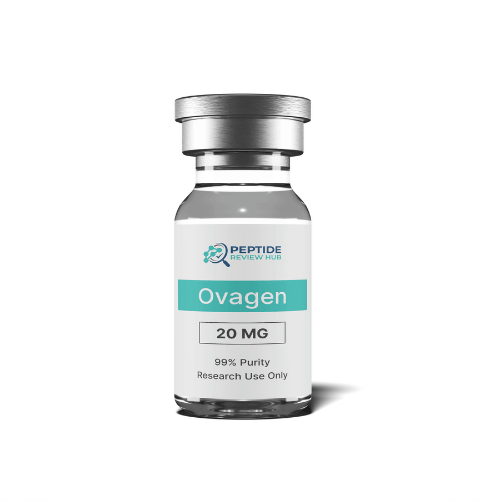
Ovagen is a low-molecular-weight tripeptide composed of glutamic acid, aspartic acid, and leucine (Glu-Asp-Leu). Researchers investigate Ovagen and related short regulatory peptides because of their potential relevance to cellular signaling, molecular recognition, protein interactions, tissue regulation, and biochemical communication. Due to its simple molecular structure, Ovagen serves as a useful research model in peptide biology, cellular regulation, enzymology, and molecular signaling studies.
As interest in short regulatory peptides continues to expand, researchers frequently compare Ovagen suppliers based on purity, analytical testing, manufacturing quality, pricing, and supplier transparency.
This Ovagen Vendor Price Comparison Guide helps researchers evaluate suppliers using objective criteria including:
Whether you're searching for the lowest-priced Ovagen supplier, the highest-purity research-grade product, or vendors providing extensive analytical verification, this guide offers a framework for comparing peptide suppliers.
Explore Ovagen Vendors by Criteria
Most Popular Ovagen Vendors
Compare suppliers frequently selected by peptide and molecular biology researchers.
Highest Reviewed Ovagen Vendors
Discover peptide suppliers with strong customer satisfaction and positive marketplace reputations.
Lowest Price Ovagen Vendors
Identify vendors offering competitive pricing and favorable cost-per-milligram value.
Highest Purity Ovagen Vendors
Review suppliers providing transparent purity verification and analytical testing.
Best Value Ovagen Vendors
Compare pricing, documentation quality, testing standards, and customer support.
Fastest Shipping Ovagen Vendors
Evaluate shipping performance, packaging quality, and fulfillment reliability.
Newly Listed Ovagen Vendors
Explore recently added suppliers offering Ovagen research peptides.
What Is Ovagen?
Overview
Ovagen is a short regulatory tripeptide consisting of:
Glu-Asp-Leu
(Glutamic Acid – Aspartic Acid – Leucine)
Researchers investigate Ovagen because of its association with:
Cellular signaling
Molecular recognition
Protein-protein interactions
Peptide-mediated regulation
Cellular metabolism
Tissue homeostasis
Biochemical communication
Regulatory peptide mechanisms
Its compact molecular structure makes it particularly useful for studying how small peptides influence biological systems.
Molecular Characteristics
Peptide Information
Researchers evaluating Ovagen products should carefully review molecular specifications and analytical documentation.
Peptide Name
Ovagen
Alternative Description
Glu-Asp-Leu Tripeptide
Amino Acid Sequence
Glu-Asp-Leu
Classification
Regulatory Tripeptide
Molecular Type
Short Bioactive Peptide
Research Category
Peptide Regulation & Molecular Biology Research
Common Form
Lyophilized Research Peptide
Why Researchers Compare Ovagen Vendors
Research reproducibility depends heavily on peptide quality and manufacturing consistency.
Differences among suppliers may include:
Careful supplier evaluation helps improve research reliability and experimental consistency.
How We Compare Ovagen Vendors
Third-Party Laboratory Testing
Independent testing remains one of the strongest indicators of peptide quality.
Researchers should prioritize suppliers offering:
Certificate of Analysis (COA)
A quality COA should include:
Batch number
Purity percentage
Identity verification
Analytical methodology
Testing dates
Product Purity
Purity remains one of the most important considerations when evaluating research peptides.
Higher-purity products generally support better reproducibility and consistency.
Cost Per Milligram
Comparing only vial prices can be misleading.
Cost Per Milligram Formula
Product Price ÷ Total Milligrams = Cost Per Milligram
This metric helps researchers compare suppliers more accurately.
Customer Reviews
Customer feedback frequently provides insight into:
Vendor Reputation
Established peptide suppliers often demonstrate:
Transparent testing procedures
Reliable inventory management
Strong quality-assurance standards
Positive customer satisfaction
Current Research & Evidence
Cellular Signaling Research
One of the primary areas of Ovagen research involves cellular communication and signaling pathways.
Researchers investigate mechanisms involving:
Signal transduction
Intracellular communication
Regulatory peptide activity
Cellular response pathways
This remains a major area of interest for short regulatory peptides.
Gene Expression Research
Scientists continue investigating how small peptides may influence:
Additional research remains ongoing.
Key Areas of Ovagen Research
Liver & Hepatic Research
Ovagen has been investigated in laboratory models involving hepatic biology.
Areas of investigation include:
These studies contribute to broader understanding of peptide regulation within liver-related biological systems.
Gastrointestinal Research
Researchers continue studying Ovagen in experimental models involving:
This remains an important area of investigation.
Cellular Regulation Research
Scientists frequently investigate Ovagen because of its simplicity as a regulatory peptide model.
Research areas include:
These studies provide insight into fundamental cellular processes.
Protein Interaction Research
Researchers continue evaluating Ovagen because of its role in studies involving:
Understanding these interactions remains central to molecular biology research.
Enzyme Interaction Research
The Glu-Asp-Leu sequence has attracted attention in studies involving:
These investigations contribute to a broader understanding of peptide-enzyme relationships.
HIV-1 Protease Research
Experimental biochemical studies have examined Glu-Asp-Leu-related interactions involving:
HIV-1 protease recognition
Molecular binding behavior
Enzyme specificity
Structural activity relationships
These models help researchers investigate peptide-enzyme interactions under controlled laboratory conditions.
Molecular Recognition Research
Researchers continue studying Ovagen because of its usefulness in understanding:
This remains a key area of modern peptide research.
Molecular Biology Applications
Ovagen remains a valuable model peptide for studying:
Peptide Chemistry
Protein Research
Protein binding
Signal recognition
Cellular communication
Biochemical Research
Cellular Biology
Its simplicity makes it attractive for fundamental biological investigations.
Lyophilized Peptide Format
Ovagen is commonly supplied as a lyophilized peptide.
Benefits of lyophilization may include:
Improved storage stability
Reduced moisture exposure
Preservation of peptide integrity
Extended storage characteristics
Convenient laboratory reconstitution
Researchers should always follow supplier-specific instructions regarding reconstitution and handling.
Storage & Handling Considerations
To maintain peptide integrity:
✅ Store in a cool, dry environment
✅ Protect from moisture and direct sunlight
✅ Follow manufacturer storage recommendations
✅ Minimize repeated temperature fluctuations
✅ Use proper laboratory handling procedures after reconstitution
Proper storage can help preserve peptide stability and research quality.
Product Quality & Analytical Testing
Why Testing Matters
Research-grade Ovagen products should undergo testing to verify:
Identity
Purity
Composition
Stability
Batch consistency
Common Testing Methods
High-Performance Liquid Chromatography (HPLC)
Used to assess purity and detect impurities.
Liquid Chromatography-Mass Spectrometry (LC-MS)
Used to verify molecular identity and composition.
Molecular Weight Verification
Confirms peptide specifications.
Identity Testing
Verifies supplied material matches the stated compound.
Purity Analysis
Measures peptide quality and impurity levels.
Batch Consistency Testing
Evaluates reproducibility across manufacturing lots.
Contaminant Screening
Helps verify research-grade quality standards.
Understanding Ovagen Pricing
Several factors influence pricing among research peptide suppliers.
Product Purity
Higher-purity products often command premium pricing.
Analytical Verification
Extensive testing increases transparency but may increase production costs.
Manufacturing Standards
Quality-control systems can significantly affect pricing.
Research Demand
Growing interest in short regulatory peptides continues to drive demand.
Vendor Reputation
Trusted suppliers often charge more due to stronger quality-assurance programs.
Ovagen Vendor Evaluation Checklist
Quality Verification
✅ Third-party testing available
✅ Certificate of Analysis provided
✅ Molecular identity confirmed
✅ Purity disclosed
✅ Batch-specific testing available
Vendor Reliability
✅ Positive customer reviews
✅ Transparent company information
✅ Responsive support team
✅ Reliable inventory availability
Purchasing Experience
✅ Secure checkout process
✅ Shipment tracking available
✅ Clear policies
✅ Reliable order fulfillment
Red Flags When Comparing Vendors
Testing Concerns
❌ No third-party testing
❌ Missing COAs
❌ Unverified purity claims
❌ Outdated analytical reports
Transparency Issues
❌ Missing product specifications
❌ No batch information
❌ Limited documentation
❌ No supplier contact information
Service Problems
❌ Frequent inventory shortages
❌ Poor communication
❌ Negative customer reviews
❌ Unclear shipping policies
Frequently Asked Questions
What is Ovagen?
Ovagen is a short regulatory tripeptide composed of glutamic acid, aspartic acid, and leucine (Glu-Asp-Leu).
What is Ovagen used for in research?
Researchers investigate Ovagen in studies involving cellular signaling, molecular recognition, protein interactions, enzyme binding, hepatic biology, gastrointestinal physiology, and regulatory peptide mechanisms.
Why compare Ovagen vendors?
Purity, testing standards, batch consistency, documentation quality, and supplier reliability can vary significantly among vendors.
What should researchers review before purchasing?
Researchers should evaluate:
Why is third-party testing important?
Independent testing helps verify peptide identity, purity, and batch consistency while improving transparency and reproducibility.
Is the lowest-priced supplier always the best option?
No. Product quality, testing standards, supplier reputation, and documentation quality are often more important than price alone.
How often should vendor comparisons be updated?
Pricing, availability, laboratory reports, and supplier policies can change frequently and should be reviewed regularly.
Final Thoughts
Ovagen is a compact regulatory tripeptide that continues to attract research interest because of its usefulness in studying cellular signaling, molecular recognition, protein interactions, enzyme activity, hepatic biology, gastrointestinal physiology, and peptide-mediated regulatory processes. Its simple Glu-Asp-Leu structure provides researchers with a valuable model for investigating fundamental biological communication systems and peptide-based regulation.
When comparing Ovagen vendors, researchers should prioritize purity verification, third-party analytical testing, Certificate of Analysis availability, supplier reputation, and overall value rather than focusing exclusively on price. A structured vendor-comparison approach can help identify suppliers capable of meeting rigorous research-quality standards.