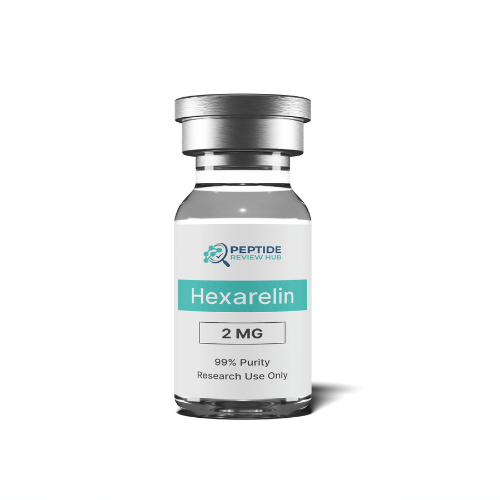
Hexarelin (also known as Examorelin) is a synthetic growth hormone secretagogue and ghrelin-receptor agonist that has become an important subject of research in endocrinology, cardiovascular biology, muscle preservation, metabolism, and regenerative science. Researchers investigate Hexarelin because of its ability to interact with both the growth hormone secretagogue receptor (GHS-R) and other cellular signaling pathways involved in tissue protection and recovery.
As interest in growth hormone secretagogues continues to expand, researchers frequently compare Hexarelin suppliers based on product purity, analytical testing, pricing, manufacturing quality, and supplier transparency.
This Hexarelin Vendor Price Comparison Guide helps researchers evaluate suppliers using objective criteria including:
Whether you're searching for the most affordable Hexarelin supplier, vendors with extensive laboratory verification, or the highest-purity research-grade product, this guide provides a framework for comparing peptide suppliers.
Explore Hexarelin Vendors by Criteria
Most Popular Hexarelin Vendors
Compare suppliers frequently selected by endocrine and cardiovascular researchers.
Highest Reviewed Hexarelin Vendors
Discover peptide companies with strong customer satisfaction and positive marketplace reputations.
Lowest Price Hexarelin Vendors
Identify suppliers offering competitive pricing and favorable cost-per-milligram value.
Highest Purity Hexarelin Vendors
Review suppliers providing transparent purity verification and analytical testing.
Best Value Hexarelin Vendors
Compare pricing, laboratory standards, customer support, and overall product quality.
Fastest Shipping Hexarelin Vendors
Evaluate packaging quality, shipping speed, and fulfillment reliability.
Newly Listed Hexarelin Vendors
Explore recently launched suppliers offering Hexarelin research peptides.
What Is Hexarelin?
Overview
Hexarelin is a synthetic peptide belonging to the growth hormone secretagogue (GHS) family.
Researchers investigate Hexarelin because of its relationship with:
Growth hormone secretion
Ghrelin signaling
Cardiovascular biology
Muscle preservation
Metabolic regulation
Cellular protection
Recovery pathways
Endocrine signaling
Hexarelin is structurally similar to GHRP-6 but contains modifications that enhance its biological activity and receptor interactions.
Molecular Characteristics
Peptide Information
Researchers evaluating Hexarelin products should carefully review analytical documentation and product specifications.
Peptide Name
Hexarelin
Alternative Names
Examorelin
Hexarelin Acetate
Amino Acid Sequence
His-D-Trp(2-Me)-Ala-Trp-D-Phe-Lys
Molecular Formula
C47H58N12O6
Molecular Weight
887.06 g/mol
PubChem CID
6918297
CAS Number
140703-51-1
Classification
Growth Hormone Secretagogue
Research Category
Endocrine & Cardiovascular Research
Why Researchers Compare Hexarelin Vendors
Research outcomes depend heavily on peptide quality and manufacturing consistency.
Differences among suppliers may include:
Purity levels
Batch consistency
Stability testing
Manufacturing standards
Product documentation
Storage procedures
Shipping practices
Quality-control systems
Careful vendor selection can improve research reproducibility and consistency.
How We Compare Hexarelin Vendors
Third-Party Laboratory Testing
Independent testing remains one of the most important indicators of peptide quality.
Researchers should prioritize vendors offering:
Certificate of Analysis (COA)
A quality COA should contain:
Batch number
Testing date
Purity percentage
Identity confirmation
Analytical methodology
Product Purity
Purity remains one of the most important considerations when evaluating research peptides.
Higher-purity products may contribute to improved reproducibility and more reliable experimental outcomes.
Cost Per Milligram
Comparing product prices alone can be misleading.
Cost Per Milligram Formula
Product Price ÷ Total Milligrams = Cost Per Milligram
This helps researchers compare products more accurately across suppliers.
Customer Reviews
Customer experiences often provide insight regarding:
Vendor Reputation
Established peptide suppliers often demonstrate:
Transparent testing standards
Reliable inventory management
Strong quality-control procedures
Positive customer satisfaction
Current Research & Evidence
Growth Hormone Research
The primary area of Hexarelin investigation involves growth hormone signaling.
Researchers continue studying pathways involving:
Growth hormone release
Endocrine regulation
GHS-R activation
Hormonal communication
Growth-factor signaling
This remains the central focus of Hexarelin research.
Ghrelin Receptor Research
Hexarelin functions as a ghrelin-receptor agonist.
Researchers continue investigating relationships involving:
Growth hormone secretagogue receptors
Appetite signaling pathways
Neuroendocrine communication
Hormonal adaptation
These mechanisms continue to attract significant scientific interest.
Key Findings on Hexarelin Research
Cardiovascular Research
One of the most extensively studied areas of Hexarelin research involves cardiovascular biology.
Researchers have explored pathways associated with:
This remains one of the most active areas of Hexarelin investigation.
Cardiac Remodeling Research
Experimental studies continue evaluating relationships involving:
Structural heart adaptations
Cardiovascular tissue maintenance
Cellular signaling pathways
Long-term cardiac function
Researchers remain interested in how these pathways contribute to cardiovascular health.
Oxidative Stress Research
Studies have investigated Hexarelin because of its relationship with:
Further research remains ongoing.
Muscle Preservation Research
Scientists continue examining Hexarelin in models involving:
Muscle-cell survival
Protein preservation
Mitochondrial function
Recovery biology
This has made Hexarelin an important subject in muscle physiology research.
Cachexia Research
Experimental investigations have explored pathways involving:
Researchers continue studying these interactions.
Mitochondrial Research
Research suggests Hexarelin may interact with cellular pathways involving:
Mitochondrial integrity
Energy production
Cellular metabolism
Tissue resilience
Additional studies remain ongoing.
Metabolic Research
Researchers investigate Hexarelin because of its relationship with:
Glucose regulation
Lipid metabolism
Insulin sensitivity
Energy utilization
These pathways continue to be actively explored.
Dyslipidemia Research
Studies have evaluated mechanisms involving:
Lipid regulation
Cholesterol metabolism
Blood-fat markers
Metabolic adaptation
This remains an emerging field of investigation.
Why Researchers Study Hexarelin
Hexarelin remains popular among researchers because it spans multiple scientific disciplines simultaneously.
Areas commonly studied include:
Endocrinology
Cardiovascular biology
Metabolism
Muscle physiology
Growth hormone signaling
Cellular protection
Mitochondrial function
Healthy-aging research
This broad research profile distinguishes Hexarelin from many other growth hormone secretagogues.
Research Limitations
Most findings involving Hexarelin originate from:
Additional research remains necessary to fully characterize the peptide's biological mechanisms and long-term effects.
Research findings should not be interpreted as evidence of approved therapeutic applications.
Product Quality & Analytical Testing
Why Testing Matters
Research-grade Hexarelin products should undergo testing to verify:
Identity
Purity
Stability
Potency
Batch consistency
Common Testing Methods
High-Performance Liquid Chromatography (HPLC)
Used to assess purity and identify impurities.
Mass Spectrometry (MS)
Used to verify molecular identity and peptide composition.
Identity Verification Testing
Confirms peptide authenticity.
Stability Testing
Measures peptide integrity during storage.
Batch Consistency Testing
Evaluates reproducibility across production lots.
Understanding Hexarelin Pricing
Several factors influence Hexarelin pricing among suppliers.
Product Purity
Higher-purity products generally command premium pricing.
Analytical Verification
Comprehensive testing programs improve transparency but increase production costs.
Manufacturing Standards
Strict quality-control systems can significantly affect pricing.
Specialized Research Demand
Hexarelin remains a specialized peptide with growing popularity in cardiovascular and endocrine research.
Vendor Reputation
Trusted suppliers often charge more due to established quality-assurance systems.
Hexarelin Vendor Evaluation Checklist
Quality Verification
✅ Third-party testing available
✅ Certificate of Analysis provided
✅ Identity verification documented
✅ Purity information disclosed
✅ Batch-specific testing available
Vendor Reliability
✅ Positive customer reviews
✅ Transparent company information
✅ Responsive customer support
✅ Reliable inventory availability
Purchasing Experience
✅ Secure checkout process
✅ Shipment tracking available
✅ Clear refund policies
✅ Reliable order fulfillment
Red Flags When Comparing Vendors
Testing Concerns
❌ No third-party testing
❌ Missing COAs
❌ Unverified purity claims
❌ Outdated laboratory reports
Transparency Issues
❌ Hidden specifications
❌ Missing batch information
❌ Limited documentation
❌ No company contact information
Service Problems
❌ Frequent stock shortages
❌ Poor communication
❌ Negative customer reviews
❌ Unclear shipping policies
How to Choose the Best Hexarelin Vendor
Prioritize Laboratory Transparency
Choose suppliers that provide third-party testing and batch-specific Certificates of Analysis.
Verify Product Purity
Purity remains one of the most important quality indicators for research peptides.
Compare Overall Value
Balance pricing against testing standards, documentation quality, and supplier reliability.
Review Product Documentation
Verify analytical reports before purchasing.
Evaluate Vendor Reputation
Established peptide suppliers often provide stronger quality assurance and manufacturing consistency.
Match Products to Research Objectives
Choose suppliers whose product standards align with laboratory requirements.
Frequently Asked Questions
What is Hexarelin?
Hexarelin (Examorelin) is a synthetic growth hormone secretagogue and ghrelin-receptor agonist studied for its relationship with growth hormone release, cardiovascular biology, metabolism, and muscle preservation.
What is Hexarelin used for in research?
Researchers investigate Hexarelin in studies involving growth hormone signaling, cardiac-cell protection, muscle preservation, mitochondrial biology, metabolism, dyslipidemia, and endocrine regulation.
Why compare Hexarelin vendors?
Purity, analytical testing, documentation quality, pricing, and supplier reliability can vary substantially among vendors.
What should researchers evaluate before purchasing?
Researchers should review:
Why is third-party testing important?
Independent laboratory testing helps verify product identity, purity, and consistency while improving transparency.
Is the cheapest supplier always the best option?
No. Product quality, laboratory verification, testing standards, and supplier reliability are often more important than price alone.
How often should vendor comparisons be updated?
Pricing, inventory availability, supplier policies, and testing reports can change frequently and should be reviewed regularly.
Final Thoughts
Hexarelin remains one of the most extensively researched growth hormone secretagogues because of its reported relationship with growth hormone signaling, cardiovascular biology, muscle preservation, mitochondrial function, metabolism, and cellular protection pathways. Ongoing investigations continue exploring how Hexarelin may contribute to a deeper understanding of endocrine regulation, cardiac health, and tissue resilience.
When comparing Hexarelin vendors, researchers should prioritize purity verification, third-party laboratory testing, Certificate of Analysis availability, supplier reputation, and overall value rather than focusing solely on cost. A structured vendor-comparison process can help identify suppliers capable of meeting rigorous research-quality standards.