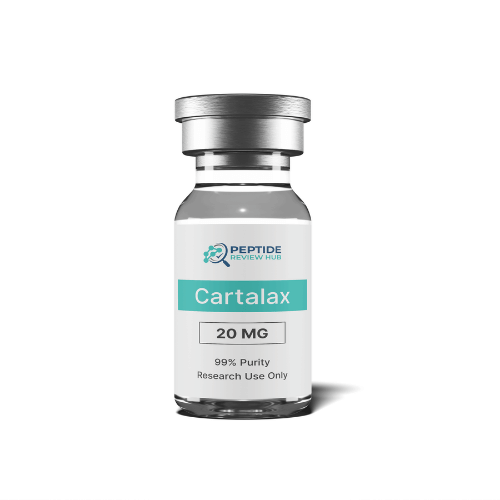
Cartalax is a synthetic bioregulatory peptide that has attracted growing interest in regenerative biology, connective tissue research, cellular aging studies, and extracellular matrix regulation. As a member of the Khavinson peptide family, Cartalax is primarily investigated for its effects on fibroblast function, tissue maintenance, cellular proliferation, and age-related changes in connective tissues.
As interest in bioregulatory peptides continues to expand, researchers frequently compare Cartalax vendors based on purity, analytical testing, pricing, quality-control standards, and supplier reliability.
This Cartalax Vendor Price Comparison Guide helps researchers evaluate suppliers using objective criteria including:
Whether you're looking for the lowest-priced Cartalax supplier, vendors offering comprehensive analytical testing, or peptide companies with strong quality-assurance programs, this guide provides a framework for informed comparison.
Explore Cartalax Vendors by Criteria
Most Popular Cartalax Vendors
Compare suppliers frequently selected by researchers studying aging, connective tissue biology, and regenerative medicine.
Highest Reviewed Cartalax Vendors
Discover vendors with strong customer satisfaction and positive marketplace reputations.
Lowest Price Cartalax Vendors
Identify suppliers offering competitive pricing and favorable cost-per-milligram value.
Highest Purity Cartalax Vendors
Review suppliers providing transparent purity verification and laboratory analysis.
Best Value Cartalax Vendors
Compare testing standards, customer support, product quality, and pricing to determine overall value.
Fastest Shipping Cartalax Vendors
Evaluate shipping speed, fulfillment performance, and packaging reliability.
Newly Listed Cartalax Vendors
Explore recently launched suppliers offering Cartalax research products.
What Is Cartalax?
Overview
Cartalax is a short bioregulatory peptide studied for its effects on cellular regulation, fibroblast activity, tissue maintenance, and aging-related biological pathways.
Researchers have investigated Cartalax in studies involving:
Cartalax is often classified as a geroprotective peptide because of its apparent ability to support cellular function and influence age-associated molecular pathways.
Molecular Characteristics
Peptide Information
Researchers evaluating Cartalax products should carefully review supplier documentation and available analytical verification.
Peptide Name
Cartalax
Classification
Bioregulatory Peptide
Research Category
Connective Tissue & Aging Research
Peptide Family
Khavinson Bioregulator Peptide
Primary Research Focus
Cellular Regulation and Fibroblast Function
Why Researchers Compare Cartalax Vendors
Not all peptide suppliers maintain identical manufacturing and quality-control standards.
Differences between vendors may include:
Product purity
Manufacturing quality
Batch consistency
Stability testing
Storage conditions
Shipping procedures
Product documentation
Laboratory verification
Careful supplier comparison helps improve research reproducibility and consistency.
How We Compare Cartalax Vendors
Third-Party Laboratory Testing
Independent testing remains one of the strongest indicators of peptide quality.
Researchers should prioritize suppliers offering:
Third-party testing
Identity verification
Purity analysis
Batch-specific reports
Certificate of Analysis (COA)
A quality COA should include:
Product Purity
Purity remains one of the most important variables when evaluating research peptides.
Suppliers providing transparent purity reporting generally receive stronger quality ratings.
Cost Per Milligram
Comparing only vial prices can create misleading conclusions.
Cost Per Milligram Formula
Product Price ÷ Total Milligrams = Cost Per Milligram
This allows more accurate vendor comparisons.
Customer Reviews
Customer feedback may provide useful insight regarding:
Vendor Reputation
Established suppliers often demonstrate:
Reliable quality-control systems
Transparent testing practices
Strong customer satisfaction
Consistent inventory availability
Current Research & Evidence
Fibroblast Research
One of the primary areas of Cartalax investigation involves fibroblasts, the cells largely responsible for maintaining connective tissues.
Researchers continue exploring how Cartalax may influence:
Connective Tissue Research
Cartalax has generated interest because connective tissues are essential to:
Skin structure
Cartilage integrity
Tendons
Ligaments
Organ support systems
Research continues investigating how bioregulatory peptides interact with these tissues.
Cellular Aging Research
A major focus of Cartalax research involves age-related cellular changes.
Scientists continue studying relationships between Cartalax and:
These investigations contribute to growing interest in geroprotection science.
Key Findings on Cartalax Research
Cell Proliferation Research
Experimental studies suggest Cartalax may influence pathways associated with cellular growth and replication.
Researchers continue evaluating its relationship to:
Cell-cycle regulation
Tissue renewal
Cellular turnover
Regenerative signaling
Cytokine Regulation Research
Research has examined how Cartalax affects signaling molecules involved in cellular communication.
Areas under investigation include:
Senescence Research
Scientists are increasingly interested in how Cartalax may influence markers associated with cellular aging.
Research has explored relationships involving:
Age-related cellular decline
Functional tissue preservation
Cellular longevity pathways
Regenerative capacity
Skin & Connective Tissue Research
Cartalax is frequently studied in relation to:
Skin integrity
Connective tissue remodeling
Collagen-support pathways
Tissue elasticity
Extracellular matrix biology
Researchers continue evaluating these mechanisms in experimental settings.
Kidney Research
Some studies have explored Cartalax's potential relationship with kidney tissue regulation and cellular maintenance.
Researchers continue investigating pathways associated with:
Geroprotection & Longevity Research
Cartalax is often discussed in the context of geroprotection, the study of biological mechanisms that help preserve tissue function during aging.
Researchers investigate whether bioregulatory peptides may contribute to:
Healthier cellular signaling
Tissue maintenance
Improved regenerative capacity
Delayed functional decline
This remains one of the most active areas of Cartalax research.
Research Limitations
Most Cartalax findings originate from:
Additional research remains necessary to fully characterize the biological mechanisms and long-term effects of Cartalax.
Research findings should not be interpreted as evidence of approved medical applications.
Product Quality & Analytical Testing
Why Testing Matters
Research-grade Cartalax products should undergo testing to verify:
Identity
Purity
Stability
Potency
Batch consistency
Common Testing Methods
High-Performance Liquid Chromatography (HPLC)
Used to determine purity and identify impurities.
Mass Spectrometry (MS)
Used to verify molecular identity and expected peptide composition.
Identity Verification Testing
Confirms peptide authenticity.
Stability Testing
Measures peptide integrity under storage conditions.
Batch Consistency Testing
Evaluates reproducibility between manufacturing lots.
Understanding Cartalax Pricing
Several factors influence supplier pricing.
Product Purity
Higher documented purity often results in premium pricing.
Testing Standards
Comprehensive analytical verification improves transparency but increases manufacturing costs.
Manufacturing Quality
Advanced synthesis and quality-control procedures can significantly impact pricing.
Market Availability
Specialized bioregulatory peptides often have limited production volumes, which may increase costs.
Vendor Reputation
Trusted suppliers frequently charge higher prices due to proven quality-assurance practices.
Cartalax Vendor Evaluation Checklist
Quality Verification
✅ Third-party testing available
✅ Certificate of Analysis provided
✅ Identity verification documented
✅ Purity information disclosed
✅ Batch-specific testing available
Vendor Reliability
✅ Positive customer reviews
✅ Transparent company information
✅ Responsive customer support
✅ Reliable inventory availability
Ordering Experience
✅ Secure checkout process
✅ Shipping tracking available
✅ Clear refund policies
✅ Reliable fulfillment performance
Red Flags When Comparing Vendors
Testing Concerns
❌ No third-party testing
❌ Missing COAs
❌ Unverified purity claims
❌ Outdated laboratory reports
Transparency Issues
❌ Hidden product specifications
❌ Missing batch information
❌ Limited documentation
❌ No company contact information
Service Problems
❌ Frequent inventory shortages
❌ Poor communication
❌ Negative customer reviews
❌ Unclear shipping policies
How to Choose the Best Cartalax Vendor
Prioritize Laboratory Testing
Choose suppliers that provide third-party testing and batch-specific Certificates of Analysis.
Compare Overall Value
Evaluate purity, testing standards, and supplier reliability alongside price.
Review Product Documentation
Verify analytical reports before purchasing.
Consider Vendor Reputation
Established suppliers often provide stronger consistency and quality-control systems.
Match Products to Research Objectives
Select suppliers whose testing standards and documentation align with your research requirements.
Frequently Asked Questions
What is Cartalax?
Cartalax is a bioregulatory peptide studied for its effects on fibroblast activity, connective tissue biology, cellular aging, and tissue-maintenance pathways.
What is Cartalax used for in research?
Researchers investigate Cartalax in studies involving fibroblast function, regenerative biology, connective tissue maintenance, cytokine regulation, and aging-related cellular processes.
Why compare Cartalax vendors?
Purity, analytical testing, documentation quality, pricing, and supplier reliability can vary significantly between vendors.
What should researchers review before purchasing?
Researchers should evaluate:
Certificate of Analysis
Purity testing
Third-party verification
Identity confirmation
Vendor reputation
Customer reviews
Why is third-party testing important?
Independent laboratory testing helps verify product identity, purity, and consistency while improving transparency.
Is the cheapest supplier always the best option?
No. Product quality, testing standards, and supplier reliability are often more important than price alone.
How often should vendor comparisons be updated?
Pricing, inventory availability, testing reports, and supplier policies can change frequently and should be reviewed regularly.
Final Thoughts
Cartalax is a unique bioregulatory peptide that continues to attract attention in connective tissue research, fibroblast biology, regenerative medicine, and aging science. Its apparent ability to influence cellular health, proliferation pathways, and tissue-maintenance mechanisms has made it an important area of investigation within the growing field of peptide bioregulation.
When comparing Cartalax vendors, researchers should prioritize purity verification, third-party testing, COA availability, supplier reputation, and overall value rather than focusing exclusively on price. A structured vendor-comparison process can help identify suppliers capable of meeting rigorous research-quality standards.