
Research Use Only. This compound is not intended for human consumption or therapeutic use.
Where to Buy GLOW: Vendor Comparison & Research Info
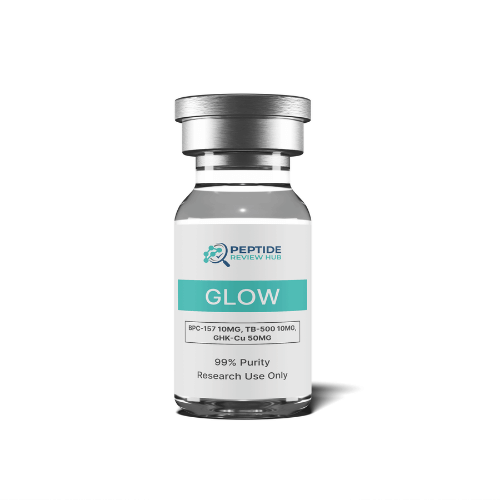
GLOW (60mg) is an experimental peptide research stack combining GHK-Cu, BPC-157, and TB-500 for laboratory studies of cellular signaling, extracellular matrix biology, tissue-response pathways, cell migration, and inflammatory mechanisms.
What is GLOW?
GLOW (60mg) — Research Peptide Stack for Tissue Biology, Cellular Signaling & Regenerative Research
GLOW (60mg) is an experimental peptide research formulation combining GHK-Cu, BPC-157, and TB-500 for laboratory investigation of cellular signaling, extracellular matrix biology, tissue-response pathways, and inflammatory processes. By bringing three distinct research peptides into a single formulation, GLOW provides researchers with a multi-component system for studying interactions between peptide-mediated signaling pathways.
GHK-Cu is a copper-binding peptide investigated in areas of extracellular matrix regulation, cellular signaling, and dermal biology. BPC-157 has been studied in experimental models involving tissue-response pathways, vascular biology, and gastrointestinal research. TB-500 is associated with research into thymosin beta-4-related cellular mechanisms, including cell migration and cytoskeletal processes.
When evaluating GLOW (60mg) for laboratory research, researchers should review documentation covering peptide identity, composition, purity, lot information, analytical testing, and storage specifications. GLOW should be regarded strictly as a research material and is not intended for human consumption, diagnosis, prevention, or treatment of any disease or medical condition.
Vendors Listed
Lowest Price: $—
What is GLOW (60mg)?
GLOW (60mg) is a multi-peptide research formulation containing GHK-Cu, BPC-157, and TB-500. Each component has been investigated independently in experimental research involving different aspects of cellular and tissue biology.
The combination provides a research model for examining multiple peptide-associated pathways within a single formulation. Research interest may include extracellular matrix processes, cellular migration, tissue-response signaling, inflammatory pathways, and mechanisms associated with cellular repair.
Because GLOW combines several experimental compounds, findings associated with individual peptides should not automatically be interpreted as evidence for the effectiveness or safety of the combined formulation.
Overview
GLOW (60mg) is formulated as a research-oriented peptide stack designed for laboratory investigation of complementary biological pathways. The formulation incorporates three peptides with distinct research histories:
GHK-Cu: A copper-binding peptide studied in cellular, dermal, and extracellular matrix research.
BPC-157: An experimental peptide investigated in preclinical studies involving tissue-response and cellular signaling pathways.
TB-500: A peptide associated with research into thymosin beta-4-related mechanisms, including cellular migration and cytoskeletal biology.
The combined formulation can serve as an experimental system for researchers interested in evaluating interactions among different peptide-mediated biological pathways. Research findings should be interpreted based on the specific experimental model, concentration, formulation, and analytical conditions used.
Molecular Characteristics
GLOW (60mg) is a multi-component formulation rather than a single molecular entity. Its molecular characteristics depend on the individual peptides included in the stack:
GHK-Cu: Glycyl-L-histidyl-L-lysine complexed with copper ions; commonly studied as a copper-binding tripeptide.
BPC-157: Experimental peptide consisting of 15 amino acids and investigated in various preclinical research models.
TB-500: Research peptide associated with thymosin beta-4-related biological mechanisms and cellular processes.
Total Formulation: 60mg combined peptide content, with the precise quantity of each component determined by the product formulation.
Formulation Type: Multi-peptide research compound.
Research Classification: Experimental laboratory material.
Because the formulation contains multiple peptides, researchers should consult the product-specific certificate of analysis for exact composition, individual peptide quantities, purity measurements, and batch information.
Research Applications
GLOW (60mg) may be investigated in laboratory and preclinical research involving:
Extracellular Matrix Research: Studying pathways associated with extracellular matrix organization and cellular signaling.
Cellular Signaling: Examining peptide-mediated signaling mechanisms in experimental cell systems.
Tissue Biology: Investigating cellular responses associated with tissue-maintenance pathways.
Inflammatory Research: Exploring signaling pathways involved in experimental inflammatory models.
Cell Migration: Studying mechanisms associated with cellular movement and migration.
Dermal Biology: Investigating GHK-Cu-related pathways in experimental skin and connective-tissue models.
Regenerative Biology: Exploring cellular mechanisms involved in tissue-response and repair-associated research.
Peptide Interaction Studies: Evaluating biological responses to a multi-peptide experimental formulation.
These applications represent areas of scientific investigation and should not be interpreted as established therapeutic applications.
Mechanism of Research Interest
The research interest in GLOW comes from the different biological pathways associated with its three peptide components.
GHK-Cu is a naturally occurring copper-binding peptide that has been investigated for its relationship with extracellular matrix components, cellular signaling, and tissue-associated biological processes. Its copper-binding characteristics make it relevant to research involving peptide–metal interactions and cellular biology.
BPC-157 is an experimental peptide investigated primarily in preclinical research. Studies have examined its relationship with cellular signaling, vascular-associated processes, and tissue-response pathways.
TB-500 is associated with research surrounding thymosin beta-4-related mechanisms. Thymosin beta-4 has been investigated in connection with actin regulation, cell migration, and cytoskeletal biology.
The combination of these components makes GLOW useful as a research formulation for examining how multiple peptide-associated pathways may interact within experimental systems. However, the biological activity of the combined formulation must be evaluated independently rather than inferred solely from studies of its individual components.
Preclinical Research
The individual components of GLOW have been investigated in different experimental and preclinical research settings.
GHK-Cu research has explored cellular and extracellular matrix processes, while BPC-157 has been examined in various animal and laboratory models involving tissue-response and signaling pathways. Research involving thymosin beta-4 and related peptides has examined mechanisms associated with cell migration, cytoskeletal regulation, and tissue biology.
The evidence base for these compounds varies considerably by peptide, experimental model, and research endpoint. Preclinical observations cannot automatically be translated into established effects in humans.
GLOW itself, as a combined formulation, should therefore be evaluated according to product-specific analytical data and experimental evidence rather than assuming that findings from individual components apply directly to the finished stack.
Product Quality & Analytical Testing
Research-grade GLOW (60mg) should be evaluated using appropriate analytical methods to confirm peptide identity, purity, composition, and batch consistency. Depending on the laboratory application, quality assessment may include:
HPLC: Evaluation of peptide purity and related impurities.
Mass Spectrometry: Verification of molecular mass and peptide identity.
Chromatographic Testing: Assessment of individual peptide components and potential degradation products.
Peptide Mapping: Additional characterization of peptide composition where appropriate.
Copper-Complex Analysis: Evaluation of GHK-Cu composition and copper association where applicable.
Batch Testing: Comparison of analytical characteristics across production lots.
Stability Testing: Monitoring peptide integrity under defined storage conditions.
Researchers should review the certificate of analysis (COA), batch number, stated purity, analytical methodology, individual peptide composition, and storage information before using a GLOW formulation in laboratory research.
Research Use Only: GLOW (60mg), containing GHK-Cu, BPC-157, and TB-500, is an experimental research formulation and is not an approved medication, dietary supplement, or established medical treatment. It should not be presented as a treatment for wound healing, inflammation, skin conditions, injury recovery, or any other medical condition. Research materials should be handled according to applicable laboratory procedures, institutional requirements, manufacturer specifications, and relevant regulations. Independent verification of identity, composition, purity, and analytical documentation is recommended before research use.
Where to Buy GLOW Online
| Rank | Vendor | Trust Score | Vial Size | Price / mg | Status | Action |
|---|---|---|---|---|---|---|
1 | N/A/10 Editorial Rating | $108.00 70mg vial | $1.54/mg | In Stock | Visit Site | |
2 | N/A/10 Editorial Rating | $89.00 10mg vial | $8.90/mg | In Stock | Visit Site | |
3 | N/A/10 Editorial Rating | $99.00 10mg vial | $9.90/mg | In Stock | Visit Site |



Top-Ranked Vendor
Chemical Properties & Handling
Standard storage protocols for lyophilized peptides generally apply unless otherwise specified.
- Lyophilized (Powder): Store at -20°C for up to 3 years. Keep away from direct light and moisture.
- Reconstituted (Liquid): Store at 2-8°C (refrigerated) and use within 20-30 days to maintain stability.
Research Reviews
No Research Reviews Yet
Be the first to share your research protocol and vendor experience with GLOW.
Best GLOW Vendors & Price Comparison
Compare current GLOW prices, vial sizes, availability, and vendor information in the prices section above before choosing a supplier.
Current Research & Evidence
Research evidence for GLOW has not yet been added.
Key Findings on GLOW Use
Key findings for GLOW have not yet been added.
Related Peptides in Peptide
Acipotide
Adipotide is an experimental peptide compound investigated in preclinical research involving adipose-tissue biology, vascular targeting, and metabolic pathways. Research has focused on its proposed ability to interact with blood vessels associated with adipose tissue, making it a compound of interest for studies examining targeted cellular and metabolic mechanisms. Researchers may investigate Adipotide in controlled laboratory models to better understand its biological activity, molecular pathways, and potential effects on adipose-related processes. When evaluating an Adipotide research product, researchers should consider available product documentation, identity information, purity data, batch details, and applicable laboratory testing. Peptide Review Hub provides a research-oriented database where users can compare product and vendor information alongside available testing and sourcing data. Adipotide products listed for research purposes should be treated strictly as laboratory research materials. They are not intended for human consumption, diagnosis, or treatment. Independent verification of product identity, purity, and documentation is recommended before use in research.
Tesamorelin
Tesamorelin 5mg is a synthetic GHRH analog studied for its interaction with the GHRH–GH–IGF-1 signaling pathway. It is researched in areas including visceral adipose tissue, lipid metabolism, endocrine signaling, glucose regulation, and metabolic health. Supplied as a lyophilized peptide, Tesamorelin 5mg is intended strictly for controlled laboratory and preclinical research.
Klow Blend
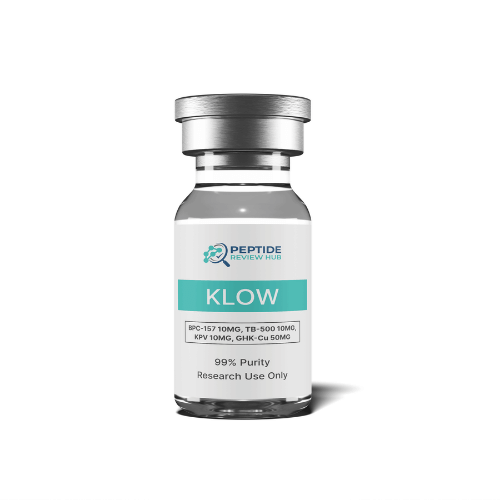
The Klow Blend combines BPC-157, TB-500, KPV, and GHK-Cu in an 80mg lyophilized peptide formulation designed for laboratory research. The four peptides are studied across areas including inflammatory signaling, cellular migration, angiogenesis, tissue repair, and extracellular-matrix research. Supplied as a research-use-only formulation, it offers researchers a convenient way to investigate multiple peptide pathways within a single blend.
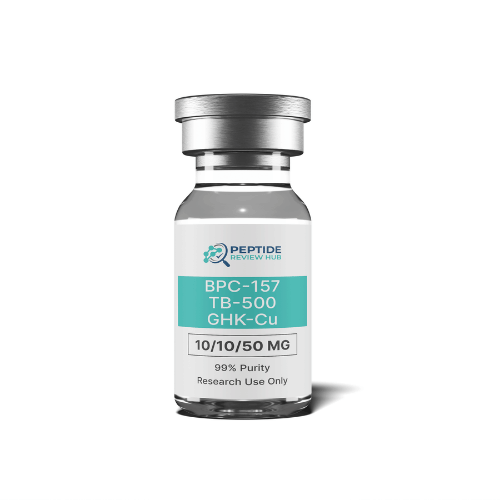
Glow Blend
BPC-157 + TB-500 + GHK-Cu 70mg Blend is a multi-peptide research formulation combining three compounds studied for their roles in cellular signaling, vascular biology, inflammation, and extracellular matrix research. With 10mg BPC-157, 10mg TB-500, and 50mg GHK-Cu in a lyophilized format, it provides a convenient model for controlled laboratory investigations into tissue remodeling and regenerative pathways.