
Research Use Only. This compound is not intended for human consumption or therapeutic use.
Where to Buy Raloxifene: Vendor Comparison & Research Info
Raloxifene Hydrochloride is an investigational selective estrogen receptor modulator (SERM) studied for its tissue-specific effects on estrogen signaling. Research focuses on breast tissue, bone metabolism, lipid pathways, endocrine regulation, and estrogen receptor activity.
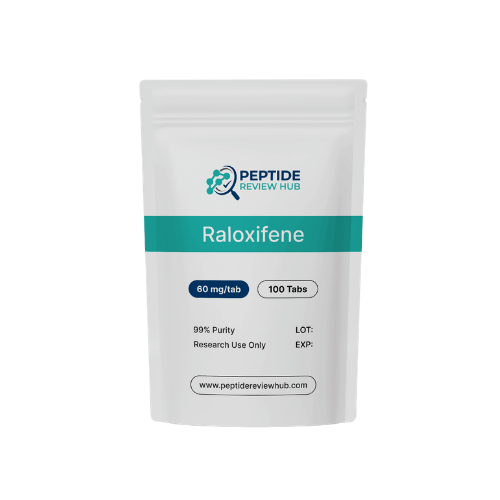
What is Raloxifene?
Raloxifene hydrochloride is a second-generation selective estrogen receptor modulator (SERM) investigated for its tissue-specific effects on estrogen receptor signaling. Originally developed for applications involving bone health and estrogen-responsive tissues, raloxifene has become an important research compound for studying estrogen receptor activity in breast tissue, bone, liver, and reproductive biology.
Unlike compounds that uniformly block estrogen signaling throughout the body, raloxifene demonstrates tissue-selective activity. It generally acts as an estrogen receptor antagonist in breast tissue while exhibiting estrogen-like activity in bone. This distinctive pharmacological profile makes it valuable for investigating how estrogen receptors produce different biological responses depending on the target tissue.
Key Research Areas
Estrogen Receptor Signaling: Investigating tissue-specific estrogen receptor activation and antagonism.
Breast Tissue Research: Studying estrogen-dependent cellular proliferation and receptor-mediated signaling.
Bone Biology: Examining estrogen receptor pathways involved in bone remodeling and mineral density.
Lipid Metabolism: Investigating estrogen-related effects on cholesterol and lipid pathways.
Endocrine Research: Studying selective estrogen receptor modulation and hormonal feedback mechanisms.
Cellular Signaling: Exploring differences in estrogen receptor co-regulator recruitment between tissues.
Mechanism of Action
Raloxifene binds to estrogen receptors and produces different downstream responses depending on the tissue involved. In breast tissue, it primarily functions as an estrogen receptor antagonist, allowing researchers to examine how blocking estrogen-mediated signaling affects cellular proliferation.
In bone tissue, raloxifene exhibits estrogen-like activity and has been extensively studied in relation to bone remodeling and mineral homeostasis. These contrasting effects are associated with differences in receptor conformation and the recruitment of tissue-specific transcriptional co-regulators.
Breast Tissue Research
Raloxifene is widely investigated in experimental models involving estrogen-responsive breast tissue. Researchers use the compound to examine estrogen receptor signaling, cellular proliferation, and molecular mechanisms involved in estrogen-dependent tissue development.
Its antagonist activity in mammary tissue has also made raloxifene relevant to research into estrogen-sensitive breast conditions and receptor-mediated cellular responses.
Bone Research
Estrogen signaling plays an important role in maintaining skeletal tissue. Raloxifene has been studied extensively for its ability to influence estrogen-responsive pathways in bone, including mechanisms associated with osteoblast and osteoclast activity, bone remodeling, and mineral preservation.
Lipid and Metabolic Research
Raloxifene is also investigated for its effects on hepatic estrogen receptor signaling and lipid metabolism. Experimental studies have examined changes in cholesterol-related pathways and other metabolic markers associated with selective estrogen receptor modulation.
Research Considerations
Raloxifene is a pharmacologically active SERM with tissue-specific effects and potential adverse effects. Research involving this compound should account for its effects on coagulation, cardiovascular parameters, liver function, and other estrogen-responsive systems.
Its established pharmacological activity does not imply suitability for unsupervised human use, and appropriate laboratory or clinical protocols should be followed when conducting research.
Analytical Quality
Research-grade raloxifene hydrochloride should undergo appropriate analytical testing to verify identity, purity, and batch consistency. Common analytical methods include:
High-Performance Liquid Chromatography (HPLC)
Mass Spectrometry (MS)
Chemical identity verification
Purity assessment
Batch consistency testing
Research Use Only: This compound is intended exclusively for laboratory and scientific research. It is not intended for human consumption, therapeutic use, performance enhancement, diagnostic applications, or veterinary use.
Where to Buy Raloxifene Online
| Rank | Vendor | Trust Score | Vial Size | Price / mg | Status | Action |
|---|---|---|---|---|---|---|
1 |  Dragon Peptides Verified | 9.0/10 Editorial Rating | $116.00 60mg vial | $1.93/mg | In Stock | Visit Site |
Top-Ranked Vendor
Dragon Peptides Review & Business Profile
Research date: September 28, 2026
Brand reviewed: Dragon Peptides
Website: dragon-peptides.to
Research note: I found several similarly named peptide businesses and domains, including Drakon Peptides. I excluded those from the assessment. The findings below relate specifically to dragon-peptides.to. Where information could not be independently verified, I have marked it accordingly.
Executive Scorecard
CategoryScoreCOA Transparency5/10
Reputation2/10
Pricing8/10
Policies5/10
Shipping6/10
Catalog8/10
Overall5.7/10
Overall Score: 5.7/10
1. COA Transparency — 5/10
Dragon Peptides makes several strong quality claims on its website, including 99% purity, independent quality testing, third-party purity testing and availability of Certificates of Analysis. Individual product pages also describe products as “lab tested” and repeatedly state that COAs are provided. (DRAGON-PEPTIDES.TO)
However, the major limitation is public verifiability. During this review, I could not locate a clearly organized, publicly accessible COA library showing batch numbers, laboratory names, testing dates and downloadable original reports for the catalog. The website's own content therefore establishes that Dragon Peptides claims to conduct testing, but does not provide enough easily accessible documentation to independently verify testing frequency or batch-by-batch results. Finnrick, an independent peptide-testing database, also did not return a Dragon Peptides vendor profile or test record in the searches conducted. (Finnrick)
Assessment: The testing claims are visible, but the supporting documentation could be considerably more transparent.
2. Reputation — 2/10
The publicly verifiable independent reputation footprint for dragon-peptides.to is limited. I could not verify a Trustpilot profile or Finnrick rating specifically for this domain, and I found no reliable Google Reviews or BBB profile attributable to the same brand/domain.
A third-party Trustprofile page for dragon-peptides.to currently displays an “Unsafe domain reported” warning and references a ScamAdviser report. (Trustprofile) Gridinsoft separately assigns the domain a 4/100 automated trust score and classifies it as “Suspicious Website.” Importantly, Gridinsoft says its assessment is based on automated technical/content signals and limited independent reputation data; it is not equivalent to verified customer-review evidence. (Gridinsoft LLC)
The website itself contains customer reviews on product pages, with positive comments about shipping, packaging and product quality, but these are first-party reviews hosted by the seller, so they should not be weighted the same as independent review-platform feedback. (DRAGON-PEPTIDES.TO)
Assessment: The principal weakness is the lack of a substantial, independently verifiable review history.
3. Pricing — 8/10
Dragon Peptides publishes prices directly on its catalog, with currently displayed products ranging approximately from $20 to $120. The site also prominently advertises 40% discounts on numerous products. Examples include BPC-157 5mg at $24, CJC-1295 DAC 5mg at $39, Ipamorelin 5mg at $27, Selank 10mg at $27 and TB-500 10mg at $27. (DRAGON-PEPTIDES.TO)
These prices appear competitive against publicly listed research-peptide prices. For example, a February 2026 market survey cited CJC-1295 DAC prices of approximately $8.40–$14 per mg among surveyed vendors, while Dragon Peptides' listed $39 price for 5mg equates to $7.80/mg before considering any additional promotion. (Peptide Commons)
The site also states that bulk-order pricing can be adjusted according to its bulk-discount policy. (DRAGON-PEPTIDES.TO)
There is no clearly documented loyalty/rewards program that I could independently verify.
Assessment: Pricing is one of the site's stronger commercial features, although discount terminology should be interpreted against the actual checkout price rather than the advertised percentage.
4. Policies — 5/10
Dragon Peptides provides dedicated pages for Terms of Use and Refunds & Returns, which is a positive transparency signal. The current refund page states that orders can be cancelled before shipment and that shipped products generally cannot be returned. Damaged, incorrect or missing orders may qualify for a refund or replacement following verification. (DRAGON-PEPTIDES.TO)
However, there are some policy inconsistencies. The current refund page describes a specific refund framework, while the Terms of Use contain additional and sometimes different operational rules concerning cancellations, lost packages, damaged products, seized shipments and reshipments. The Terms page also states that products are tested before receipt and that quality issues should be reported through a support ticket. (DRAGON-PEPTIDES.TO)
The homepage currently advertises a 60-day money-back guarantee, but the dedicated refund policy appears considerably narrower, limiting refunds primarily to verified shipping errors or product damage. (DRAGON-PEPTIDES.TO)
Assessment: Policies are available, but they would benefit from consolidation and clearer alignment.
5. Shipping — 6/10
Dragon Peptides provides unusually detailed shipping information. Its current shipping page states that the company offers U.S. domestic fulfillment at approximately five days, international fulfillment at up to 15 days, and tracking for all shipments. It lists a $45 flat worldwide shipping fee and says international orders are fulfilled from European warehouses. (DRAGON-PEPTIDES.TO)
The company also describes discreet, neutral packaging and says larger orders can be split into multiple packages. (DRAGON-PEPTIDES.TO)
However, there is a notable contradiction between the current shipping page and the Terms of Use. The shipping page describes both U.S. domestic and international fulfillment, whereas the Terms page says international shipping only and no domestic service. The Terms page additionally describes an average arrival window of 7–20 days. (DRAGON-PEPTIDES.TO)
Assessment: Shipping information is detailed, but customers would benefit from a single authoritative shipping policy with consistent delivery estimates and fulfillment-origin information.
6. Catalog — 8/10
Catalog breadth is a significant feature of the website. The peptide catalog includes compounds such as BPC-157, CJC-1295 DAC, Ipamorelin, Selank, Semax, Sermorelin, TB-500, Tesamorelin, MOTS-c, GHK-Cu, PT-141, Epitalon, IGF-1 LR3, Melanotan II, Retatrutide, Mazdutide and Survodutide, along with blends and other categories. (DRAGON-PEPTIDES.TO)
The catalog is organized into categories including peptides, blends and SARMs, with product filtering by price and sorting by title, manufacturer and price. The first catalog page alone contains more than 20 visible products and pagination indicates additional pages. (DRAGON-PEPTIDES.TO)
The homepage claims 200+ peptide variants, although I could not independently verify the exact total from the accessible catalog during this review. (DRAGON-PEPTIDES.TO)
Assessment: The catalog is broad and reasonably organized, with a substantial range of conventional and specialty research compounds.
SECTION 2: WHAT WE LIKE & WHAT COULD BE BETTER
What We Like
Broad catalog: The site offers a substantial range of peptides, blends and related research compounds. (DRAGON-PEPTIDES.TO)
Visible pricing: Product prices are publicly displayed rather than requiring customers to request quotations. (DRAGON-PEPTIDES.TO)
Quality claims are clearly presented: The website explicitly discusses third-party testing, purity and COAs. (DRAGON-PEPTIDES.TO)
Detailed shipping information: The dedicated shipping page provides shipping costs, estimated timelines and tracking information. (DRAGON-PEPTIDES.TO)
Dedicated policies: Refund, returns and terms pages are available.
Research-use disclaimer: The website clearly states that products are intended for research and development and not human or animal consumption. (DRAGON-PEPTIDES.TO)
Multiple customer-support channels/claims: The homepage advertises 24/7 chat and phone support. (DRAGON-PEPTIDES.TO)
What Could Be Better
Public COA access: Make batch-specific original COAs easily searchable and downloadable by product and lot number.
Independent reputation: Establish a stronger presence on recognized third-party review platforms.
Policy consistency: Resolve differences between the current shipping/refund pages and the older Terms of Use. (DRAGON-PEPTIDES.TO)
Company transparency: Headquarters and detailed corporate information are not clearly disclosed on the official website.
Testing verification: Publishing laboratory names, test dates, batch IDs and complete analytical results would make quality claims substantially easier to verify.
Third-party reputation signals: Independent services currently provide limited or unfavorable domain-level signals, although these should not be interpreted as proof of product quality or fraud. (Trustprofile)
SECTION 3: ONLINE RATINGS & REVIEWS
Trustpilot
Rating: Information Not Publicly Available / no verified Trustpilot profile found for dragon-peptides.to
Review Count: Information Not Publicly Available
I specifically searched for a Trustpilot profile associated with the reviewed domain. Search results instead surfaced Drakon Peptides / drakonpeptides.com, which is a different domain and therefore has not been included in this assessment.
Key Positive Themes
The official website contains positive customer testimonials mentioning:
Fast shipping
Secure packaging
Product consistency
Responsive customer service
Competitive pricing
These are seller-hosted testimonials, not independent Trustpilot reviews. (DRAGON-PEPTIDES.TO)
Key Negative Themes
Information Not Publicly Available from a verified Trustpilot profile.
Finnrick
Rating: Information Not Publicly Available
Vendor Listing: No Dragon Peptides listing/test record located in the Finnrick searches conducted.
Finnrick states that its vendor rankings are based on independent test data and that vendor-supplied COAs do not determine its rankings. (Finnrick)
Because I could not locate a Dragon Peptides record, there is no Finnrick rating that should be attributed to this brand.
Key Findings
No verified Finnrick vendor rating found.
No verified Finnrick batch-testing history found.
No independent Finnrick purity score can therefore be assigned.
Notable Observation
The absence of a Finnrick record does not prove that Dragon Peptides products are untested or poor quality. It simply means that I could not verify a Finnrick test history for the brand during this research.
Other Review / Reputation Sources
Trustprofile
Trustprofile has a profile for dragon-peptides.to, but it currently displays an “Unsafe domain reported” warning and references ScamAdviser. (Trustprofile)
Gridinsoft
Gridinsoft currently reports a 4/100 automated trust score and categorizes the domain as suspicious. Its report emphasizes limited independent reputation data, medical-risk signals and automated website checks. This is a website-risk assessment, not a customer satisfaction rating or laboratory product-quality assessment. (Gridinsoft LLC)
Overall Public Sentiment
The independent public-review footprint is too limited to establish a reliable overall customer sentiment trend.
The available first-party product reviews are predominantly positive, particularly around shipping, packaging and customer support. However, because those reviews are hosted on the company's own website, they should be treated separately from independently verified customer reviews. (DRAGON-PEPTIDES.TO)
SECTION 4: BRAND OVERVIEW
Company Name
Dragon Peptides
Website
Industry
Research chemicals / research peptides
Main Products
BPC-157, TB-500, CJC-1295, Ipamorelin, Selank, Semax, Sermorelin, Tesamorelin, GHK-Cu, MOTS-c, Epitalon, PT-141, IGF-1 LR3, Retatrutide, Mazdutide, Survodutide and various peptide blends. (DRAGON-PEPTIDES.TO)
Headquarters
Information Not Publicly Available.
A Crunchbase profile identifies Dragon Peptides as an active private biotechnology company and associates it with dragon-peptides.to, but does not provide a clearly verified headquarters location. (Crunchbase)
Shipping Regions
The company advertises U.S. domestic and international shipping. It says international fulfillment can originate from European warehouses. However, its Terms of Use contain different shipping language, so this should be independently confirmed before ordering. (DRAGON-PEPTIDES.TO)
Payment Methods
Information Not Publicly Available from the accessible official pages reviewed.
Company Summary
Dragon Peptides presents itself as a supplier of research-grade peptide products serving researchers and other customers internationally. Its website positions the company around product purity, independent testing, competitive pricing and discreet fulfillment. The catalog is relatively broad, covering individual peptides, peptide blends and additional research-chemical categories. (DRAGON-PEPTIDES.TO)
The company publicly lists product prices and currently promotes discounts on numerous products. Its catalog includes both established research compounds and newer/specialty compounds, providing considerable breadth for customers looking for a single supplier across multiple research categories. (DRAGON-PEPTIDES.TO)
Dragon Peptides also publishes dedicated pages covering shipping, refunds and terms. Its current shipping information describes U.S. and international fulfillment, tracking and a $45 worldwide flat shipping charge. (DRAGON-PEPTIDES.TO) Its refund policy allows cancellation before shipment and provides remedies for verified damaged, incorrect or missing orders. (DRAGON-PEPTIDES.TO)
The primary information gap is independent verification. Although the company advertises third-party testing and COAs, a comprehensive public batch-level COA archive and independent Finnrick testing record were not located. Likewise, an established independent customer-review history was not verified.
SECTION 5: FINAL VERDICT
Dragon Peptides appears to be an online research-peptide supplier with a broad catalog, publicly displayed pricing and detailed operational policies. The company clearly positions its products as research-use materials and makes multiple claims regarding purity, independent testing and COA availability. (DRAGON-PEPTIDES.TO)
Its strongest documented commercial characteristics are catalog breadth, competitive-looking pricing, publicly available product information and a relatively detailed shipping policy. The company also provides dedicated refund and terms pages, which gives customers more information than a site with no formal policies.
The principal concern is independent verification rather than any single documented product failure. I could not verify a Trustpilot rating, Finnrick rating, Google Reviews profile or BBB profile specifically associated with dragon-peptides.to. I also could not locate a comprehensive public database of batch-specific COAs. Independent website-reputation services currently provide unfavorable automated assessments, although those assessments should not be treated as proof that the company's products are fraudulent or defective. (Trustprofile)
For researchers evaluating the supplier, the most important due-diligence question is therefore whether current, batch-specific laboratory documentation can be independently obtained and matched to the product being purchased. The company would materially strengthen its public credibility by publishing those records, clarifying its corporate identity and resolving inconsistencies between its shipping and terms pages.
Overall Score: 5.7/10
This review reflects publicly available information located on September 28, 2026. Lack of publicly available evidence is reported as such and should not be interpreted as evidence that a claim is false.
Chemical Properties & Handling
Standard storage protocols for lyophilized peptides generally apply unless otherwise specified.
- Lyophilized (Powder): Store at -20°C for up to 3 years. Keep away from direct light and moisture.
- Reconstituted (Liquid): Store at 2-8°C (refrigerated) and use within 20-30 days to maintain stability.
Research Reviews
No Research Reviews Yet
Be the first to share your research protocol and vendor experience with Raloxifene.
Best Raloxifene Vendors & Price Comparison
Raloxifene Hydrochloride is a second-generation Selective Estrogen Receptor Modulator (SERM) widely studied for its tissue-specific effects on estrogen receptor signaling. Researchers investigate raloxifene because of its unique ability to produce different biological responses depending on the tissue involved, acting primarily as an estrogen receptor antagonist in breast tissue while exhibiting estrogen-like activity in bone.
This tissue-selective profile has made raloxifene an important research compound for investigations involving estrogen receptor biology, bone remodeling, breast tissue signaling, lipid metabolism, endocrine regulation, and cellular transcription mechanisms.
This Raloxifene Vendor Price Comparison Guide helps researchers evaluate suppliers using objective criteria including:
Product Pricing
Cost Per Milligram
Product Purity
Third-Party Testing
Certificate of Analysis (COA)
Vendor Reputation
Customer Reviews
Shipping Performance
Product Availability
Overall Value
Whether you're searching for the lowest-priced raloxifene supplier, the highest-purity research material, or vendors providing extensive analytical verification, this guide offers a structured framework for comparing research-compound suppliers.
Explore Raloxifene Vendors by Criteria
Most Popular Raloxifene Vendors
Compare suppliers frequently selected by endocrine and estrogen-receptor researchers.
Highest Reviewed Vendors
Discover vendors with strong customer satisfaction and positive industry reputations.
Lowest Price Vendors
Identify suppliers offering competitive pricing and favorable cost-per-milligram value.
Highest Purity Vendors
Review suppliers providing transparent purity verification and analytical testing.
Best Value Vendors
Compare pricing, laboratory documentation, quality-control systems, and customer support.
Fastest Shipping Vendors
Evaluate fulfillment performance, packaging quality, and shipping reliability.
Newly Listed Vendors
Explore recently added suppliers offering raloxifene research compounds.
What Is Raloxifene?
Overview
Raloxifene Hydrochloride is a selective estrogen receptor modulator (SERM) investigated for its tissue-specific interaction with estrogen receptors.
Researchers investigate raloxifene because of its relationship with:
Estrogen receptor signaling
Breast tissue biology
Bone metabolism
Lipid regulation
Hormonal signaling
Endocrine feedback systems
Gene transcription
Cellular communication
Unlike compounds that produce uniform estrogenic activity throughout the body, raloxifene demonstrates tissue-selective receptor modulation.
Molecular Characteristics
Compound Information
Researchers evaluating raloxifene products should carefully review analytical documentation and product specifications.
Chemical Name
Raloxifene Hydrochloride
Classification
Selective Estrogen Receptor Modulator (SERM)
Research Category
Endocrine & Estrogen Receptor Research
Compound Type
Small-Molecule Research Compound
Physical Form
Powder or Crystalline Material
Typical Purity
Subject to Analytical Verification
Product Format
Research-Grade Compound
Why Researchers Study Raloxifene
Raloxifene has generated significant scientific interest because of its ability to modulate estrogen receptor signaling in a tissue-dependent manner.
Researchers investigate pathways involving:
Estrogen receptor activation
Estrogen receptor antagonism
Cellular proliferation
Gene transcription
Hormonal communication
Bone remodeling
Lipid metabolism
Endocrine regulation
These remain active areas of endocrine and metabolic research.
Mechanism of Action Research
Estrogen Receptor Modulation
The primary scientific interest surrounding raloxifene involves its interaction with estrogen receptors.
Researchers investigate pathways involving:
Receptor binding
Nuclear signaling
Gene-expression regulation
Cellular communication
Hormonal responses
This remains the central focus of raloxifene research.
Tissue-Specific Signaling Research
One of raloxifene's distinguishing characteristics is its tissue-selective activity.
Researchers investigate differences involving:
Receptor conformation
Co-regulator recruitment
Gene expression
Cellular adaptation
Tissue-specific physiological responses
Raloxifene & Estrogen Receptor Research
Receptor Biology Research
Researchers frequently use raloxifene to investigate:
Estrogen receptor signaling
Ligand-receptor interactions
Nuclear receptor biology
Signal transduction
Cellular regulation
This remains one of the most important applications of the compound.
Transcriptional Regulation Research
Scientists continue examining pathways involving:
Gene transcription
Co-activator recruitment
Co-repressor recruitment
Cellular adaptation
Hormonal signaling
Raloxifene & Breast Tissue Research
Estrogen-Responsive Tissue Research
Researchers investigate pathways involving:
Estrogen-dependent signaling
Cellular proliferation
Hormonal communication
Breast tissue physiology
Receptor-mediated responses
This remains one of the largest areas of raloxifene research.
Cellular Growth Research
Studies frequently examine:
Cell-cycle regulation
Signal transduction
Receptor activity
Cellular adaptation
Transcriptional control
Hormonal Signaling Models
Researchers investigate:
Estrogen receptor function
Tissue responsiveness
Cellular communication
Molecular regulation
Endocrine adaptation
Raloxifene & Bone Biology Research
Bone Remodeling Research
One of the most extensively studied applications of raloxifene involves bone biology.
Researchers investigate pathways involving:
Bone remodeling
Osteoblast activity
Osteoclast regulation
Skeletal signaling
Structural maintenance
Mineral Homeostasis Research
Scientists continue studying:
Mineral regulation
Bone metabolism
Tissue maintenance
Cellular signaling
Skeletal adaptation
Skeletal Physiology Research
Research includes pathways involving:
Bone turnover
Structural integrity
Cellular communication
Tissue remodeling
Hormonal regulation
Raloxifene & Lipid Metabolism Research
Hepatic Estrogen Signaling
Researchers investigate pathways involving:
Estrogen receptor activity
Liver metabolism
Hormonal communication
Cellular adaptation
Metabolic regulation
Cholesterol Pathway Research
Scientists continue examining:
Lipid signaling
Cholesterol metabolism
Cellular regulation
Endocrine influences
Metabolic physiology
Metabolic Research
Researchers investigate:
Hormonal regulation
Energy metabolism
Lipid utilization
Cellular communication
Physiological adaptation
Raloxifene & Endocrine Research
Hormonal Feedback Research
Researchers investigate pathways involving:
Endocrine feedback mechanisms
Hormonal adaptation
Receptor signaling
Cellular regulation
Physiological communication
Estrogen Signaling Research
Scientists continue studying:
Hormone-receptor interactions
Signal transduction
Gene regulation
Cellular responses
Tissue-specific effects
Neuroendocrine Communication Research
Research includes pathways involving:
Endocrine regulation
Hormonal signaling networks
Cellular communication
Feedback systems
Physiological adaptation
Raloxifene & Cellular Signaling Research
Co-Regulator Recruitment Research
A major scientific interest in raloxifene research involves understanding why different tissues respond differently to the same compound.
Researchers investigate:
Transcription factors
Co-regulator recruitment
Receptor conformation
Gene-expression differences
Tissue-specific responses
Molecular Signaling Research
Scientists continue examining pathways involving:
Nuclear receptor biology
Signal transduction
Cellular adaptation
Hormonal communication
Regulatory pathways
Why Researchers Compare Raloxifene Vendors
Research reproducibility depends heavily on compound quality and manufacturing consistency.
Differences among suppliers may include:
Product purity
Analytical verification
Stability testing
Batch consistency
Manufacturing standards
Product documentation
Storage procedures
Quality-control systems
Careful vendor evaluation can improve consistency across laboratory studies.
How We Compare Raloxifene Vendors
Third-Party Laboratory Testing
Researchers should prioritize suppliers offering:
✅ Third-party testing
✅ Identity verification
✅ Purity confirmation
✅ Batch-specific reports
✅ Analytical documentation
Certificate of Analysis (COA)
A quality COA should contain:
Batch number
Testing date
Purity percentage
Identity confirmation
Analytical methodology
Product Purity
Purity remains one of the most important variables when evaluating research compounds.
Higher-purity products generally contribute to improved reproducibility and experimental consistency.
Cost Per Milligram
Comparing product prices alone may not accurately reflect overall value.
Cost Per Milligram Formula
Product Price ÷ Total Milligrams = Cost Per Milligram
This metric standardizes supplier comparisons.
Customer Reviews
Customer experiences often provide insight regarding:
Product consistency
Packaging quality
Shipping reliability
Customer support
Purchasing experience
Vendor Reputation
Established suppliers often demonstrate:
Transparent testing procedures
Reliable quality-control systems
Positive customer feedback
Consistent inventory availability
Quality & Analytical Testing
Why Testing Matters
Research-grade raloxifene should undergo testing to verify:
Identity
Purity
Molecular integrity
Stability
Batch consistency
Common Testing Methods
High-Performance Liquid Chromatography (HPLC)
Used to assess purity and detect impurities.
Mass Spectrometry (MS)
Used to verify molecular identity and composition.
Identity Verification
Confirms compound authenticity.
Batch Consistency Analysis
Measures reproducibility between manufacturing lots.
Stability Testing
Evaluates product integrity during storage and transport.
Storage & Handling
Researchers should follow validated laboratory procedures.
Best practices include:
✅ Protect from moisture
✅ Protect from excessive heat
✅ Minimize direct light exposure
✅ Follow manufacturer storage recommendations
✅ Maintain batch records
✅ Review analytical reports before use
✅ Utilize proper laboratory handling procedures
Proper storage helps preserve research quality and consistency.
Understanding Raloxifene Pricing
Several factors influence supplier pricing.
Product Purity
Higher-purity materials generally command premium pricing.
Manufacturing Standards
Advanced synthesis and purification procedures increase production costs.
Analytical Verification
Comprehensive testing improves transparency while increasing manufacturing expenses.
Research Demand
Growing interest in endocrine and estrogen-receptor biology contributes to market demand.
Vendor Reputation
Established suppliers often command higher prices because of rigorous quality-control standards.
Raloxifene Vendor Evaluation Checklist
Quality Verification
✅ Third-party testing available
✅ Certificate of Analysis provided
✅ Identity verification documented
✅ Purity information disclosed
✅ Stability testing available
✅ Batch-specific reports available
Vendor Reliability
✅ Positive customer reviews
✅ Transparent company information
✅ Responsive customer support
✅ Reliable inventory availability
Purchasing Experience
✅ Secure checkout process
✅ Shipment tracking available
✅ Clear return policies
✅ Reliable order fulfillment
Frequently Asked Questions
What is Raloxifene?
Raloxifene Hydrochloride is a selective estrogen receptor modulator (SERM) studied for its tissue-specific effects on estrogen receptor signaling.
What is Raloxifene used for in research?
Researchers investigate raloxifene in studies involving estrogen receptor biology, breast tissue signaling, bone remodeling, lipid metabolism, endocrine feedback mechanisms, and tissue-selective receptor modulation.
What receptor does Raloxifene target?
Raloxifene primarily interacts with estrogen receptors, producing tissue-dependent agonist and antagonist effects.
Why compare Raloxifene vendors?
Purity, analytical verification, product consistency, stability testing, and supplier transparency can vary substantially among vendors.
What should researchers review before purchasing?
Researchers should evaluate:
Certificate of Analysis (COA)
Third-party testing
HPLC purity verification
Mass spectrometry confirmation
Identity verification
Vendor reputation
Is Raloxifene a peptide?
No. Raloxifene is a small-molecule Selective Estrogen Receptor Modulator (SERM) rather than a peptide. However, it is frequently sold by peptide and research-compound suppliers and is often included in research compound comparisons.
Final Thoughts
Raloxifene Hydrochloride remains one of the most extensively studied selective estrogen receptor modulators because of its tissue-specific estrogen receptor activity and relevance to breast tissue biology, skeletal physiology, lipid metabolism, endocrine regulation, and transcriptional signaling. Researchers continue utilizing raloxifene as a valuable model for understanding how selective receptor modulation produces different biological responses across tissues.
When comparing raloxifene vendors, researchers should prioritize purity verification, third-party analytical testing, Certificate of Analysis availability, HPLC validation, mass spectrometry confirmation, supplier reputation, and overall value rather than focusing exclusively on price. A structured vendor-comparison process can help identify suppliers capable of meeting rigorous research-quality standards.
Current Research & Evidence
Research evidence for Raloxifene has not yet been added.
Key Findings on Raloxifene Use
Key findings for Raloxifene have not yet been added.
Related Peptides in
PT 21
PT-21 is an experimental research peptide investigated in controlled laboratory studies of cellular signaling, molecular pathways, tissue biology, and cellular responses. Supplied as a research material for qualified researchers, it is intended strictly for in vitro research and not for human or animal use.
SS-31
SS-31, also known as elamipretide or MTP-131, is a synthetic mitochondria-targeted tetrapeptide studied in laboratory research involving cardiolipin interactions, mitochondrial respiration, oxidative stress, ATP production, and cellular energy metabolism.
Welanostatin DM
Melanostatin DM is a synthetic hexapeptide studied in research involving melanocortin signaling, melanocyte biology, pigmentation pathways, peptide-receptor interactions, and structure-activity relationships.
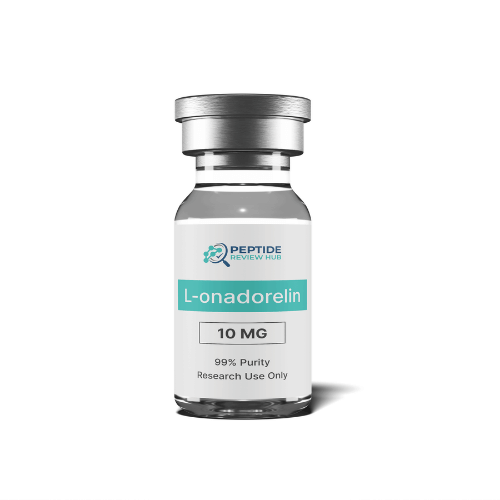
L-onadorelin
L-Onadorelin is an experimental research peptide studied for GnRH receptor signaling, endocrine pathways, peptide–receptor interactions, and reproductive biology research. It is intended strictly for laboratory research and is not for human consumption or medical use.