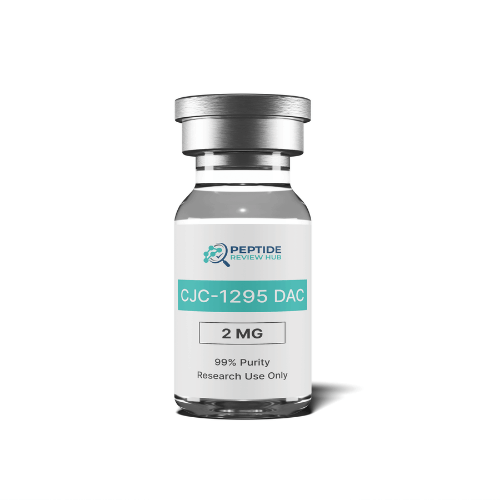
CJC-1295 No DAC, also known as Modified GRF (1-29), is a synthetic growth hormone-releasing hormone (GHRH) analog widely studied in endocrine research, growth hormone signaling, pituitary physiology, peptide-receptor interactions, and somatotropic-axis biology. Researchers investigate CJC-1295 No DAC because of its ability to provide a stable model for examining GHRH receptor activation while retaining a relatively short duration of activity compared to DAC-modified variants.
As interest in growth-hormone pathway research continues to expand, researchers frequently compare CJC-1295 No DAC suppliers based on purity, analytical testing, manufacturing standards, pricing, and supplier transparency.
This CJC-1295 No DAC Vendor Price Comparison Guide helps researchers evaluate suppliers using objective criteria including:
Whether you're searching for the lowest-priced CJC-1295 No DAC supplier, the highest-purity research-grade material, or vendors offering comprehensive laboratory verification, this guide provides a framework for comparing research peptide suppliers.
Explore CJC-1295 No DAC Vendors by Criteria
Most Popular CJC-1295 No DAC Vendors
Compare suppliers frequently selected by endocrinology and peptide researchers.
Highest Reviewed Vendors
Discover peptide suppliers with strong customer satisfaction and positive marketplace reputations.
Lowest Price Vendors
Identify suppliers offering competitive pricing and attractive cost-per-milligram value.
Highest Purity Vendors
Review suppliers providing transparent purity verification and analytical testing.
Best Value Vendors
Compare pricing, documentation quality, testing standards, and customer support.
Fastest Shipping Vendors
Evaluate fulfillment speed, package handling, and shipping reliability.
Newly Listed Vendors
Explore recently added suppliers offering CJC-1295 No DAC research peptides.
What Is CJC-1295 No DAC?
Overview
CJC-1295 No DAC is a synthetic analog of growth hormone-releasing hormone (GHRH) designed to improve peptide stability while maintaining a comparatively short activity profile.
Researchers investigate CJC-1295 No DAC because of its relationship with:
GHRH receptor activity
Growth hormone signaling
Pituitary physiology
Somatotropic-axis regulation
Endocrine communication
IGF-1 pathway research
Hormonal feedback systems
Peptide-receptor interactions
It is widely used as a research tool for studying pulsatile endocrine signaling.
Molecular Characteristics
Peptide Information
Researchers evaluating CJC-1295 No DAC products should carefully review analytical documentation and molecular specifications.
Peptide Name
CJC-1295 No DAC
Alternative Name
Modified GRF (1-29)
Classification
Synthetic GHRH Analog
Research Category
Growth Hormone & Endocrine Research
Molecular Formula
C₁₅₂H₂₅₂N₄₄O₄₂
Molecular Weight
3,367.9 g/mol
CAS Number
863288-34-0
Amino Acid Sequence
Tyr-D-Ala-Asp-Ala-Ile-Phe-Thr-Gln-Ser-Tyr-Arg-Lys-Val-Leu-Ala-Gln-Leu-Ser-Ala-Arg-Lys-Leu-Leu-Gln-Asp-Ile-Leu-Ser-Arg-NH₂
Typical Purity
≥99%
Product Format
White to Off-White Lyophilized Powder
Why Researchers Study CJC-1295 No DAC
CJC-1295 No DAC has generated significant interest because of its value as a model for investigating growth hormone regulatory pathways.
Researchers investigate pathways involving:
Pituitary signaling
GHRH receptor activation
Hormonal communication
Endocrine feedback loops
IGF-1-related signaling
Peptide stability
Its shorter duration of activity makes it particularly useful for studying transient hormone signaling events.
Mechanism of Research Interest
GHRH Receptor Research
One of the primary focuses of CJC-1295 No DAC research involves GHRH receptor activity.
Researchers investigate:
These studies remain central to understanding growth hormone physiology.
Pituitary Function Research
Scientists continue examining pathways involving:
Further investigations remain ongoing.
CJC-1295 No DAC & Growth Hormone Research
Growth Hormone Signaling
One of the most common applications of CJC-1295 No DAC involves studying growth hormone pathways.
Researchers investigate:
Growth hormone release
Signal amplification
Endocrine communication
Receptor responsiveness
Cellular adaptation
This remains a core area of scientific investigation.
Somatotropic Axis Research
Research continues examining pathways involving:
Growth hormone regulation
IGF-1 signaling
Hypothalamic-pituitary communication
Endocrine balance
Hormonal feedback systems
Additional studies continue to expand understanding in this area.
Key Areas of CJC-1295 No DAC Research
IGF-1 Pathway Research
Researchers investigate pathways involving:
Growth-factor signaling
Cellular communication
Endocrine physiology
Hormonal regulation
Metabolic signaling
These remain important areas of study.
Pulsatile Hormone Signaling Research
Because of its shorter activity profile, CJC-1295 No DAC is frequently investigated in studies involving:
This is one of the primary distinctions between No DAC and DAC-modified variants.
Endocrine Feedback Research
Researchers continue studying pathways involving:
Negative-feedback loops
Hormonal communication
Pituitary regulation
Signal adaptation
Endocrine homeostasis
Further investigation remains active.
Receptor-Binding Research
Scientists examine relationships involving:
These studies contribute to broader peptide-development research.
Peptide Stability Research
The modified structure of CJC-1295 No DAC remains an important area of investigation.
Researchers evaluate:
Additional research continues in this field.
Physical Properties
Appearance
White to Off-White Lyophilized Powder
Purity
≥99%
Solubility
Suitable for laboratory reconstitution with compatible aqueous research solutions.
Classification
Synthetic Modified GRF (1-29) Analog
Research Use
Growth Hormone & Endocrine Signaling Research
Storage & Handling
Researchers should follow established peptide laboratory protocols.
Best practices include:
✅ Protect from excessive heat
✅ Minimize moisture exposure
✅ Avoid unnecessary temperature fluctuations
✅ Protect from direct light
✅ Follow validated laboratory reconstitution procedures
✅ Minimize repeated freeze-thaw cycles
Proper storage practices help preserve peptide stability and consistency.
Why Researchers Compare CJC-1295 No DAC Vendors
Research reproducibility depends heavily on peptide quality and manufacturing consistency.
Differences among suppliers may include:
Product purity
Stability verification
Batch consistency
Manufacturing standards
Analytical validation
Storage procedures
Documentation quality
Quality-control systems
Careful supplier selection can improve consistency and reliability across studies.
How We Compare CJC-1295 No DAC Vendors
Third-Party Laboratory Testing
Independent testing remains one of the strongest indicators of peptide quality.
Researchers should prioritize suppliers offering:
Certificate of Analysis (COA)
A quality COA should contain:
Batch number
Testing date
Purity percentage
Identity verification
Analytical methodology
Product Purity
Purity remains one of the most important variables when evaluating research peptides.
Higher-purity materials generally promote improved reproducibility and experimental consistency.
Cost Per Milligram
Comparing vial prices alone may not accurately reflect overall value.
Cost Per Milligram Formula
Product Price ÷ Total Milligrams = Cost Per Milligram
This metric helps standardize supplier comparisons.
Customer Reviews
Customer experiences often provide insight regarding:
Product consistency
Shipping performance
Packaging quality
Customer support
Purchasing experience
Vendor Reputation
Established suppliers often demonstrate:
Transparent quality standards
Reliable testing procedures
Strong customer satisfaction
Consistent inventory availability
Product Quality & Analytical Testing
Why Testing Matters
Research-grade CJC-1295 No DAC products should undergo testing to verify:
Identity
Purity
Stability
Composition
Batch consistency
Common Testing Methods
High-Performance Liquid Chromatography (HPLC)
Used to evaluate purity and identify impurities.
Mass Spectrometry (MS)
Used to verify molecular identity and composition.
Identity Verification Testing
Confirms peptide authenticity.
Stability Testing
Evaluates peptide integrity during storage.
Batch Consistency Testing
Measures reproducibility across manufacturing lots.
Understanding CJC-1295 No DAC Pricing
Several factors influence supplier pricing.
Product Purity
Higher-purity products generally command premium pricing.
Complex Manufacturing
Long-chain synthetic peptides require advanced synthesis and purification techniques.
Analytical Verification
Comprehensive testing improves transparency while increasing production costs.
Research Demand
Growing interest in endocrine and growth-hormone research contributes to demand.
Vendor Reputation
Trusted suppliers often command higher prices due to rigorous quality-assurance practices.
CJC-1295 No DAC Vendor Evaluation Checklist
Quality Verification
✅ Third-party testing available
✅ Certificate of Analysis provided
✅ Identity verification documented
✅ Purity information disclosed
✅ Batch-specific testing available
✅ Stability information available
Vendor Reliability
✅ Positive customer reviews
✅ Transparent company information
✅ Responsive customer support
✅ Reliable inventory availability
Purchasing Experience
✅ Secure checkout process
✅ Shipment tracking available
✅ Clear refund policies
✅ Reliable order fulfillment
Frequently Asked Questions
What is CJC-1295 No DAC?
CJC-1295 No DAC is a synthetic Modified GRF (1-29) peptide designed for research involving growth hormone-releasing hormone receptors and endocrine signaling pathways.
What is CJC-1295 No DAC used for in research?
Researchers investigate CJC-1295 No DAC in studies involving growth hormone secretion, pituitary physiology, GHRH receptor activation, IGF-1 pathways, pulsatile hormone signaling, and endocrine feedback mechanisms.
How is CJC-1295 No DAC different from CJC-1295 with DAC?
The No DAC version does not contain the Drug Affinity Complex (DAC), resulting in a shorter duration of activity that makes it useful for studying transient or pulsatile hormone signaling.
Why compare vendors?
Purity, analytical testing, supplier reliability, and documentation quality can vary considerably among research peptide suppliers.
What should researchers review before purchasing?
Researchers should evaluate:
Final Thoughts
CJC-1295 No DAC remains one of the most widely studied synthetic GHRH analogs because of its usefulness in investigating growth hormone physiology, pituitary signaling, endocrine regulation, receptor-binding dynamics, and IGF-1-related pathways. Its relatively short activity profile makes it particularly valuable for researchers interested in natural hormone-pulse models and transient endocrine signaling.
When comparing CJC-1295 No DAC vendors, researchers should prioritize purity verification, third-party analytical testing, Certificate of Analysis availability, supplier reputation, and overall value rather than focusing exclusively on price. A structured vendor-comparison process can help identify suppliers capable of meeting rigorous research-quality standards.