
The Science of Precision: Quality Assurance & Laboratory Testing in Peptide Research
Discover why Quality Assurance, HPLC, and LC-MS testing are essential in peptide research. Learn how third-party lab analysis verifies purity, prevents assay errors, and ensures reproducible scientific data.
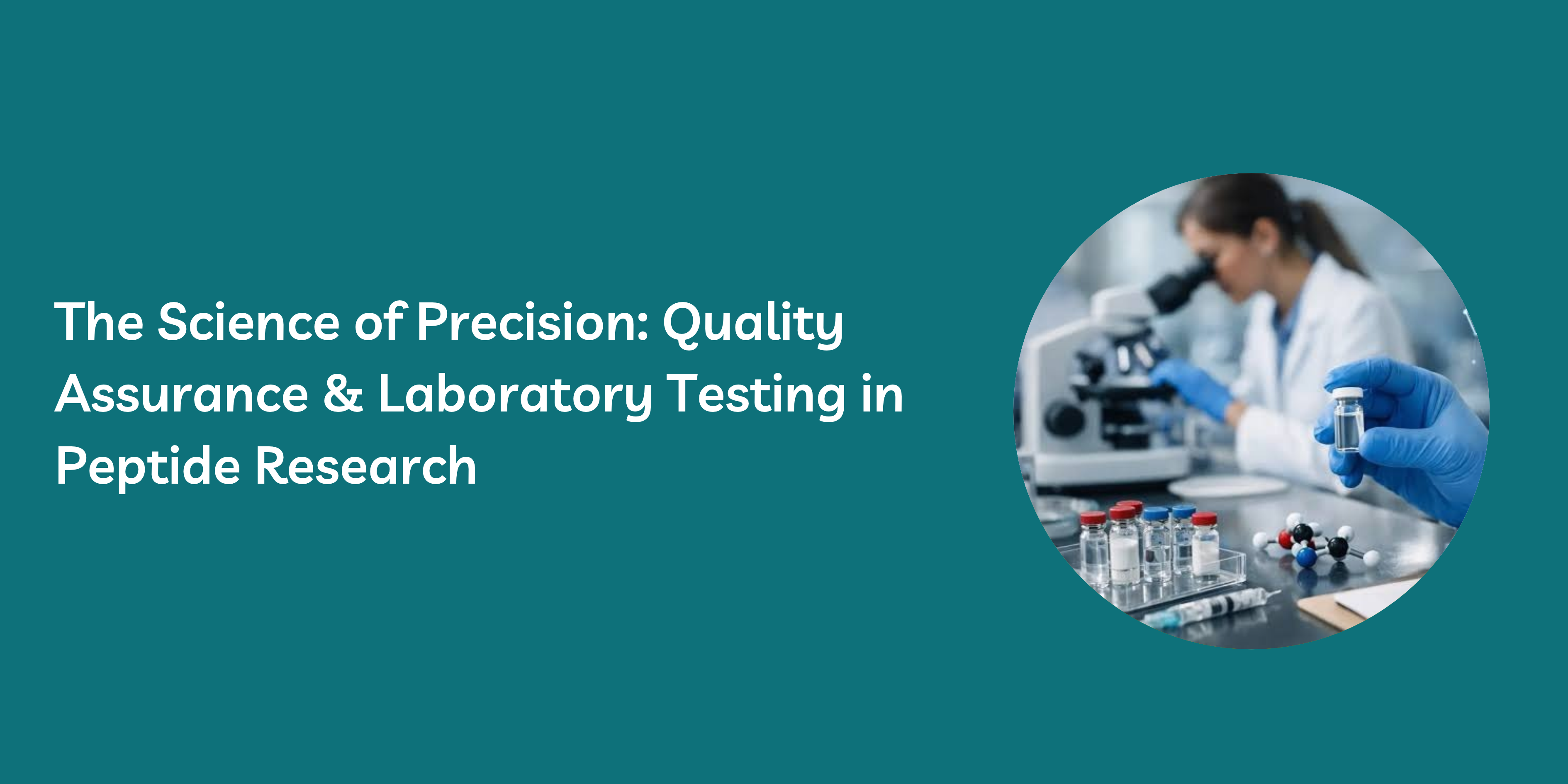
When navigating the rapidly evolving landscape of biochemical research, data reproducibility is everything. Synthetic peptides have become essential tools across molecular biology, pharmacology, and tissue engineering. However, the success of any experiment hinges entirely on a single critical factor: the absolute structural integrity and purity of the research compounds being utilized.
Even tiny variations in sequence length, counter-ion content, or trace degradation can derail months of careful scientific work. This reality makes rigorous quality assurance and analytical validation non-negotiable.
At Peptide Vendor Directory, understanding how analytical laboratories verify custom sequences, evaluate raw material standards, and enforce stringent Quality Control (QC) protocols helps researchers make informed decisions and safeguard their experimental outcomes.
The Foundation of Peptide Quality Assurance
Peptide synthesis is an intricate step-by-step chemical process. As amino acids are coupled sequentially onto a growing chain, side reactions, incomplete couplings, and sequence deletions can occur naturally. Quality Assurance (QA) encompasses the overarching system of checks, balances, standard operating procedures, and facility controls that prevent these chemical discrepancies before a compound ever reaches a lab bench.
A robust QA protocol ensures every batch follows rigid guidelines governed by international analytical frameworks. This regulatory oversight covers instrument calibration, cleanroom environmental monitoring, controlled storage conditions, and detailed documentation trails.
Core Laboratory Testing Methods in Peptide Analysis
To turn quality assurance from a theoretical concept into verifiable scientific proof, dedicated testing laboratories rely on sophisticated analytical instrumentation. Several primary testing methodologies form the backbone of modern peptide characterization.
Analytical Method
Primary Purpose
Key Output / Benchmark
High-Performance Liquid Chromatography (HPLC)
Assesses overall chemical purity by separating target molecules from synthesis byproducts.
Peak area percentage (aiming for or research grade).
Liquid Chromatography-Mass Spectrometry (LC-MS)
Confirms molecular weight and verifies precise amino acid sequence identity.
Mass-to-charge ratio () matches theoretical target weight.
Net Peptide Content Quantitation
Measures actual active peptide mass versus residual moisture and salts (TFA).
Reported as a weight-by-weight percentage ().
Endotoxin & Bioburden Testing
Detecting bacterial contaminants is critical for cellular and in vitro assays.
Expressed in Endotoxin Units per milligram ().
High-Performance Liquid Chromatography (HPLC)
HPLC serves as the analytical workhorse for evaluating purity. Using reversed-phase chromatography (RP-HPLC), liquid samples pass through a specialized C18 column under high pressure. Components separate based on hydrophobic interactions, passing a UV detector (typically set at ). The resulting chromatogram displays distinct peaks: the largest peak represents the target peptide, while smaller surrounding peaks indicate truncated sequences or modified impurities.
Mass Spectrometry (MS)
While HPLC measures purity, it cannot definitively confirm if the isolated peak is the exact intended molecule. That is where mass spectrometry becomes essential. By ionizing the sample and detecting its mass-to-charge ratio, LC-MS verifies the exact molecular weight against theoretical values. This confirms that no amino acid substitutions, unexpected additions, or deletions took place during synthesis.
Beyond Purity: Net Content and Contaminant Screening
A common oversight in biochemical sourcing involves if a vial containing of powder represents of pure, active peptide. Lyophilized peptides naturally contain residual moisture, counterions like trifluoroacetate (TFA) used during cleavage, and trace solvents.
This distinction makes sourcing through Trusted Peptide Vendors US critical when designing precise quantitative protocols, as net peptide content frequently ranges between and of total dry weight. Without adjusting for net peptide content, researchers risk inadvertently under-dosing experimental assays, leading to skewed data and unrepeatable observations.
In addition to salt and moisture analysis, comprehensive laboratory screening tests for biological contaminants:
Endotoxin Testing (LAL Assay): Prevents pyrogenic reactions and non-specific inflammatory responses in sensitive biological systems.
Heavy Metals Screening: Ensures trace catalyst residues from chemical synthesis do not cross toxicity thresholds.
Residual Solvent Analysis: Confirms that organic solvents like dimethylformamide (DMF) or acetonitrile are evaporated below safe residual limits.
Actionable Tips for Evaluating Quality Documentation
Navigating analytical laboratory data can feel overwhelming without a systematic verification approach. Evaluating potential research suppliers using these clear guidelines helps ensure compound reliability:
Verify Independent Third-Party Testing: Always request a Certificate of Analysis (COA) conducted by an independent ISO/IEC 17025 accredited laboratory rather than relying exclusively on in-house vendor reporting.
Examine the Complete Chromatogram: Ensure the provided HPLC report shows the entire baseline along with full axis scales, rather than a cropped view that conceals secondary impurity peaks.
Cross-Check Batch and Lot Numbers: Confirm that the unique batch identifier on the physical vial matches the exact reference number printed on the accompanying LC-MS and HPLC documentation.
Confirm Specificity for Your Application: Select a purity tier aligned with research goals to purity may suffice for initial screening or antibody generation, but quantitative binding studies, cell assays, and structural work demand or purity.
When reviewing educational resources or exploring budget options like Research Peptide Discounts, checking these analytical parameters creates a dependable safeguard against experimental errors.
Conclusion
Quality assurance and laboratory testing are far more than routine administrative steps they form the structural backbone of scientific progress. Utilizing unverified compounds risks generating conflicting data, wasting valuable resources, and compromising experimental integrity.
By demanding third-party validation, prioritizing full LC-MS and HPLC analytical reporting, and calculating accurate dosages based on net peptide content, research teams protect their investments and ensure their scientific discoveries stand on repeatable, rock-solid foundations.
Similar Blog Posts
All articles6/1/2026
BPC-157: The Complete Research Guide
A comprehensive overview of BPC-157's mechanisms, research applications, and reconstitution protocols.
Read Article
10/13/2026
HGH Fragment 176-191: Structure, Properties, and Research Overview
HGH Fragment 176-191 is a peptide studied for its molecular structure and potential role in lipid metabolism. Explore its chemical properties, preclinical research, comparison with AOD-9604, and current scientific evidence, including the limitations of available studies.
Read Article
10/5/2026