
Mindy Kaling Before and After: What She Has Said About Ozempic and Weight Loss
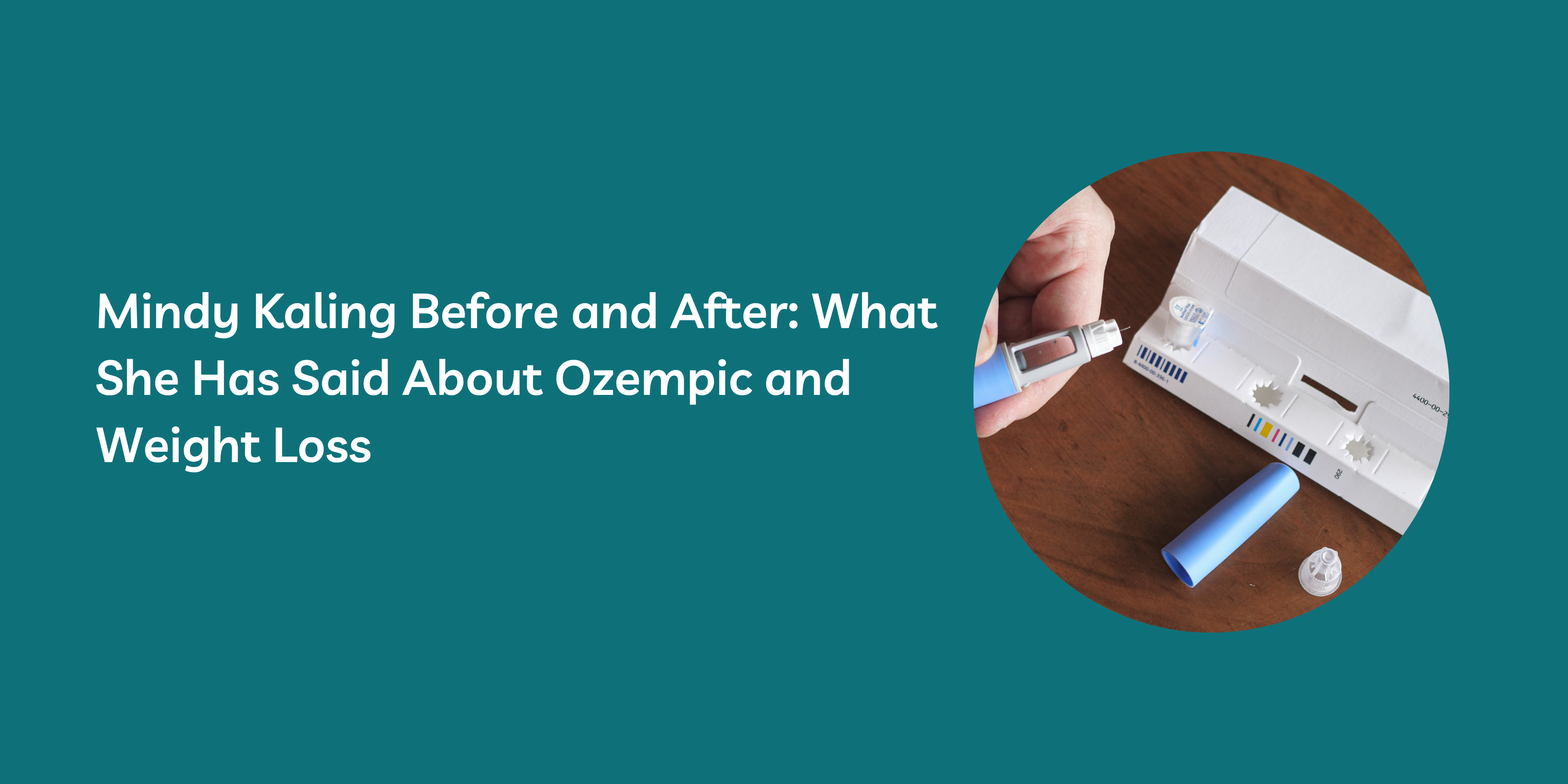
Mindy Kaling’s changing appearance has generated plenty of online discussion, including repeated speculation about whether she used Ozempic or another GLP-1 medication. But there is an important distinction between public speculation and verified information: Kaling has repeatedly said that she did not use weight-loss medication and has attributed her changes to exercise, eating habits, and the demands of raising young children.
That answer has remained remarkably consistent across multiple interviews. Rather than trying to determine what medication a celebrity may or may not be taking from photographs, the more useful question is what the person has actually said publicly—and how much can reasonably be concluded from that information.
Here is a closer look at Kaling’s comments, the timeline of her statements, and why the Ozempic speculation has continued despite her repeated responses.
What Has Mindy Kaling Said About Ozempic?
Kaling has addressed questions about her weight directly on several occasions.
During a 2023 television appearance, she described her changes as gradual and connected them to having children, walking more, and staying active while caring for a toddler. When the subject of Ozempic came up more directly in another interview that year, she rejected the suggestion and said that she exercised and paid attention to what she ate.
She returned to the subject again during a podcast conversation in 2024. Her explanation was substantially the same: exercise, changes in eating habits, and the physical demands of raising two young children.
The consistency is notable. These comments were not limited to a single interview or one carefully worded statement. She has returned to essentially the same explanation over several years and different media appearances.
More recent coverage has continued to discuss Kaling's relationship with weight, health, and public commentary about her appearance.
Why the Timeline Matters
One reason the medication speculation is difficult to evaluate is that photographs cannot establish when, why, or how someone's body changed.
Kaling became a mother for the first time in 2017 and welcomed her second child in 2020. She has subsequently described becoming more active, including running and Pilates, while also following a more structured approach to eating.
Public appearances over the following years showed changes that attracted increasing attention, particularly around 2023 and afterward.
However, photographs cannot establish a medication timeline. They cannot tell us whether someone has taken a prescription, changed their diet, increased physical activity, experienced postpartum changes, or simply changed over time.
That is why claims such as "her photos prove she used Ozempic" go beyond what the available evidence can establish.
A Gradual Change Is Not Proof of One Explanation
It can be tempting to compare a celebrity's appearance at different points in time and draw a straight line between the two images.
Real-life changes are rarely that simple.
Weight can be influenced by many factors, including age, activity, eating patterns, sleep, stress, pregnancy and postpartum changes, medical conditions, medications, genetics, and numerous other circumstances.
Even clinical weight-loss studies cannot be used to reverse-engineer an individual's treatment history from photographs.
So while Kaling's timeline can provide context, it cannot prove or disprove private medical treatment.
Her Explanation Has Remained Consistent
Perhaps the strongest publicly available evidence is not a photograph but Kaling's own repeated statements.
Her explanation has generally included several themes:
Regular physical activity
Running and Pilates
Greater attention to eating habits
Walking and everyday movement
The physical demands of parenting young children
A structured weekday eating routine with some flexibility on weekends
In other words, Kaling has not presented her experience as a mysterious transformation.
She has repeatedly described it as the result of ordinary lifestyle factors accumulating over time.
That does not allow outsiders to independently verify every part of her private life. It does, however, mean that there is no responsible basis for rewriting her explanation as though an unconfirmed medication use were established fact.
What About the "Before and After" Photos?
Before-and-after celebrity coverage can create the impression that two photographs tell the complete story.
They don't.
A photograph captures one moment. Lighting, clothing, posing, camera angle, styling, facial expression, and other factors can all change how someone looks.
More importantly, photographs provide no reliable information about a person's medical history.
This is particularly relevant when discussing prescription medications. A person could use a medication without discussing it publicly, just as a person could make significant lifestyle changes without those changes being visible to an audience.
For that reason, photographs should not be treated as medical evidence.
Why Did Ozempic Speculation Continue?
The continued speculation surrounding Kaling reflects a broader celebrity-media phenomenon.
GLP-1 medications have become a major topic in popular culture, and significant changes in a celebrity's appearance are often immediately connected to them.
There is also a strong appetite for a simple explanation.
"She changed her routine over several years" is less dramatic than "she secretly took a popular medication." The latter makes a more attention-grabbing headline, even when there is no evidence supporting it.
Social media can intensify this effect because users can compare photographs from different years within seconds.
Celebrity Bodies Become Public Conversation
Kaling's experience also highlights how quickly a public figure's appearance can become a subject of collective analysis.
People often discuss celebrities as though their bodies are evidence that needs to be explained. That can create an unrealistic expectation that someone must provide a detailed account of their private health decisions simply because their appearance has changed.
But public visibility does not eliminate personal privacy.
Kaling can discuss her health if she chooses, and she can also decline to provide details she considers private.
Does Her Story Prove That She Did Not Use Medication?
No—and this distinction matters.
The responsible conclusion is not that outsiders can prove Kaling never used a GLP-1 medication.
It is that she has publicly denied using medication for her weight changes, and there is no verified evidence presented here that establishes otherwise.
Those are two different statements.
It is reasonable to acknowledge that celebrities can sometimes provide incomplete or inaccurate accounts of their private lives. It is not reasonable to turn that general possibility into a specific accusation without evidence.
The fairest approach is to take her public statements at face value unless credible information emerges that changes the picture.
What Her Comments Say About Weight-Loss Expectations
There is another important lesson here: celebrity experiences should not become templates for everyone else.
Kaling has access to resources, professional opportunities, childcare, work flexibility, and other circumstances that may differ considerably from those of an average person.
Even if her account is completely accurate, another person's experience may look entirely different.
Some people make lifestyle changes and see major health improvements. Others struggle despite sustained effort. Some people may receive medical treatment when appropriate. Others may have medical or personal circumstances that make particular approaches unsuitable.
There is no single "correct" story.
Medication Is Not a Moral Shortcut
The discussion around celebrity GLP-1 use sometimes turns into a debate over whether medication represents an easy way out.
That framing is misleading.
When prescribed appropriately, medications are medical treatments—not moral achievements or failures. Likewise, choosing lifestyle changes does not make someone more disciplined or virtuous than someone receiving medical treatment.
The important question is whether a particular approach is appropriate for an individual's health and circumstances, not whether it produces the most impressive celebrity narrative.
What We Can Actually Learn From Kaling's Public Comments
The most useful takeaway is not a supposed secret behind her appearance.
It is the importance of separating what is known, what has been stated, and what is merely speculation.
What Is Publicly Stated?
Kaling has repeatedly attributed her changes to exercise, eating habits, walking, and the demands of parenting.
What Is Not Independently Established?
Her private medical history cannot be determined from interviews or photographs alone.
What Should Readers Avoid?
Readers should be cautious about social-media posts or headlines that present speculation about prescription medication as confirmed fact.
A Better Way to Read Celebrity Weight-Loss Stories
When you encounter another celebrity story involving Ozempic or another GLP-1 medication, ask a few simple questions:
Did the Celebrity Actually Say This?
Look for a direct statement rather than relying on anonymous claims or social-media speculation.
Is There a Credible Source?
A photograph, anonymous post, or online comment is not equivalent to a documented interview.
Is the Claim Being Presented as Fact or Speculation?
Headlines can blur that distinction.
Could Multiple Explanations Exist?
Changes in appearance rarely have one obvious cause.
Does the Story Encourage Unhealthy Comparison?
A celebrity's experience is not a reliable benchmark for someone else's health or appearance.
These questions help separate genuine reporting from internet speculation.
The Bigger Conversation Around Mindy Kaling
The fascination with Kaling's appearance says as much about celebrity culture as it does about her.
Public figures—particularly women—often face intense scrutiny when their bodies change in either direction. Instead of focusing on their work, creativity, or accomplishments, coverage can quickly shift toward explaining their appearance.
Kaling's case is particularly interesting because she has repeatedly attempted to provide her own explanation, yet the speculation has continued.
That raises a broader question: when someone clearly answers a question about their own body and health, why do audiences sometimes assume the answer must be hiding something?
There may never be a satisfying answer to that question. But it is worth remembering that a celebrity's body does not become public property simply because millions of people recognize their face.
The Bottom Line
So, did Mindy Kaling use Ozempic?
There is no verified evidence in the information discussed here establishing that she did. Kaling has repeatedly said that she did not use medication for her weight changes and has instead credited exercise, eating habits, walking, and the physical demands of motherhood.
Her statements have been broadly consistent over several years.
At the same time, nobody outside Kaling and her medical team can know every detail of her private health history. The responsible position is therefore neither to declare that a medication was secretly involved nor to claim that outsiders can prove it was not.
The bigger lesson is simple: celebrity photographs are not medical records.
Kaling's story is best understood through what she has actually said, rather than through assumptions based on appearance. And whether someone changes their health habits, uses medically appropriate treatment, does both, or chooses neither, their experience should not become a measuring stick for anyone else's body or health.
Sources
Wilding JPH et al. Once-Weekly Semaglutide in Adults with Overweight or Obesity. New England Journal of Medicine. 2021.
Jastreboff AM et al. Tirzepatide Once Weekly for the Treatment of Obesity. New England Journal of Medicine. 2022.
Pi-Sunyer X et al. Cardiovascular Effects of Intensive Lifestyle Intervention in Type 2 Diabetes (Look AHEAD). New England Journal of Medicine. 2013.
Wing RR, Phelan S. Long-Term Weight Loss Maintenance. American Journal of Clinical Nutrition. 2005.
Westerterp KR et al. Physical Activity Energy Expenditure of Parents with Young Children. Pediatrics. 2022.
Garvey WT et al. American Association of Clinical Endocrinologists Comprehensive Clinical Practice Guidelines for Medical Care of Patients with Obesity. Endocrine Practice. 2016.
Pearl RL et al. Weight Bias and Stigma: Public Health Implications and Structural Solutions. Obesity. 2023.
Halpern J et al. Gender Asymmetry in Celebrity Health Coverage: A Content Analysis. Journal of Health Communication. 2024.
Rubino D et al. Effect of Continued Weekly Subcutaneous Semaglutide vs Placebo on Weight Loss Maintenance in Adults With Overweight or Obesity: The STEP 4 Randomized Clinical Trial. JAMA. 2021.
Today. Mindy Kaling interview, September 2023.
Vogue. Mindy Kaling profile, 2025.
Aronne LJ et al. Continued Treatment With Tirzepatide for Maintenance of Weight Reduction in Adults With Obesity: The SURMOUNT-4 Randomized Clinical Trial. JAMA. 2024.
Similar Blog Posts
All articles
9/7/2026
How to Evaluate Peptide Vendors and Avoid Common Red Flags
Read Article
9/7/2026
How to Choose a Reliable Research Peptide Vendor: A Complete Guide to COAs, Lab Testing, and Transparency
Read Article
9/1/2026