
Best BPC-157 Peptide Capsules (2026): Evidence Review, Benefits, Safety, and Research Guide
BPC-157 has gained significant attention in the peptide research community because of its potential connection to tissue repair, digestive health, recovery, and cellular protection. Available in different forms, oral capsules have become especially popular among people looking for a convenient option without injections.
However, understanding what BPC-157 can realistically do requires separating scientific evidence from marketing claims. While laboratory and animal studies have reported promising results, human research remains limited.
The peptide has been investigated for areas such as tendon recovery, gastrointestinal protection, inflammation, and nervous system effects. Yet, most available studies come from animal models, and there are still unanswered questions about oral absorption, long-term safety, and effectiveness in humans.
This guide examines what BPC-157 is, how it works, what current research shows, and what consumers should know before considering peptide capsules.
What Is BPC-157?
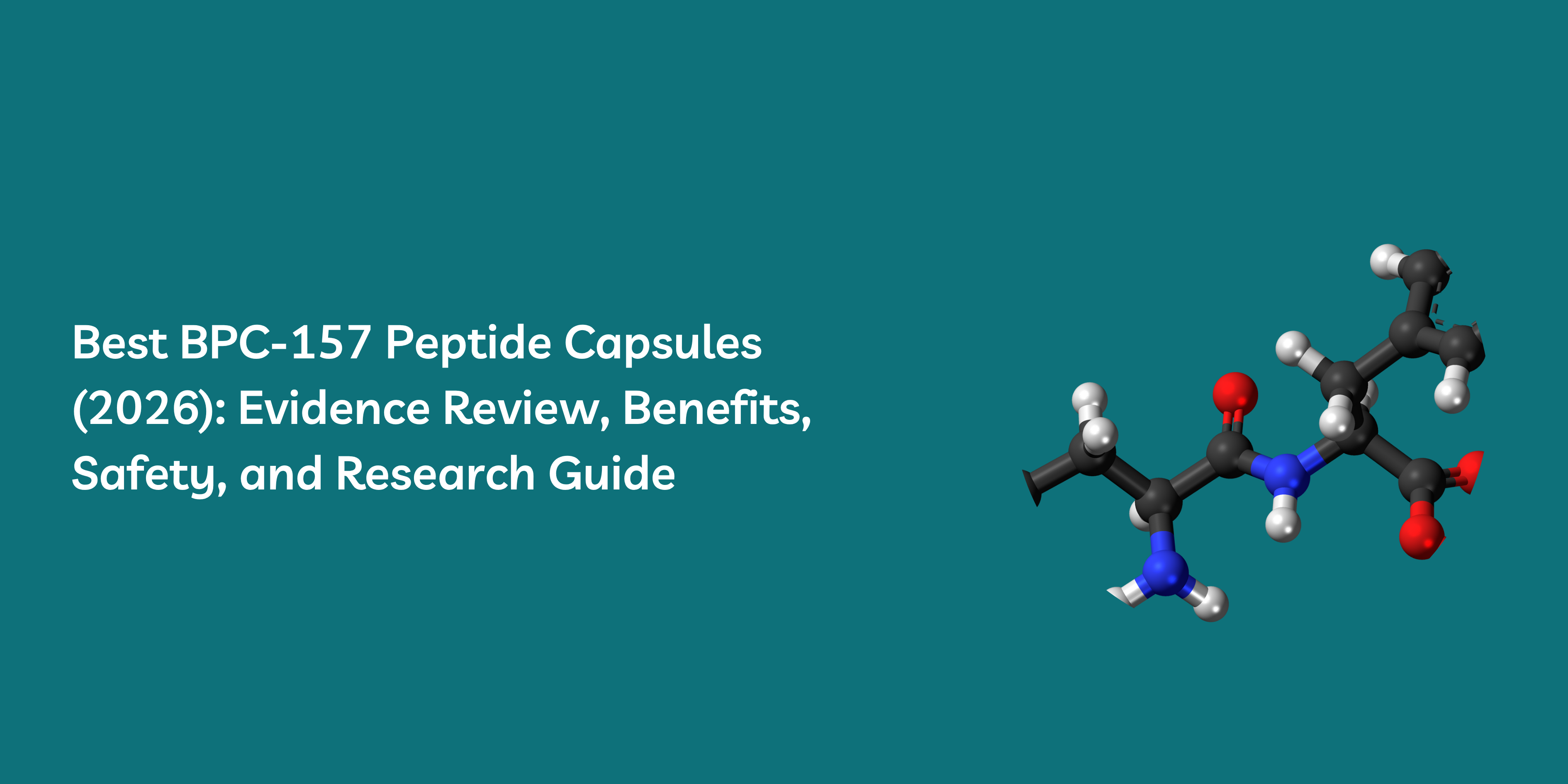
BPC-157, also known as Body Protection Compound-157, is a synthetic peptide made up of 15 amino acids.
Its sequence is:
Gly-Glu-Pro-Pro-Pro-Gly-Lys-Pro-Ala-Asp-Asp-Ala-Gly-Leu-Val
The peptide was originally derived from a protective protein sequence found in human gastric juice. Research surrounding BPC-157 has primarily been conducted by scientists at the University of Zagreb, including Croatian researcher Predrag Sikiric and his collaborators.
Over approximately three decades, studies have explored BPC-157 in animal models involving:
Tendon and ligament injuries
Stomach ulcers
Intestinal inflammation
Bone healing
Brain injury models
Organ protection
The research is published in scientific journals, but the majority of evidence remains preclinical. That means results observed in animals have not yet been confirmed through large human clinical trials.
What Does the Research Actually Show?
When evaluating BPC-157, the quality of evidence matters.
Research Area
Current Evidence
Research Outcome
Human Confidence
Gut protection and colitis
Animal studies
Positive findings in rodents
Low
Tendon and ligament repair
Animal models
Improved healing markers
Very Low
Bone recovery
Animal studies
Positive biological effects
Very Low
Brain protection
Animal research
Neuroprotective signals observed
Very Low
Oral absorption
Pharmacology studies
Uncertain systemic availability
Very Low
Safety profile
Animal toxicology
No major toxicity signals
Low
As of 2026, there are no completed Phase II or Phase III human randomized controlled trials proving BPC-157 as an effective treatment for any medical condition.
A registered clinical trial exploring inflammatory bowel disease has been reported, but published results are not currently available in peer-reviewed literature.
How Does BPC-157 Work?
Researchers have proposed several possible biological pathways through which BPC-157 may influence healing and cellular activity.
VEGFR2 and Nitric Oxide Signaling
One of the most studied mechanisms involves vascular endothelial growth factor receptor 2 (VEGFR2) and nitric oxide pathways.
VEGFR2 plays an important role in angiogenesis, the formation of new blood vessels. Since damaged tissues require blood supply for repair, researchers believe this pathway may contribute to the improved healing responses observed in animal experiments.
In rodent tendon injury models, BPC-157 doses around 10 mcg/kg delivered through injection were associated with improvements in tendon repair markers within approximately two weeks.
Some intestinal injury models also showed positive effects with oral administration.
However, these findings do not prove that humans taking capsules experience the same results.
A peptide affecting VEGFR2 in laboratory testing or improving healing in rodents does not automatically mean it reaches human tissues in an active form after oral consumption.
Effects on Dopamine and the Nervous System
Animal research has also investigated BPC-157’s interaction with dopamine signaling.
Studies suggest the peptide may influence dopamine receptors and reduce certain chemically induced neurological changes in rodents.
This has led to claims involving:
Mood support
Cognitive effects
Neurological protection
However, the connection between animal neurotransmitter changes and human mental health outcomes has not been established.
Do BPC-157 Capsules Actually Absorb?
One of the biggest questions surrounding oral BPC-157 is whether enough of the peptide reaches the bloodstream to create systemic effects.
Unlike traditional medications, peptides are fragile biological molecules. When swallowed, they encounter:
Stomach acid with a fasting pH around 1.5–2.0
Pepsin digestion
Intestinal enzymes such as trypsin and chymotrypsin
These processes can break peptide chains apart before absorption occurs.
BPC-157 contains several proline amino acids, which may make it more resistant to certain digestive enzymes compared with other peptides.
However, resistance to breakdown is different from proven absorption.
Currently, there is no published human pharmacokinetic study showing blood concentrations after taking oral BPC-157 capsules.
Why Oral BPC-157 May Still Have Potential
Although systemic absorption remains uncertain, researchers have suggested one possible advantage of capsules: local gastrointestinal activity.
If BPC-157 interacts directly with cells inside the digestive tract before being degraded, it may not need high bloodstream levels to influence gut-related processes.
Animal studies involving:
Colitis
Gastric injury
Intestinal inflammation
provide some support for this idea.
The mistake is assuming this same mechanism automatically applies to:
Tendon healing
Muscle recovery
Brain effects
Whole-body repair
Those claims require human studies that currently do not exist.
BPC-157 Capsule Stability and Storage
Like other peptides, BPC-157 can gradually degrade if stored improperly.
Hydrolysis
Hydrolysis occurs when water breaks peptide bonds apart.
Factors that accelerate degradation include:
Heat
Moisture
Extreme pH conditions
Keeping capsules sealed and stored in a cool, dry environment helps reduce degradation.
Oxidation
BPC-157 does not contain cysteine, which is one of the amino acids most vulnerable to oxidation.
However, peptide structures can still experience slow chemical changes from:
Oxygen exposure
Light
Heat
Using protective packaging and avoiding direct sunlight can help maintain stability.
Signs a Peptide Product May Have Degraded
Possible warning signs include:
Moisture-related clumping
Unexpected color changes
Unusual smell
Damaged packaging
A degraded peptide may no longer maintain its original structure or biological activity.
BPC-157 Capsules vs Injection: Which Is Better?
Option
Potential Benefit
Main Limitation
Oral capsules
Convenient and needle-free
Human absorption is uncertain
Injectable BPC-157
Avoids digestive breakdown
Still lacks strong human trials
Physical therapy
Strong evidence for injury recovery
Requires consistency
Collagen supplements
Some human research available
Different biological pathway
Injection may theoretically improve delivery, but it does not solve the biggest limitation: the lack of human clinical evidence.
How to Evaluate a BPC-157 Product
Because peptide products vary widely in quality, documentation is important.
Look for HPLC Testing
A reliable certificate of analysis should include:
Purity testing results
Testing method
Laboratory information
Purity claims without supporting data should be viewed cautiously.
Confirm Mass Spectrometry Testing
Mass spectrometry helps verify:
Correct molecular weight
Correct peptide identity
A COA listing only a purity percentage is incomplete.
Check Endotoxin Testing
Research-grade peptide documentation should include endotoxin testing results, especially for products intended for laboratory use.
Verify Lot Information
A trustworthy COA should match:
Batch number
Product label
Testing records
Generic certificates without traceable lot information are a warning sign.
Understanding BPC-157 Dosage Claims
Online discussions commonly mention capsule amounts ranging from 250 mcg to 750 mcg daily.
However, these numbers are mainly based on animal research comparisons and community practices, not approved human dosing studies.
Example animal-equivalent calculations:
Body Weight
Lower Animal Equivalent
Higher Animal Equivalent
60 kg
Around 120 mcg/day
Around 600 mcg/day
75 kg
Around 150 mcg/day
Around 750 mcg/day
90 kg
Around 180 mcg/day
Around 900 mcg/day
These calculations should not be considered medical recommendations because human dose-finding studies have not been completed.
Regulatory Status in the United States
BPC-157 is not approved by the FDA for any medical condition.
It is not classified as:
An approved medication
A dietary supplement ingredient
A food product
In the United States, it is generally considered an experimental research compound.
The FDA has not included BPC-157 among substances approved for use by traditional compounding pharmacies or outsourcing facilities.
Regulations may vary between countries, and users should understand the legal status in their location.
Final Verdict: Are BPC-157 Capsules Worth Considering?
BPC-157 is one of the most scientifically interesting experimental peptides currently being researched.
The available evidence shows:
Promising animal research
Potential effects on tissue repair pathways
Interesting gastrointestinal findings
Possible neurological activity
But current research does not prove:
Reliable human benefits
Effective oral absorption
Long-term safety
Approved medical applications
For now, BPC-157 capsules remain an experimental option rather than a proven therapy. Anyone researching this peptide should focus on evidence quality, product transparency, and realistic expectations rather than relying only on promotional claims.
Sources
Sikiric P, Seiwerth S, Rucman R, et al. "Focus on Ulcerative Colitis: Stable Gastric Pentadecapeptide BPC 157." Current Medicinal Chemistry. 2012;19(1):126-132. PubMed indexed.
Sikiric P, Seiwerth S, Rucman R, et al. "Stable gastric pentadecapeptide BPC 157: novel therapy in gastrointestinal tract." Current Pharmaceutical Design. 2011;17(16):1612-1632.
Chang CH, Tsai WC, Lin MS, Hsu YH, Pang JH. "The promoting effect of pentadecapeptide BPC 157 on tendon healing involves tendon outgrowth, cell survival, and cell migration." Journal of Applied Physiology. 2011;110(3):774-780.
Sikiric P, Seiwerth S, Rucman R, et al. "Toxicity by NSAIDs. Counteraction by stable gastric pentadecapeptide BPC 157." Current Pharmaceutical Design. 2013;19(1):76-83.
Gwyer D, Wragg NM, Wilson SL. "Gastric pentadecapeptide body protection compound BPC 157 and its role in accelerating musculoskeletal soft tissue healing." Cell and Tissue Research. 2019;377(2):153-159.
US Food and Drug Administration. "FDA updates on bulk drug substances nominated for use in compounding." FDA.gov, updated communications 2023. (BPC-157 not included on 503A/503B approved lists.)
Sikiric P, et al. "Brain-gut Axis and Pentadecapeptide BPC 157: Theoretical and Practical Implications." Current Neuropharmacology. 2016;14(8):857-865.
United States Pharmacopeia (USP). General Chapter 85: Bacterial Endotoxins Test. USP-NF. (Reference standard for endotoxin limits.)
Sikiric P, Seiwerth S, Rucman R, et al. "Stress in gastrointestinal tract and stable gastric pentadecapeptide BPC 157." Current Pharmaceutical Design. 2017;23(27):4012-4028.
Vanhoof G, Goossens F, De Meester I, Hendriks D, Scharpe S. "Proline motifs in peptides and their biological processing." FASEB Journal. 1995;9(9):736-744. (Peer-reviewed review of proline residues and protease resistance in peptide sequences.)
Similar Blog Posts
All articles
9/7/2026
How to Evaluate Peptide Vendors and Avoid Common Red Flags
Read Article
9/7/2026
How to Choose a Reliable Research Peptide Vendor: A Complete Guide to COAs, Lab Testing, and Transparency
Read Article
9/1/2026