
Research Use Only. This compound is not intended for human consumption or therapeutic use.
Where to Buy Glow Blend: Vendor Comparison & Research Info
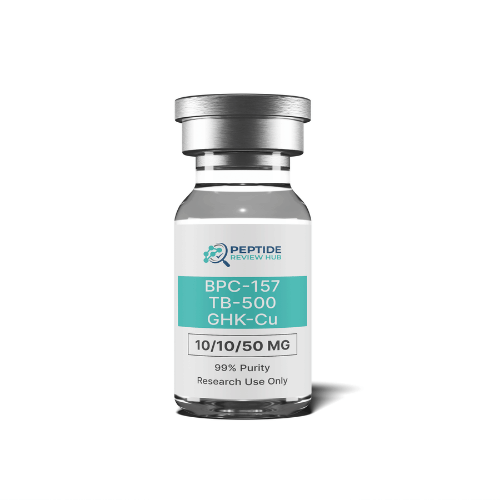
BPC-157 + TB-500 + GHK-Cu 70mg Blend is a multi-peptide research formulation combining three compounds studied for their roles in cellular signaling, vascular biology, inflammation, and extracellular matrix research. With 10mg BPC-157, 10mg TB-500, and 50mg GHK-Cu in a lyophilized format, it provides a convenient model for controlled laboratory investigations into tissue remodeling and regenerative pathways.
What is Glow Blend?
BPC-157 + TB-500 (Thymosin Beta-4) + GHK-Cu 70mg Blend
BPC-157, TB-500 (Thymosin Beta-4), and GHK-Cu are three research peptides investigated across areas including tissue biology, cellular signaling, extracellular matrix regulation, and inflammatory pathways. Combining these compounds into a single 70mg lyophilized blend provides researchers with a convenient formulation for studying multiple biological mechanisms within controlled laboratory models.
The blend contains 10mg BPC-157, 10mg TB-500, and 50mg GHK-Cu. Each component has a distinct biochemical profile: BPC-157 has been investigated in vascular and tissue-response models, TB-500 is associated with actin-related cellular migration pathways, and GHK-Cu is studied for its relationship with collagen production, extracellular matrix regulation, and copper-dependent cellular processes.
BPC-157: Research Profile
BPC-157 is a synthetic pentadecapeptide consisting of 15 amino acids. It has been investigated primarily in preclinical research involving tissue response, vascular signaling, inflammatory pathways, and cellular repair mechanisms.
Research has examined BPC-157's interaction with signaling pathways including VEGF, nitric oxide, and ERK1/2, which are involved in endothelial activity, cellular proliferation, and tissue remodeling. These properties make it an area of interest for researchers studying cellular responses to injury and physiological stress.
BPC-157 has also been evaluated for its effects on inflammatory mediators and vascular function in experimental models. Its biochemical stability and defined peptide sequence make it suitable for controlled laboratory investigation.
TB-500 (Thymosin Beta-4): Research Profile
TB-500 is commonly described as a synthetic fragment related to Thymosin Beta-4, a naturally occurring peptide involved in cellular processes associated with actin regulation and cell movement.
A primary research interest surrounding TB-500 involves its interaction with G-actin, an important component of the cellular cytoskeleton. Actin dynamics play a central role in cell migration, structural organization, and tissue remodeling.
Preclinical research has also examined Thymosin Beta-4-related pathways involving cell migration, angiogenesis, ERK/MAPK signaling, and inflammatory regulation. These mechanisms provide useful models for investigating how cellular movement and vascular responses contribute to tissue remodeling.
GHK-Cu: Research Profile
GHK-Cu is a naturally occurring copper-peptide complex consisting of glycyl-L-histidyl-L-lysine (GHK) bound to copper ions. It is widely studied in research involving extracellular matrix biology, collagen synthesis, cellular signaling, and tissue structure.
The GHK peptide has a strong affinity for copper, allowing the complex to participate in copper-dependent biological processes. Copper is an important cofactor for enzymes involved in collagen cross-linking, antioxidant defense, and cellular energy metabolism.
Research involving GHK-Cu has investigated its relationship with collagen production, glycosaminoglycan synthesis, metalloproteinase regulation, and extracellular matrix remodeling. These properties make it particularly relevant to laboratory studies focused on connective-tissue and skin biology.
Combined Research Profile
The three components provide distinct areas of investigation within a single formulation:
BPC-157: vascular signaling, inflammatory pathways, and cellular-response research
TB-500: actin dynamics, cell migration, and angiogenesis-related research
GHK-Cu: collagen synthesis, copper-dependent processes, and extracellular matrix regulation
Because these peptides interact with different biological pathways, the combination can be used as a research model for examining how multiple signaling mechanisms influence tissue biology simultaneously. Any proposed interaction or synergy between the components should be established experimentally rather than assumed from their individual properties.
Inflammatory Pathway Research
Inflammation is a complex biological response involving cytokines, immune cells, vascular signaling, and extracellular matrix activity. Each component of this blend has been investigated in different aspects of inflammatory biology.
BPC-157 research has explored changes in inflammatory mediators and nitric-oxide-associated signaling. Thymosin Beta-4-related research has examined pathways involving NF-κB, macrophage behavior, and inflammatory cytokines. GHK-Cu has also been investigated for its effects on inflammatory signaling and tissue remodeling.
Together, these mechanisms provide a research framework for examining inflammatory responses across different cellular and molecular pathways.
Tissue Remodeling and Cellular Research
Tissue remodeling involves coordinated activity from fibroblasts, endothelial cells, extracellular matrix proteins, and other cell populations. BPC-157, TB-500, and GHK-Cu have each been studied in connection with different components of this process.
BPC-157 research focuses on vascular and cellular signaling, while TB-500-related studies examine cell migration and cytoskeletal dynamics. GHK-Cu research emphasizes collagen formation and extracellular matrix organization.
The combined formulation therefore offers researchers an opportunity to investigate several interconnected aspects of tissue biology within controlled experimental systems.
Angiogenesis Research
Angiogenesis—the formation of new blood vessels—is an important area of research in tissue biology and regeneration.
BPC-157 has been investigated in relation to VEGF-associated and nitric-oxide signaling, while Thymosin Beta-4-related research has explored endothelial cell migration and vascular development. These pathways provide useful experimental models for studying vascular responses under different biological conditions.
GHK-Cu may also be relevant to vascular research because copper participates in several enzymes and cellular processes involved in tissue and vascular biology.
Extracellular Matrix and Collagen Research
The extracellular matrix provides structural support for tissues and is continuously modified through collagen synthesis and matrix-degrading enzymes.
GHK-Cu is particularly relevant to this research area because studies have examined its effects on collagen synthesis, glycosaminoglycans, proteoglycans, and matrix metalloproteinase regulation.
BPC-157 and TB-500-related research can complement this area by providing additional models for investigating vascular responses and cellular migration during matrix remodeling.
Research Considerations
This formulation is intended for laboratory research and analytical investigation. Findings from cell or animal studies should not automatically be interpreted as evidence of equivalent effects in humans. The individual components may also differ in sequence, structure, purity, and analytical characteristics depending on the material source.
For reproducible research, investigators should document batch information, analytical testing, storage conditions, experimental parameters, and appropriate controls.
Summary
BPC-157 + TB-500 (Thymosin Beta-4) + GHK-Cu 70mg combines three research peptides with distinct biochemical profiles. BPC-157 is investigated in vascular and inflammatory signaling, TB-500/Thymosin Beta-4-related research focuses on actin dynamics and cellular migration, while GHK-Cu is studied for copper-dependent processes, collagen synthesis, and extracellular matrix regulation.
The resulting formulation provides a multi-pathway research model for studying cellular signaling, vascular biology, inflammation, tissue remodeling, and extracellular matrix processes under controlled laboratory conditions.
Feature Highlights
Three-Peptide Formulation: Contains BPC-157, TB-500, and GHK-Cu in one 70mg blend.
Defined Composition: 10mg BPC-157, 10mg TB-500, and 50mg GHK-Cu per vial.
Multi-Pathway Research: Supports investigation of vascular, inflammatory, cellular-migration, and matrix-related pathways.
Lyophilized Format: Freeze-dried presentation designed for peptide stability during appropriate laboratory storage.
Research-Oriented: Intended for controlled laboratory, analytical, and preclinical research applications.
Analytical Documentation: Batch-specific testing and quality documentation can support research reproducibility where available.
Where to Buy Glow Blend Online
| Action | ||||||
|---|---|---|---|---|---|---|
1 |  Peptide Hubs Verified | 9.0/10 Editorial Rating | $130.00 70mg vial | $1.86/mg | In Stock | Visit Site |
2 | 7.0/10 Editorial Rating | $169.99 10mg vial | $17.00/mg | In Stock | Visit Site | |
3 | 6.9/10 Editorial Rating | $65.00 70mg vial | $0.93/mg | In Stock | Visit Site | |
4 |  Pure Peptide Labs Verified | 5.0/10 Editorial Rating | $109.95 10mg vial | $11.00/mg | In Stock | Visit Site |
5 | 4.0/10 Editorial Rating | $222.95 70mg vial | $3.19/mg | In Stock | Visit Site | |
6 | N/A/10 Editorial Rating | $89.95 70mg vial | $1.29/mg | In Stock | Visit Site | |
7 | N/A/10 Editorial Rating | $129.00 10mg vial | $12.90/mg | In Stock | Visit Site | |
8 | N/A/10 Editorial Rating | $99.00 10mg vial | $9.90/mg | In Stock | Visit Site | |
9 | N/A/10 Editorial Rating | $84.00 500mg vial | $0.17/mg | In Stock | Visit Site | |
10 | N/A/10 Editorial Rating | $130.00 10mg vial | $13.00/mg | In Stock | Visit Site | |
11 | N/A/10 Editorial Rating | $119.99 10mg vial | $12.00/mg | In Stock | Visit Site | |
12 | N/A/10 Editorial Rating | $358.00 10mg vial | $35.80/mg | In Stock | Visit Site | |
13 | N/A/10 Editorial Rating | $88.00 70mg vial | $1.26/mg | In Stock | Visit Site | |
14 | N/A/10 Editorial Rating | $75.00 10mg vial | $7.50/mg | In Stock | Visit Site | |
15 | N/A/10 Editorial Rating | $125.00 70mg vial | $1.79/mg | In Stock | Visit Site | |
16 | N/A/10 Editorial Rating | $110.00 70mg vial | $1.57/mg | In Stock | Visit Site | |
17 | N/A/10 Editorial Rating | $129.00 70mg vial | $1.84/mg | In Stock | Visit Site |














Top-Ranked Vendor
COA Transparency
Score: 8/10
Testing Documentation & Verification
Peptide Hubs markets itself as a supplier of research peptides and related laboratory compounds. The company emphasizes product quality, purity standards, and analytical testing procedures designed to support research applications.
Product information is generally organized and includes technical details intended to help customers evaluate available compounds. The company promotes quality-control measures and manufacturing consistency across its portfolio.
While transparency appears solid, wider availability of batch-specific Certificates of Analysis (COAs), third-party laboratory testing reports, and independent verification documentation would further strengthen buyer confidence.
Assessment
Peptide Hubs demonstrates a clear commitment to quality standards, though expanded public testing documentation would improve overall transparency.
Reputation
Score: 8/10
Customer Feedback & Online Presence
Peptide Hubs maintains a professional online presence focused on research products and customer service. The company appears positioned toward researchers and buyers seeking access to popular peptide compounds and specialty research materials.
Its product presentation, organization, and focus on customer support contribute positively to credibility. The supplier has developed a growing presence within the research-compound marketplace.
Independent review volume appears moderate, and prospective buyers may benefit from conducting routine due diligence before large purchases.
Assessment
A professional business presentation and research-focused approach support a generally favorable reputation.
Pricing
Score: 9/10
Product Value & Cost Competitiveness
Pricing is one of Peptide Hubs' stronger competitive advantages. The company appears to offer competitive rates across a broad selection of research compounds.
Volume discounts, wholesale opportunities, and bundled purchasing options help improve value for repeat buyers and larger research projects.
Assessment
Competitive pricing and broad product availability create strong value for research customers.
Policies
Score: 8/10
Customer Protection & Transparency
Peptide Hubs provides customer-support channels and purchasing information intended to simplify the ordering process.
The company appears focused on maintaining responsive communication and a straightforward customer experience. Product information is generally easy to access and navigate.
More publicly available information regarding returns, refunds, warranties, and dispute-resolution procedures would further strengthen policy transparency.
Assessment
Customer-support accessibility contributes positively to buyer confidence.
Shipping
Score: 8/10
Delivery Coverage & Fulfillment
Shipping appears to be a reliable operational area. The company promotes order fulfillment services designed to support efficient delivery and customer satisfaction.
Secure packaging, shipment processing, and logistics support help improve the overall purchasing experience.
Assessment
Reliable fulfillment practices contribute positively to customer satisfaction.
Catalog
Score: 9/10
Product Selection & Inventory Depth
Peptide Hubs offers a broad range of peptide and research compounds.
Metabolic Research Products
Tirzepatide
Retatrutide
Semaglutide
Cagrilintide
Recovery & Regenerative Peptides
BPC-157
TB-500
GHK-Cu
KPV
Growth Hormone Research Products
Tesamorelin
Ipamorelin
CJC-1295
Sermorelin
Longevity & Cellular Research
MOTS-C
SS-31
NAD+ Related Compounds
Specialty Research Products
Peptide Blends
Experimental Research Compounds
Laboratory Support Materials
Assessment
The catalog provides strong coverage across several major peptide-research categories while supporting both individual and commercial purchasing needs.
What We Like
Strengths
Competitive pricing.
Broad peptide selection.
User-friendly website.
Growing market presence.
Variety of research compounds.
Wholesale purchasing options.
Customer-focused service.
Organized product catalog.
Research-oriented business model.
What Could Be Better
Areas for Improvement
More publicly available batch-specific COAs.
Expanded third-party testing visibility.
Greater independent customer-review volume.
Enhanced manufacturing transparency.
More detailed refund and return information.
Additional educational resources for researchers.
Online Ratings & Reviews
Key Positive Themes
Competitive pricing.
Broad product selection.
Easy ordering process.
Product availability.
Responsive support.
Key Negative Themes
Limited third-party review volume.
Desire for additional testing transparency.
More publicly available documentation requested.
Overall Public Sentiment
Overall sentiment appears generally positive, with customers appreciating product availability, affordability, and ease of purchasing.
Most Common Praise
Product variety.
Value for money.
Customer support.
Research-focused catalog.
Ordering convenience.
Most Common Concerns
Limited independent reviews.
Additional testing documentation desired.
Greater company transparency requested.
Brand Overview
Company Name
Peptide Hubs
Industry
Research Peptides, Biotechnology Products & Research Compounds
Main Products
Tirzepatide
Retatrutide
Semaglutide
Cagrilintide
BPC-157
TB-500
GHK-Cu
MOTS-C
Tesamorelin
CJC-1295
Headquarters
United States-Oriented Research Supply Business
Shipping Regions
Domestic and International Availability
Payment Methods
Online Payment Solutions
Alternative Payment Methods
Commercial Purchasing Arrangements
Company Summary
Peptide Hubs is a research-focused supplier offering peptides, research compounds, and related laboratory products. The company emphasizes accessibility, competitive pricing, and customer support while serving researchers and procurement customers seeking popular peptide compounds.
Its catalog includes compounds commonly used in metabolic, regenerative, hormonal, and longevity-related research. Through a combination of product variety and value-oriented pricing, the company aims to provide convenient access to research materials.
Final Verdict
Peptide Hubs offers a solid mix of affordability, catalog depth, and customer accessibility. The company's strongest advantages include competitive pricing, broad product availability, and a straightforward purchasing experience.
While expanded third-party testing transparency and a larger body of independent customer reviews would further strengthen credibility, Peptide Hubs presents a reasonable option for buyers seeking a wide selection of research compounds at competitive prices.
Final Rating: 8.4/10
Chemical Properties & Handling
Standard storage protocols for lyophilized peptides generally apply unless otherwise specified.
- Lyophilized (Powder): Store at -20°C for up to 3 years. Keep away from direct light and moisture.
- Reconstituted (Liquid): Store at 2-8°C (refrigerated) and use within 20-30 days to maintain stability.
Research Reviews
No Research Reviews Yet
Be the first to share your research protocol and vendor experience with Glow Blend.
Best Glow Blend Vendors & Price Comparison
Glow Blend (BPC-157 + TB-500 + GHK-Cu) is a multi-peptide research formulation containing 10mg BPC-157, 10mg TB-500 (Thymosin Beta-4), and 50mg GHK-Cu for a total peptide content of 70mg per lyophilized vial. Researchers investigate this blend because it combines three distinct peptide systems associated with vascular signaling, cellular migration, extracellular matrix biology, collagen regulation, and tissue-remodeling pathways.
As interest in regenerative biology, extracellular matrix research, cellular signaling, and tissue-response mechanisms continues to grow, researchers frequently compare Glow Blend suppliers based on purity, analytical testing, manufacturing standards, pricing, and supplier transparency.
This Glow Blend Vendor Price Comparison Guide helps researchers evaluate suppliers using objective criteria including:
Product Pricing
Cost Per Milligram
Product Purity
Third-Party Testing
Certificate of Analysis (COA)
Vendor Reputation
Customer Reviews
Shipping Performance
Product Availability
Overall Value
Whether you're searching for the lowest-priced Glow Blend supplier, the highest-purity research-grade material, or vendors offering comprehensive analytical verification, this guide provides a structured framework for comparing peptide suppliers.
Explore Glow Blend Vendors by Criteria
Most Popular Glow Blend Vendors
Compare suppliers frequently selected by peptide and regenerative biology researchers.
Highest Reviewed Vendors
Discover peptide suppliers with strong customer satisfaction and positive marketplace reputations.
Lowest Price Vendors
Identify suppliers offering competitive pricing and favorable cost-per-milligram value.
Highest Purity Vendors
Review suppliers providing transparent purity verification and analytical testing.
Best Value Vendors
Compare pricing, documentation standards, laboratory testing, and customer support.
Fastest Shipping Vendors
Evaluate shipping reliability, fulfillment performance, and packaging quality.
Newly Listed Vendors
Explore recently added suppliers offering Glow Blend peptide formulations.
What Is Glow Blend?
Overview
Glow Blend is a three-peptide formulation containing:
10mg BPC-157
10mg TB-500
50mg GHK-Cu
Researchers investigate this combination because each component has a distinct biochemical profile associated with tissue biology and cellular signaling.
Research areas include:
Vascular signaling
Cellular migration
Tissue remodeling
Extracellular matrix regulation
Collagen research
Inflammatory signaling
Cellular communication
Connective tissue biology
The formulation provides researchers with a convenient multi-pathway laboratory model for studying interactions across several biological systems simultaneously.
Product Specifications
Research Information
Researchers evaluating Glow Blend products should carefully review analytical documentation and product specifications.
Product Name
Glow Blend
Total Peptide Content
70mg
BPC-157 Content
10mg
TB-500 Content
10mg
GHK-Cu Content
50mg
Product Format
Lyophilized Powder
Classification
Multi-Peptide Research Blend
Research Category
Regenerative Biology & Cellular Signaling Research
Why Researchers Study Glow Blend
Glow Blend has attracted scientific interest because it combines three peptides frequently investigated in separate areas of tissue biology and cellular physiology.
Researchers investigate pathways involving:
Vascular communication
Actin regulation
Cell migration
Extracellular matrix organization
Collagen synthesis
Tissue remodeling
Regenerative signaling
Cellular adaptation
The combination provides a useful laboratory model for examining multiple biological systems within a single experimental framework.
BPC-157 Research Profile
Vascular Signaling Research
BPC-157 is a synthetic pentadecapeptide studied in research involving cellular and vascular biology.
Researchers investigate pathways involving:
VEGF signaling
Nitric oxide signaling
Endothelial communication
Cellular adaptation
Tissue-response mechanisms
This remains one of the primary areas of BPC-157 research.
Cellular Communication Research
Scientists continue examining pathways involving:
ERK1/2 signaling
Cellular proliferation
Signal transduction
Physiological adaptation
Tissue maintenance
Further investigation remains ongoing.
Inflammatory Signaling Research
Researchers investigate pathways involving:
Cytokine communication
Cellular stress responses
Vascular adaptation
Immune signaling
Tissue remodeling
TB-500 Research Profile
Actin Regulation Research
TB-500 is commonly investigated because of its relationship with actin-associated cellular processes.
Researchers study:
G-actin dynamics
Cytoskeletal organization
Cellular architecture
Structural adaptation
Cell motility
This remains one of the largest areas of TB-500 research.
Cell Migration Research
Scientists continue examining pathways involving:
Cellular movement
Tissue organization
Structural communication
Wound-healing models
Regenerative signaling
Further investigation remains active.
Angiogenesis Research
Researchers investigate pathways involving:
Endothelial cell behavior
Vascular signaling
Cellular migration
Tissue adaptation
Biological remodeling
GHK-Cu Research Profile
Copper Peptide Research
GHK-Cu is a naturally occurring copper-binding peptide complex consisting of glycyl-L-histidyl-L-lysine bound to copper ions.
Researchers investigate pathways involving:
Copper-dependent processes
Cellular signaling
Tissue organization
Structural maintenance
Metabolic regulation
Collagen Research
One of the most important applications of GHK-Cu research involves extracellular matrix biology.
Researchers study pathways involving:
Collagen synthesis
Matrix organization
Connective tissue biology
Structural proteins
Tissue maintenance
Matrix Remodeling Research
Scientists examine pathways involving:
Glycosaminoglycan synthesis
Proteoglycan production
Matrix metalloproteinases
Extracellular matrix signaling
Tissue architecture
Combined Research Applications
Multi-Pathway Signaling Research
A primary scientific interest of Glow Blend involves examining multiple biological mechanisms simultaneously.
Researchers investigate interactions involving:
Vascular responses
Cellular migration
Matrix organization
Collagen biology
Tissue adaptation
These pathways remain active areas of regenerative research.
Tissue Remodeling Research
Tissue remodeling involves coordinated interactions between:
Fibroblasts
Endothelial cells
Extracellular matrix proteins
Structural tissues
Signaling pathways
Each component of Glow Blend contributes a unique research perspective to these investigations.
Cellular Response Research
Scientists continue exploring pathways involving:
Cellular communication
Adaptation mechanisms
Structural organization
Tissue maintenance
Physiological signaling
Glow Blend & Inflammatory Pathway Research
Cytokine Signaling Research
Researchers investigate inflammatory pathways involving:
Cellular signaling
Cytokine activity
Vascular communication
Tissue adaptation
Immune responses
This remains an important field of investigation.
NF-κB Research
Scientists continue studying pathways involving:
Gene regulation
Cellular stress responses
Inflammatory signaling
Tissue biology
Molecular adaptation
Macrophage Research
Research includes pathways involving:
Cellular communication
Tissue maintenance
Inflammatory responses
Remodeling mechanisms
Regenerative biology
Glow Blend & Angiogenesis Research
Vascular Biology Research
Researchers investigate pathways involving:
Blood-vessel formation
Endothelial signaling
Cellular movement
Tissue adaptation
Regenerative communication
VEGF Research
Scientists continue examining pathways involving:
Growth-factor signaling
Vascular regulation
Cellular adaptation
Endothelial biology
Tissue communication
Nitric Oxide Research
Studies investigate pathways involving:
Vascular function
Cellular signaling
Endothelial communication
Physiological regulation
Tissue maintenance
Glow Blend & Extracellular Matrix Research
Collagen Biology Research
Researchers continue studying:
Collagen synthesis
Matrix organization
Structural integrity
Connective tissue function
Cellular support systems
Matrix Metalloproteinase Research
Scientists investigate pathways involving:
Matrix remodeling
Tissue adaptation
Structural signaling
Cellular communication
Extracellular regulation
Connective-Tissue Research
Research includes:
Tissue architecture
Structural proteins
Cellular support networks
Matrix biology
Tissue maintenance
Why Researchers Compare Glow Blend Vendors
Research reproducibility depends heavily on peptide quality and manufacturing consistency.
Differences among suppliers may include:
Product purity
Batch consistency
Stability testing
Manufacturing standards
Analytical verification
Product documentation
Storage procedures
Quality-control systems
Careful supplier evaluation helps improve consistency across laboratory studies.
How We Compare Glow Blend Vendors
Third-Party Laboratory Testing
Researchers should prioritize suppliers offering:
Third-party testing
Identity verification
Purity confirmation
Batch-specific reports
Analytical documentation
Certificate of Analysis (COA)
A quality COA should contain:
Batch number
Testing date
Purity percentage
Identity confirmation
Testing methodology
Product Purity
Purity remains one of the most important variables when evaluating research peptide blends.
Higher-purity materials generally contribute to improved reproducibility and experimental consistency.
Cost Per Milligram
Comparing vial prices alone may not accurately reflect value.
Cost Per Milligram Formula
Product Price ÷ Total Milligrams = Cost Per Milligram
This metric standardizes supplier comparisons.
Customer Reviews
Customer experiences often provide insight regarding:
Product consistency
Packaging quality
Shipping reliability
Customer support
Purchasing experience
Vendor Reputation
Established peptide suppliers often demonstrate:
Transparent testing standards
Reliable quality-control programs
Positive customer feedback
Consistent inventory availability
Quality & Analytical Testing
Why Testing Matters
Research-grade Glow Blend products should undergo testing to verify:
Identity
Purity
Component composition
Stability
Batch consistency
Common Testing Methods
High-Performance Liquid Chromatography (HPLC)
Used to evaluate purity and identify impurities.
Mass Spectrometry (MS)
Used to verify molecular identity and component composition.
Identity Verification
Confirms peptide authenticity.
Batch Consistency Analysis
Evaluates reproducibility across manufacturing lots.
Stability Testing
Measures integrity during storage and handling.
Storage & Handling
Researchers should follow validated laboratory procedures.
Best practices include:
✅ Protect from moisture
✅ Protect from excessive heat
✅ Minimize direct light exposure
✅ Avoid repeated temperature fluctuations
✅ Follow validated storage procedures
✅ Document batch information for research reproducibility
✅ Minimize repeated freeze-thaw cycles after reconstitution
Proper storage helps preserve peptide integrity and consistency.
Understanding Glow Blend Pricing
Several factors influence supplier pricing.
Multi-Peptide Composition
Three-component formulations often require additional manufacturing and quality-control steps.
Product Purity
Higher-purity peptide blends typically command premium pricing.
Analytical Verification
Comprehensive testing programs increase transparency and consistency.
Manufacturing Standards
Specialized peptide blending and lyophilization procedures contribute to production costs.
Vendor Reputation
Established suppliers often command higher pricing due to rigorous quality-assurance standards.
Glow Blend Vendor Evaluation Checklist
Quality Verification
✅ Third-party testing available
✅ Certificate of Analysis provided
✅ Identity verification documented
✅ Purity information disclosed
✅ Batch-specific reports available
✅ Stability testing available
Vendor Reliability
✅ Positive customer reviews
✅ Transparent company information
✅ Responsive customer support
✅ Reliable inventory availability
Purchasing Experience
✅ Secure checkout process
✅ Shipment tracking available
✅ Clear return policies
✅ Reliable order fulfillment
Frequently Asked Questions
What is Glow Blend?
Glow Blend is a multi-peptide formulation containing 10mg BPC-157, 10mg TB-500, and 50mg GHK-Cu for a total peptide content of 70mg.
What is Glow Blend used for in research?
Researchers investigate Glow Blend in studies involving vascular signaling, cellular migration, extracellular matrix biology, collagen synthesis, angiogenesis, tissue remodeling, and inflammatory pathways.
Why combine BPC-157, TB-500, and GHK-Cu?
Each peptide is associated with distinct biological systems, allowing researchers to investigate multiple signaling pathways within a single experimental model.
What should researchers review before purchasing?
Researchers should evaluate:
Certificate of Analysis (COA)
Third-party testing
Purity verification
Identity confirmation
Batch consistency documentation
Vendor reputation
Why is analytical testing important?
Independent testing helps verify product identity, purity, composition, stability, and batch consistency while improving research reproducibility.
Is the lowest-priced supplier always the best option?
No. Product quality, analytical verification, testing standards, documentation transparency, and supplier reliability are generally more important than price alone.
Final Thoughts
Glow Blend (BPC-157 + TB-500 + GHK-Cu 70mg) combines three widely researched peptides into a single multi-pathway formulation designed for investigations involving vascular biology, cellular migration, tissue remodeling, inflammatory signaling, extracellular matrix organization, and collagen-related processes. By incorporating compounds associated with distinct biological functions, the blend provides researchers with a versatile model for studying complex interactions within tissue biology and regenerative research systems.
When comparing Glow Blend vendors, researchers should prioritize purity verification, third-party analytical testing, Certificate of Analysis availability, supplier reputation, and overall value rather than focusing solely on price. A structured vendor-comparison process can help identify suppliers capable of meeting rigorous research-quality standards.
Current Research & Evidence
Research evidence for Glow Blend has not yet been added.
Key Findings on Glow Blend Use
Key findings for Glow Blend have not yet been added.