
Research Use Only. This compound is not intended for human consumption or therapeutic use.
Where to Buy Acipotide: Vendor Comparison & Research Info
Adipotide is an experimental peptide compound investigated in preclinical research involving adipose-tissue biology, vascular targeting, and metabolic pathways. Research has focused on its proposed ability to interact with blood vessels associated with adipose tissue, making it a compound of interest for studies examining targeted cellular and metabolic mechanisms. Researchers may investigate Adipotide in controlled laboratory models to better understand its biological activity, molecular pathways, and potential effects on adipose-related processes. When evaluating an Adipotide research product, researchers should consider available product documentation, identity information, purity data, batch details, and applicable laboratory testing. Peptide Review Hub provides a research-oriented database where users can compare product and vendor information alongside available testing and sourcing data. Adipotide products listed for research purposes should be treated strictly as laboratory research materials. They are not intended for human consumption, diagnosis, or treatment. Independent verification of product identity, purity, and documentation is recommended before use in research.
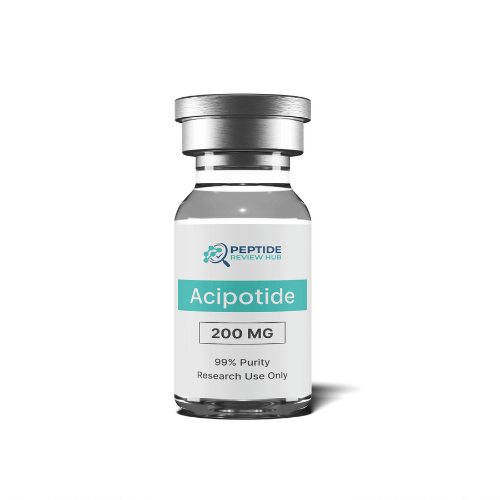
What is Acipotide?
Adipotide is an experimental peptidomimetic compound investigated primarily in preclinical research involving white adipose tissue, vascular targeting, prohibitin (PHB) signaling, and metabolic biology. Research has examined how Adipotide can target blood vessels associated with white adipose tissue and influence cellular pathways involved in adipose-tissue regulation. Studies in animal models have reported changes in adipose tissue and metabolic parameters, but these findings remain experimental and should not be interpreted as evidence of an approved human therapy.
Overview
Adipotide is a chimeric peptide consisting of a targeting component and a pro-apoptotic sequence. Its research interest comes from its ability to recognize prohibitin-associated targets on the surface of vascular endothelial cells within white adipose tissue. The targeting sequence is designed to direct the compound toward specific vascular structures, while the attached pro-apoptotic component has been studied for its effects on targeted cells.
Experimental research has primarily used animal models to investigate adipose-tissue targeting, vascular biology, apoptosis, and metabolic changes. These studies provide a framework for examining how targeted peptide approaches may interact with specific tissue-associated vascular systems.
Molecular Characteristics
According to PubChem, Adipotide has the following chemical characteristics:
Chemical Name: Adipotide
Synonyms: Adipotide, HKPao, EX-A6186
Molecular Formula: C₁₁₁H₂₀₆N₃₆O₂₈S₂
Molecular Weight: 2557.2 g/mol
CAS Number: 859216-15-2
Sequence: CKGGRAKDCGGKLAKLAKKLAKLAK
The compound contains both L- and D-amino-acid residues, a structural characteristic relevant to its design and research properties.
Research Applications
Adipotide has been investigated in several areas of experimental research, including:
Adipose-Tissue Biology: Studying cellular and vascular mechanisms associated with white adipose tissue.
Vascular Targeting: Investigating peptide-directed targeting of blood vessels associated with adipose tissue.
Prohibitin Research: Examining PHB-associated signaling at the vascular endothelial cell surface.
Apoptosis Research: Studying targeted cellular responses to pro-apoptotic peptide sequences.
Metabolic Research: Exploring relationships between adipose tissue, insulin sensitivity, and metabolic regulation.
Targeted Peptide Delivery: Evaluating strategies for directing biologically active peptide sequences toward specific tissues.
Mechanism of Research Interest
The central research concept behind Adipotide involves ligand-directed targeting of prohibitin-associated structures on adipose-tissue vasculature. Following targeting, the pro-apoptotic portion of the molecule has been investigated for its ability to affect targeted vascular cells. This mechanism provides researchers with a model for studying tissue-selective peptide targeting and vascular-cell apoptosis.
Research into prohibitin is also relevant because PHB has been identified on vascular endothelial cells and adipocytes and has been associated with fatty-acid transport within adipose tissue.
Preclinical Research
One notable study investigated Adipotide in obese nonhuman primates. Researchers reported targeted effects involving blood vessels within white adipose tissue, along with reductions in white adipose tissue and changes in insulin resistance. The study also reported reversible changes in renal proximal-tubule function at experimentally determined doses, highlighting the importance of safety evaluation in subsequent research.
These findings represent preclinical research observations and should not be interpreted as establishing safety, efficacy, or an approved medical application in humans.
Product Quality & Analytical Testing
Research-grade Adipotide should be evaluated using appropriate analytical methods to establish identity, purity, and batch consistency. Depending on the research application, quality assessment may include:
HPLC: Evaluation of peptide purity and related impurities.
Mass Spectrometry: Confirmation of molecular mass and identity.
Peptide Mapping: Assessment of sequence-related characteristics.
Batch Testing: Comparison of quality between production lots.
Stability Analysis: Monitoring peptide integrity under defined storage conditions.
Research Use Only: Adipotide is an investigational research compound. It is not an approved medication and should not be presented as a treatment for obesity, weight loss, metabolic disease, or any other medical condition. Product information, analytical documentation, and independent laboratory results should be reviewed when evaluating research-grade material.
Where to Buy Acipotide Online
| Rank | Vendor | Trust Score | Vial Size | Price / mg | Status | Action |
|---|---|---|---|---|---|---|
| No vendors currently tracking this product. Check back soon. | ||||||
Chemical Properties & Handling
Standard storage protocols for lyophilized peptides generally apply unless otherwise specified.
- Lyophilized (Powder): Store at -20°C for up to 3 years. Keep away from direct light and moisture.
- Reconstituted (Liquid): Store at 2-8°C (refrigerated) and use within 20-30 days to maintain stability.
Research Reviews
No Research Reviews Yet
Be the first to share your research protocol and vendor experience with Acipotide.
Best Acipotide Vendors & Price Comparison
Compare current Acipotide prices, vial sizes, availability, and vendor information in the prices section above before choosing a supplier.
Current Research & Evidence
Research evidence for Acipotide has not yet been added.
Key Findings on Acipotide Use
Key findings for Acipotide have not yet been added.
Related Peptides in Peptide
GLOW
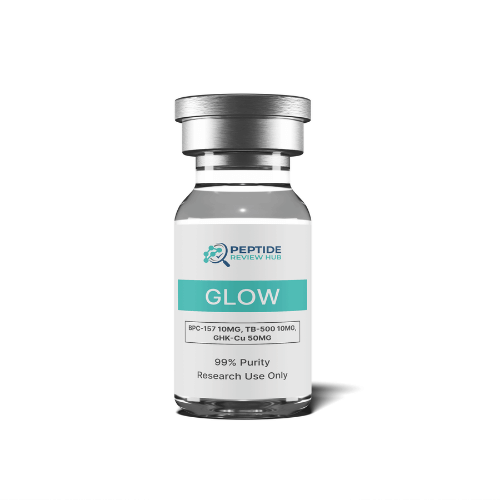
GLOW (60mg) is an experimental peptide research stack combining GHK-Cu, BPC-157, and TB-500 for laboratory studies of cellular signaling, extracellular matrix biology, tissue-response pathways, cell migration, and inflammatory mechanisms.
Tesamorelin
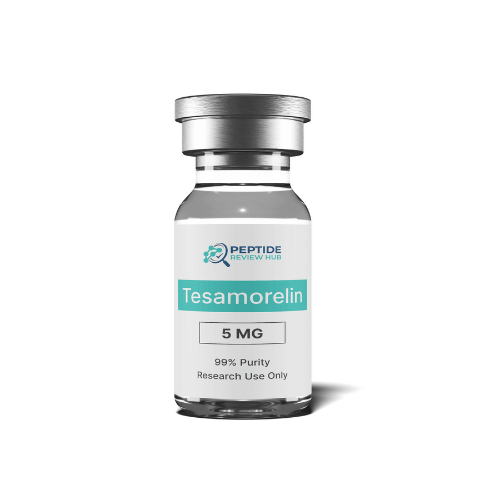
Tesamorelin 5mg is a synthetic GHRH analog studied for its interaction with the GHRH–GH–IGF-1 signaling pathway. It is researched in areas including visceral adipose tissue, lipid metabolism, endocrine signaling, glucose regulation, and metabolic health. Supplied as a lyophilized peptide, Tesamorelin 5mg is intended strictly for controlled laboratory and preclinical research.
Klow Blend
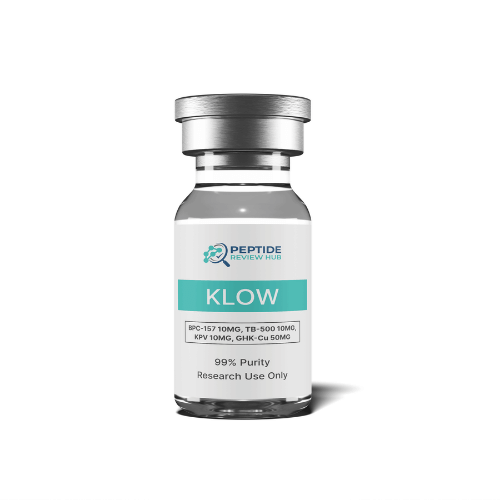
The Klow Blend combines BPC-157, TB-500, KPV, and GHK-Cu in an 80mg lyophilized peptide formulation designed for laboratory research. The four peptides are studied across areas including inflammatory signaling, cellular migration, angiogenesis, tissue repair, and extracellular-matrix research. Supplied as a research-use-only formulation, it offers researchers a convenient way to investigate multiple peptide pathways within a single blend.
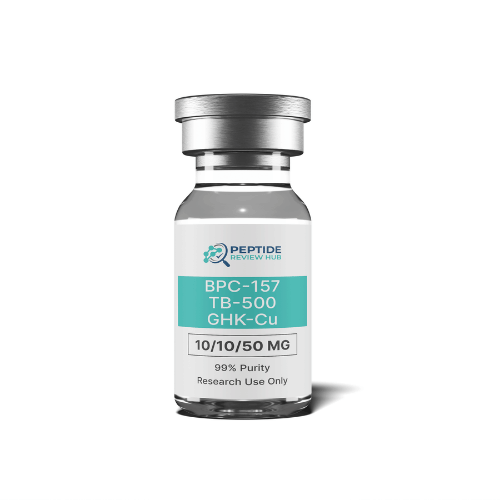
Glow Blend
BPC-157 + TB-500 + GHK-Cu 70mg Blend is a multi-peptide research formulation combining three compounds studied for their roles in cellular signaling, vascular biology, inflammation, and extracellular matrix research. With 10mg BPC-157, 10mg TB-500, and 50mg GHK-Cu in a lyophilized format, it provides a convenient model for controlled laboratory investigations into tissue remodeling and regenerative pathways.