
Research Use Only. This compound is not intended for human consumption or therapeutic use.
Where to Buy P21: Vendor Comparison & Research Info
P21 is a nootropic peptide targeting improved neurogenesis. In animal studies, P21 has been shown to boost levels of BDNF (brain-derived neurotrophic factor), thus promoting neurogenesis (nerve growth) and inhibiting the formation of Amyloid plaques and Tau proteins seen in Alzheimer's disease. BDNF has been linked not just to enhanced neurogenesis, but to the down regulation of certain enzyme responsible for tau and amyloid plaque formation in Alzheimer's brains. P21 has been shown to improve cognition in animal models.
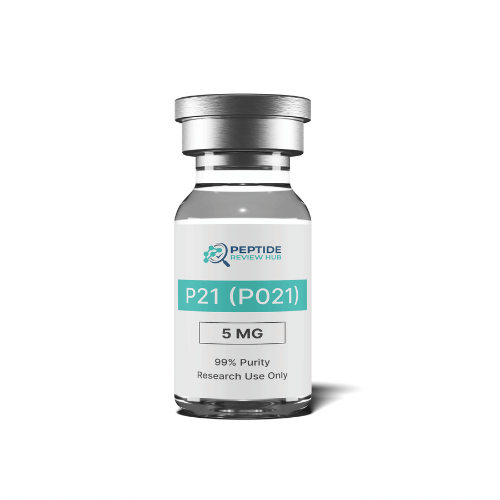
What is P21?
P21 (also known as P021 or Peptide 021) is a synthetic neurotrophic research peptide developed from a biologically active region of Ciliary Neurotrophic Factor (CNTF). Researchers investigate P21 because of its relationship with neurogenesis, synaptic plasticity, memory formation, cognitive function, neurotrophic signaling, and neurodegenerative disease research.
As interest in nootropic and neuroregenerative peptides continues to grow, researchers frequently compare P21 suppliers based on purity, analytical testing, manufacturing quality, pricing, and vendor transparency.
This P21 Vendor Price Comparison Guide helps researchers evaluate suppliers using objective criteria including:
Product Pricing
Cost Per Milligram
Product Purity
Third-Party Testing
Certificate of Analysis (COA)
Vendor Reputation
Customer Reviews
Shipping Performance
Product Availability
Overall Value
Whether you're searching for the lowest-priced P21 supplier, the highest-purity product, or vendors offering extensive laboratory verification, this guide provides a framework for comparing research peptide suppliers.
Explore P21 Vendors by Criteria
Most Popular P21 Vendors
Compare suppliers frequently selected by neuroscience and nootropic researchers.
Highest Reviewed P21 Vendors
Discover peptide suppliers with strong customer satisfaction and positive marketplace reputations.
Lowest Price P21 Vendors
Identify vendors offering competitive pricing and attractive cost-per-milligram value.
Highest Purity P21 Vendors
Review suppliers providing transparent purity verification and analytical testing.
Best Value P21 Vendors
Compare pricing, laboratory standards, documentation, and customer support.
Fastest Shipping P21 Vendors
Evaluate fulfillment reliability, packaging quality, and delivery performance.
Newly Listed P21 Vendors
Explore recently added suppliers offering P21 research peptides.
What Is P21?
Overview
P21 is a synthetic neurotrophic peptide derived from a biologically active region of CNTF.
Researchers investigate P21 because of its potential relationship with:
Neurogenesis
Synaptic plasticity
Memory formation
Learning processes
Cognitive performance
Neurotrophic signaling
Brain-derived neurotrophic factor (BDNF)
Neurodegenerative disease mechanisms
P21 has become particularly interesting in studies examining neuronal growth and the maintenance of healthy neural networks.
Molecular Characteristics
Peptide Information
Researchers evaluating P21 products should carefully review molecular specifications and analytical documentation.
Peptide Name
P21
Alternative Names
P021
Peptide 021
Sequence
DGGL-Adamantane-G
Molecular Formula
C30H54N6O5
Molecular Weight
578.3 g/mol
Classification
Synthetic Neurotrophic Peptide
Research Category
Neuroscience & Neurogenesis Research
How Was P21 Developed?
P21 was developed through epitope mapping techniques designed to identify biologically active regions of CNTF.
The resulting peptide was engineered to:
Improve stability
Enhance bioavailability
Increase blood-brain barrier penetration
Reduce degradation
Support neurotrophic activity
An adamantane-containing component was incorporated to improve central nervous system accessibility and protect the peptide from rapid breakdown.
Why Researchers Compare P21 Vendors
Research reproducibility depends heavily on peptide quality and manufacturing consistency.
Differences among suppliers may include:
Purity levels
Batch consistency
Stability testing
Manufacturing standards
Storage conditions
Product documentation
Shipping procedures
Quality-control systems
Careful vendor selection may improve experimental reliability and consistency.
How We Compare P21 Vendors
Third-Party Laboratory Testing
Independent testing remains one of the strongest indicators of peptide quality.
Researchers should prioritize suppliers offering:
Third-party laboratory testing
Purity verification
Identity confirmation
Batch-specific reports
Certificate of Analysis (COA)
A quality COA should contain:
Batch number
Testing date
Purity percentage
Identity verification
Analytical methodology
Product Purity
Purity remains one of the most important variables when evaluating research peptides.
Higher-purity products generally contribute to more consistent experimental outcomes.
Cost Per Milligram
Comparing vial prices alone can be misleading.
Cost Per Milligram Formula
Product Price ÷ Total Milligrams = Cost Per Milligram
This allows researchers to compare vendors more accurately.
Customer Reviews
Customer experiences often provide insight into:
Product consistency
Packaging quality
Shipping speed
Customer service
Overall purchasing experience
Vendor Reputation
Established suppliers often demonstrate:
Strong testing procedures
Transparent quality standards
Reliable inventory availability
Positive customer feedback
Current Research & Evidence
Neurogenesis Research
The primary focus of P21 research involves neurogenesis.
Researchers continue investigating pathways involving:
Neural progenitor-cell growth
Neuron maturation
Neural-network development
Brain plasticity
This remains the most active area of P21 research.
Dentate Gyrus Research
Studies have focused heavily on the dentate gyrus, a region of the hippocampus associated with:
Episodic memory formation
Pattern separation
Learning adaptation
Adult neurogenesis
Researchers continue examining how neurotrophic signaling may influence these functions.
BDNF Research
One of the most frequently studied effects of P21 is its relationship with brain-derived neurotrophic factor (BDNF).
Researchers investigate pathways involving:
Neuronal survival
Synaptic development
Learning mechanisms
Neural adaptation
BDNF remains a major focus of modern neuroscience.
Key Findings on P21 Research
Memory Research
Experimental studies have examined P21 in areas involving:
Memory consolidation
Object recognition
Learning efficiency
Cognitive performance
Researchers continue investigating these neurobiological pathways.
Synaptic Plasticity Research
P21 has generated interest for its apparent relationship with:
Synapse formation
Synaptic communication
Neural connectivity
Brain plasticity
This remains a significant area of investigation.
Alzheimer's Disease Research
A substantial portion of P21 research involves laboratory models of neurodegenerative disease.
Researchers continue evaluating pathways involving:
Amyloid-related mechanisms
Tau-associated biology
Neurodegeneration
Cognitive decline
Synaptic dysfunction
These findings remain preclinical and require further investigation.
Neurotrophin Research
Studies suggest P21 may influence pathways associated with:
Neurotrophin-4
BDNF signaling
Neuronal development
Neural maintenance
Additional research remains ongoing.
GSK-3β Research
Researchers continue examining relationships involving:
GSK-3β signaling
Tau phosphorylation pathways
Neurodegenerative mechanisms
Cellular communication networks
This remains an emerging field of neuroscience research.
Learning & Cognition Research
Scientists have investigated P21 because of its relationship with:
Learning processes
Information retention
Cognitive performance
Neural adaptability
Further research remains necessary to fully characterize these effects.
Neuroplasticity Research
Neuroplasticity represents one of the most important themes in P21 research.
Researchers continue examining pathways involving:
Neuronal remodeling
Synaptic growth
Adaptive learning
Brain resilience
This area continues to attract considerable scientific interest.
P21 vs Cerebrolysin
P21 and Cerebrolysin are frequently discussed together but are not the same substance.
P21
Single synthetic peptide
Derived from CNTF-related research
Specific molecular structure
Designed for blood-brain barrier penetration
Investigated for neurogenesis-focused effects
Cerebrolysin
Peptide mixture
Multiple biological components
Broader neurotrophic profile
Complex composition
Different mechanism of action
Researchers generally treat these as distinct compounds with separate research purposes.
Potential Areas of Future Research
Scientists continue exploring P21 in studies involving:
Healthy cognitive aging
Neurodegenerative disease models
Learning enhancement
Neural regeneration
Memory-related pathways
Synaptic resilience
Brain plasticity
Neurotrophic signaling
Interest in these areas continues to grow.
Research Limitations
Most findings involving P21 originate from:
Cell-culture studies
Rodent models
Laboratory investigations
Preclinical neuroscience research
Additional studies will be necessary to fully characterize biological mechanisms and long-term effects.
Research findings should not be interpreted as evidence of approved therapeutic, pharmaceutical, or medical applications.
Product Quality & Analytical Testing
Why Testing Matters
Research-grade P21 products should undergo testing to verify:
Identity
Purity
Stability
Potency
Batch consistency
Common Testing Methods
High-Performance Liquid Chromatography (HPLC)
Used to evaluate purity and identify impurities.
Mass Spectrometry (MS)
Used to verify molecular identity and composition.
Identity Verification Testing
Confirms peptide authenticity.
Stability Testing
Evaluates peptide integrity during storage.
Batch Consistency Testing
Measures reproducibility across manufacturing lots.
Understanding P21 Pricing
Several variables influence pricing among research peptide suppliers.
Product Purity
Higher-purity products often command premium pricing.
Specialized Manufacturing
Complex peptide synthesis and stabilization methods can increase production costs.
Analytical Verification
Comprehensive testing programs improve transparency while increasing manufacturing expenses.
Research Demand
Growing interest in neuroscience and neurogenesis research continues to increase demand.
Vendor Reputation
Trusted suppliers often charge more due to stronger quality-control systems.
P21 Vendor Evaluation Checklist
Quality Verification
✅ Third-party testing available
✅ Certificate of Analysis provided
✅ Identity verification documented
✅ Purity information disclosed
✅ Batch-specific testing available
Vendor Reliability
✅ Positive customer reviews
✅ Transparent company information
✅ Responsive customer support
✅ Reliable inventory availability
Purchasing Experience
✅ Secure checkout process
✅ Shipment tracking available
✅ Clear refund policies
✅ Reliable order fulfillment
Red Flags When Comparing Vendors
Testing Concerns
❌ No third-party testing
❌ Missing COAs
❌ Unverified purity claims
❌ Outdated laboratory reports
Transparency Issues
❌ Hidden specifications
❌ Missing batch information
❌ Limited documentation
❌ No company contact information
Service Problems
❌ Frequent inventory shortages
❌ Poor communication
❌ Negative customer reviews
❌ Unclear shipping policies
Frequently Asked Questions
What is P21?
P21 (P021) is a synthetic neurotrophic peptide derived from CNTF-related research and investigated primarily for neurogenesis, neuroplasticity, and cognitive-function pathways.
What is P21 used for in research?
Researchers investigate P21 in studies involving neurogenesis, learning, memory, synaptic plasticity, BDNF regulation, neurotrophic signaling, and neurodegenerative disease models.
Why compare P21 vendors?
Purity, analytical testing, documentation quality, pricing, and supplier reliability can vary substantially among vendors.
What should researchers review before purchasing?
Researchers should evaluate:
Certificate of Analysis (COA)
Third-party testing
Purity verification
Identity confirmation
Vendor reputation
Customer reviews
Why is third-party testing important?
Independent testing helps verify product identity, purity, and consistency while improving transparency.
Is the cheapest supplier always the best option?
No. Product quality, testing standards, documentation, and supplier reliability are often more important than price alone.
How often should vendor comparisons be updated?
Pricing, inventory availability, supplier policies, and laboratory testing reports can change frequently and should be reviewed regularly.
Final Thoughts
P21 remains one of the most intriguing neurotrophic research peptides due to its reported relationship with neurogenesis, synaptic plasticity, BDNF signaling, memory formation, and neural-network development. Ongoing investigations continue exploring how P21 may contribute to a deeper understanding of cognitive function, learning, healthy brain aging, and neurodegenerative disease biology.
When comparing P21 vendors, researchers should prioritize purity verification, third-party testing, Certificate of Analysis availability, supplier reputation, and overall value rather than focusing exclusively on price. A structured vendor-comparison process can help identify suppliers capable of meeting rigorous research-quality standards.
Where to Buy P21 Online
| Rank | Vendor | Trust Score | Vial Size | Price / mg | Status | Action |
|---|---|---|---|---|---|---|
1 | 9.3/10 Editorial Rating | $84.99 10mg vial | $8.50/mg | In Stock | Visit Site | |
2 |  Peptide Hubs Verified | 9.0/10 Editorial Rating | $50.00 5mg vial | $10.00/mg | Out of Stock | Visit Site |
3 |  Dragon Peptides Verified | 9.0/10 Editorial Rating | $50.00 50mg vial | $1.00/mg | Out of Stock | Visit Site |
4 | 7.8/10 Editorial Rating | $49.99 82mg vial | $0.61/mg | In Stock | Visit Site | |
5 |  Core Peptides Verified | 4.0/10 Editorial Rating | $116.00 5mg vial | $23.20/mg | In Stock | Visit Site |
6 | N/A/10 Editorial Rating | $49.00 5mg vial | $9.80/mg | In Stock | Visit Site | |
7 | N/A/10 Editorial Rating | $249.00 50mg vial | $4.98/mg | In Stock | Visit Site | |
8 | N/A/10 Editorial Rating | $78.00 5mg vial | $15.60/mg | Out of Stock | Visit Site |




Top-Ranked Vendor

Overall Score
Category Scores
COA Transparency: 8.5/10
Reputation: 8.0/10
Pricing: 9.0/10
Policies: 8.0/10
Shipping: 8.5/10
Catalog: 9.5/10
Overall Score: 8.6/10
Calculation
(8.5 + 8.0 + 9.0 + 8.0 + 8.5 + 9.5) ÷ 6 = 8.58/10
COA Transparency
Score: 8.5/10
Analysis
Soma Chems places significant emphasis on product verification and quality assurance. The company promotes third-party testing and indicates that products are supported by Certificates of Analysis (COAs). Public information suggests that laboratory testing includes purity verification and analytical review of products before release.
The supplier also highlights quality-tested research compounds and publishes documentation supporting product verification. Compared with many research-peptide vendors, Soma Chems demonstrates a stronger commitment to transparency by referencing laboratory testing and quality-control procedures throughout its catalog.
However, the depth and consistency of publicly available COA documentation appear to vary among products. A larger archive of standardized batch-specific reports and easier access to historical testing data would further improve transparency.
Overall, Soma Chems performs well in this category and demonstrates an above-average focus on quality verification.
Reputation
Score: 8.0/10
Analysis
Soma Chems has established a growing reputation within the research-peptide industry and has received positive attention from several peptide-review platforms. Customer feedback commonly highlights fast shipping, competitive pricing, product quality, and responsive customer service.
Available reviews often praise the overall purchasing experience, reliable product availability, and communication during the ordering process. Several customers also reference repeat purchases and positive long-term experiences with the company.
Although the company does not yet have the same level of mainstream recognition as the largest peptide suppliers, its reputation profile appears to be steadily improving. Some customers have reported occasional shipping delays, but these complaints appear relatively limited compared with the volume of positive feedback.
Overall, Soma Chems maintains a positive reputation and favorable customer sentiment.
Pricing
Score: 9.0/10
Analysis
Pricing is one of Soma Chems' strongest competitive advantages. The supplier offers a large selection of peptides, sprays, amino products, blends, and specialty research compounds at pricing that is frequently lower than many premium competitors.
The company appears particularly focused on affordability without sacrificing product diversity. In addition to traditional peptide formats, Soma Chems offers oral formulations, sprays, and specialty blends that help differentiate its inventory from many competing suppliers.
Discounts, promotional offers, and value-oriented pricing further contribute to the company's appeal. Researchers seeking broad product availability at accessible pricing levels may find Soma Chems particularly attractive.
Overall, Soma Chems delivers excellent value for money and performs exceptionally well in the pricing category.
Policies
Score: 8.0/10
Analysis
Soma Chems provides clear research-use disclaimers and explains that its products are intended exclusively for analytical and scientific research purposes. The company also communicates that it is not a compounding pharmacy and provides policy information regarding privacy and data handling.
The supplier maintains accessible customer-service channels and basic ordering information, helping customers understand purchasing requirements and product restrictions.
While the company demonstrates above-average policy transparency compared with many peptide vendors, additional public detail regarding returns, refunds, exchanges, and shipment claims would strengthen the customer experience further.
Overall, policy information is professional, clear, and suitable for research-focused customers.
Shipping
Score: 8.5/10
Analysis
Shipping is frequently cited as a strength of the Soma Chems operation. Customer feedback often highlights fast fulfillment, prompt delivery, and reliable order processing.
The company appears focused on maintaining customer satisfaction through efficient shipping workflows and responsive communication. Review-platform feedback suggests that most customers experience timely deliveries and accurate order fulfillment.
Although isolated complaints regarding delayed shipments exist, they appear to represent exceptions rather than common experiences. The company also benefits from straightforward payment options that can simplify the ordering process for many customers.
Overall, shipping performance appears reliable and supports a positive customer experience.
Catalog
Score: 9.5/10
Analysis
Catalog depth is one of Soma Chems' most impressive strengths. The company offers more than 100 research products spanning peptides, amino compounds, sprays, liquids, blends, and specialty formulations.
Recovery and Regenerative Peptides
Examples
BPC-157
TB-500
GHK-Cu
LL-37
Growth and Performance Peptides
Examples
CJC-1295
Ipamorelin
Tesamorelin
IGF-LR3
Metabolic Research Compounds
Examples
AOD-9604
MOTS-C
Cagrilintide
Weight-management blends
Cognitive Research Compounds
Examples
Semax
Selank
Pinealon
P21
Specialty Products
Examples
Sprays
Amino formulations
Multi-peptide blends
NAD+
Melanotan products
The combination of variety, organization, and specialty offerings makes Soma Chems one of the broader catalogs currently available within this market segment.
What We Like
Positive Highlights
Large peptide and research-compound catalog.
Third-party testing emphasis.
COA availability.
Competitive pricing.
Strong product diversity.
Positive customer feedback.
Fast shipping reputation.
Availability of sprays and alternative formulations.
What Could Be Better
Areas for Improvement
More consistent public COA documentation.
Expanded historical testing archives.
Greater transparency regarding laboratory partners.
More detailed refund and return policies.
Increased mainstream review-platform presence.
Additional educational content for new researchers.
Online Ratings & Reviews
Trustpilot
Rating
Information Not Publicly Available.
Review Count
Information Not Publicly Available.
Key Positive Themes
Information Not Publicly Available.
Key Negative Themes
Information Not Publicly Available.
Finnrick
Rating
Information Not Publicly Available.
Key Findings
No verified Finnrick rating identified.
Limited supplier-specific analytical coverage available.
Notable Observations
Independent review activity is stronger on peptide-focused platforms.
Other Review Sources
Peptide Review Platforms
Rating
Approximately 4.7/5
Review Count
More than 20 publicly available reviews.
Key Findings
Positive comments regarding product quality.
Frequent praise for shipping speed.
Strong customer-service feedback.
Competitive pricing repeatedly highlighted.
Vendor Analysis Platforms
Key Findings
Large product inventory.
Competitive market positioning.
Strong value-oriented approach.
Broad availability of oral and spray formulations.
Community Discussions
Key Findings
Positive reception for affordability.
Appreciation for product diversity.
Growing visibility within the peptide community.
Overall Public Sentiment
Most Common Praise
Fast shipping.
Competitive pricing.
Product quality.
Large inventory.
Responsive customer support.
Easy ordering process.
Most Common Complaints
Occasional shipping delays.
Variability in COA depth.
Limited mainstream review coverage.
Relatively modest brand recognition compared with industry leaders.
Public Sentiment Summary
Overall sentiment is positive. Customers frequently praise Soma Chems for affordability, shipping speed, product availability, and quality. Most criticisms are relatively minor and relate to transparency enhancements or isolated logistical issues rather than product concerns.
Brand Overview
Company Name
Soma Chems
Website
Industry
Research Peptides and Research Compounds
Main Products
BPC-157
TB-500
GHK-Cu
CJC-1295
Ipamorelin
Tesamorelin
AOD-9604
MOTS-C
Semax
Selank
Pinealon
Melanotan products
Headquarters
Information Not Publicly Available
Shipping Regions
Information Not Publicly Available
Payment Methods
Credit Cards
Company Summary
Soma Chems is a research-peptide supplier focused on providing peptides, amino products, sprays, liquids, blends, and specialty research compounds. The company has developed a reputation for combining product diversity with competitive pricing, making it attractive to researchers seeking a broad range of compound options.
One of the company's strongest assets is its extensive catalog, which spans metabolic peptides, regenerative compounds, cognitive products, performance-focused peptides, and specialty formulations. The availability of sprays and alternative delivery formats further differentiates the supplier from many competitors.
Soma Chems also emphasizes quality verification through third-party testing and COA-supported products. These initiatives contribute positively to transparency and customer confidence. Customer reviews frequently highlight reliable fulfillment, affordable pricing, and responsive support.
While the company could strengthen transparency through a more extensive public archive of laboratory reports, it already provides many of the trust signals researchers seek when evaluating suppliers.
Overall, Soma Chems presents a strong profile supported by broad inventory depth, favorable pricing, quality-focused operations, and positive customer sentiment.
Final Verdict
Is Soma Chems Worth Considering?
Soma Chems appears best suited for researchers seeking a supplier that combines affordability, inventory depth, and product variety. The company's strongest advantages include competitive pricing, a large peptide catalog, positive customer feedback, and a growing reputation within the research-compound market.
The supplier performs especially well in categories related to product selection and value. Researchers can access a diverse range of compounds, including popular peptides, specialty blends, cognitive compounds, sprays, and amino-based formulations. This breadth makes the platform appealing for buyers who prefer sourcing from a single vendor.
Quality assurance also contributes positively to the company's profile. The supplier promotes laboratory testing and COA-backed products, helping support confidence in product quality and consistency. Customer feedback further reinforces strengths related to fulfillment and customer service.
The primary opportunities for improvement involve expanding public testing archives and providing greater transparency regarding laboratory partners and quality-control practices.
Overall, Soma Chems presents a positive profile characterized by excellent product diversity, strong value, and a growing reputation for quality and service. For many research-focused buyers, it represents a competitive option within the peptide marketplace.
Final Verdict Score: 8.6/10
Chemical Properties & Handling
Standard storage protocols for lyophilized peptides generally apply unless otherwise specified.
- Lyophilized (Powder): Store at -20°C for up to 3 years. Keep away from direct light and moisture.
- Reconstituted (Liquid): Store at 2-8°C (refrigerated) and use within 20-30 days to maintain stability.
Research Reviews
No Research Reviews Yet
Be the first to share your research protocol and vendor experience with P21.
Best P21 Vendors & Price Comparison
P21 (P021 or Peptide 021) is a synthetic neurotrophic research peptide derived from a biologically active region of Ciliary Neurotrophic Factor (CNTF). Researchers investigate P21 because of its relationship with neurogenesis, synaptic plasticity, memory formation, learning, neurotrophic signaling, and neurodegenerative disease research.
As interest in nootropic, neuroregenerative, and cognitive-performance peptides continues to expand, researchers frequently compare P21 suppliers based on purity, analytical testing, manufacturing quality, pricing, and vendor transparency.
This P21 Vendor Price Comparison Guide helps researchers evaluate suppliers using objective criteria including:
Product Pricing
Cost Per Milligram
Product Purity
Third-Party Testing
Certificate of Analysis (COA)
Vendor Reputation
Customer Reviews
Shipping Performance
Product Availability
Overall Value
Whether you're searching for the lowest-priced P21 supplier, the highest-purity research-grade material, or vendors providing comprehensive laboratory verification, this guide provides a framework for comparing peptide suppliers.
Explore P21 Vendors by Criteria
Most Popular P21 Vendors
Compare suppliers frequently selected by neuroscience and neurogenesis researchers.
Highest Reviewed P21 Vendors
Discover peptide suppliers with strong customer satisfaction and positive marketplace reputations.
Lowest Price P21 Vendors
Identify vendors offering competitive pricing and favorable cost-per-milligram value.
Highest Purity P21 Vendors
Review suppliers providing transparent purity verification and analytical testing.
Best Value P21 Vendors
Compare pricing, product quality, documentation, and customer support.
Fastest Shipping P21 Vendors
Evaluate shipping reliability, packaging quality, and fulfillment performance.
Newly Listed P21 Vendors
Explore recently added suppliers offering P21 research peptides.
What Is P21?
Overview
P21 is a synthetic neurotrophic peptide developed from a biologically active region of CNTF.
Researchers investigate P21 because of its potential relationship with:
Neurogenesis
Synaptic plasticity
Memory formation
Learning processes
Cognitive function
Neurotrophic signaling
BDNF-related pathways
Neurodegenerative disease mechanisms
P21 has become particularly interesting in studies examining neuronal growth, neural connectivity, and maintenance of healthy neural networks.
Molecular Characteristics
Peptide Information
Researchers evaluating P21 products should carefully review molecular specifications and analytical documentation.
Peptide Name
P21
Alternative Names
P021
Peptide 021
Sequence
DGGL-Adamantane-G
Molecular Formula
C₃₀H₅₄N₆O₅
Molecular Weight
578.3 g/mol
Classification
Synthetic Neurotrophic Peptide
Research Category
Neuroscience & Neurogenesis Research
How Was P21 Developed?
P21 was developed through epitope-mapping strategies designed to identify biologically active regions of CNTF.
The resulting peptide was engineered to:
Improve stability
Enhance bioavailability
Increase blood-brain barrier penetration
Reduce degradation
Support neurotrophic activity
An adamantane-containing component was incorporated to improve central nervous system accessibility and increase resistance to breakdown.
Why Researchers Compare P21 Vendors
Research reproducibility depends heavily on peptide quality and manufacturing consistency.
Differences among suppliers may include:
Purity levels
Batch consistency
Stability testing
Manufacturing standards
Storage conditions
Product documentation
Shipping procedures
Quality-control systems
Careful vendor selection may improve experimental reliability and consistency.
How We Compare P21 Vendors
Third-Party Laboratory Testing
Independent testing remains one of the strongest indicators of peptide quality.
Researchers should prioritize suppliers offering:
Third-party laboratory testing
Purity verification
Identity confirmation
Batch-specific reports
Certificate of Analysis (COA)
A quality COA should contain:
Batch number
Testing date
Purity percentage
Identity verification
Analytical methodology
Product Purity
Purity remains one of the most important variables when evaluating research peptides.
Higher-purity products generally contribute to more consistent experimental outcomes.
Cost Per Milligram
Comparing vial prices alone can be misleading.
Cost Per Milligram Formula
Product Price ÷ Total Milligrams = Cost Per Milligram
This allows researchers to compare vendors more accurately.
Customer Reviews
Customer experiences often provide insight into:
Product consistency
Packaging quality
Shipping speed
Customer service
Overall purchasing experience
Vendor Reputation
Established suppliers often demonstrate:
Strong testing procedures
Transparent quality standards
Reliable inventory availability
Positive customer feedback
Current Research & Evidence
Neurogenesis Research
The primary focus of P21 research involves neurogenesis.
Researchers continue investigating pathways involving:
Neural progenitor-cell growth
Neuron maturation
Neural-network development
Brain plasticity
This remains the most active area of P21 research.
Dentate Gyrus Research
Studies have focused heavily on the dentate gyrus, a region of the hippocampus associated with:
Episodic memory formation
Pattern separation
Learning adaptation
Adult neurogenesis
Researchers continue examining how neurotrophic signaling may influence these functions.
BDNF Research
One of the most frequently studied aspects of P21 involves its relationship with brain-derived neurotrophic factor (BDNF).
Researchers investigate pathways involving:
Neuronal survival
Synaptic development
Learning mechanisms
Neural adaptation
BDNF remains a major focus of modern neuroscience.
Key Areas of P21 Research
Memory Research
Experimental studies have examined P21 in areas involving:
Memory consolidation
Object recognition
Learning efficiency
Cognitive performance
Researchers continue investigating these neurobiological pathways.
Synaptic Plasticity Research
P21 has generated interest because of its apparent relationship with:
Synapse formation
Synaptic communication
Neural connectivity
Brain plasticity
This remains a significant area of investigation.
Alzheimer's Disease Research
A substantial portion of P21 research involves laboratory models of neurodegenerative disease.
Researchers continue evaluating pathways involving:
Amyloid-associated mechanisms
Tau-related biology
Neurodegeneration
Cognitive decline
Synaptic dysfunction
These findings remain preclinical and require further investigation.
Neurotrophin Research
Studies suggest P21 may influence pathways associated with:
Neurotrophin-4
BDNF signaling
Neuronal development
Neural maintenance
Additional research remains ongoing.
GSK-3β Research
Researchers continue examining relationships involving:
GSK-3β signaling
Tau phosphorylation pathways
Neurodegenerative mechanisms
Cellular communication networks
This remains an emerging field of neuroscience research.
Learning & Cognition Research
Scientists investigate P21 because of its relationship with:
Learning processes
Information retention
Cognitive performance
Neural adaptability
Further research remains necessary to fully characterize these effects.
Neuroplasticity Research
Neuroplasticity represents one of the most important themes in P21 research.
Researchers continue examining pathways involving:
Neuronal remodeling
Synaptic growth
Adaptive learning
Brain resilience
This area continues to attract considerable scientific interest.
P21 vs Cerebrolysin
P21 and Cerebrolysin are frequently discussed together but are not the same substance.
P21
Single synthetic peptide
Derived from CNTF-related research
Specific molecular structure
Designed for blood-brain barrier penetration
Investigated for neurogenesis-focused effects
Cerebrolysin
Peptide mixture
Multiple biological components
Broader neurotrophic profile
Complex composition
Different mechanism of action
Researchers generally treat these as distinct compounds with separate research purposes.
Potential Areas of Future Research
Scientists continue exploring P21 in studies involving:
Healthy cognitive aging
Neurodegenerative disease models
Learning enhancement
Neural regeneration
Memory-related pathways
Synaptic resilience
Brain plasticity
Neurotrophic signaling
Interest in these areas continues to grow.
Research Limitations
Most findings involving P21 originate from:
Cell-culture studies
Rodent models
Laboratory investigations
Preclinical neuroscience research
Additional studies will be necessary to fully characterize biological mechanisms and long-term effects.
Research findings should not be interpreted as evidence of approved therapeutic, pharmaceutical, or medical applications.
Product Quality & Analytical Testing
Why Testing Matters
Research-grade P21 products should undergo testing to verify:
Identity
Purity
Stability
Potency
Batch consistency
Common Testing Methods
High-Performance Liquid Chromatography (HPLC)
Used to evaluate purity and identify impurities.
Mass Spectrometry (MS)
Used to verify molecular identity and composition.
Identity Verification Testing
Confirms peptide authenticity.
Stability Testing
Evaluates peptide integrity during storage.
Batch Consistency Testing
Measures reproducibility across manufacturing lots.
Understanding P21 Pricing
Several variables influence pricing among research peptide suppliers.
Product Purity
Higher-purity products often command premium pricing.
Specialized Manufacturing
Complex peptide synthesis and stabilization methods can increase production costs.
Analytical Verification
Comprehensive testing programs improve transparency while increasing manufacturing expenses.
Research Demand
Growing interest in neuroscience and neurogenesis research continues to increase demand.
Vendor Reputation
Trusted suppliers often charge more due to stronger quality-control systems.
P21 Vendor Evaluation Checklist
Quality Verification
✅ Third-party testing available
✅ Certificate of Analysis provided
✅ Identity verification documented
✅ Purity information disclosed
✅ Batch-specific testing available
Vendor Reliability
✅ Positive customer reviews
✅ Transparent company information
✅ Responsive customer support
✅ Reliable inventory availability
Purchasing Experience
✅ Secure checkout process
✅ Shipment tracking available
✅ Clear refund policies
✅ Reliable order fulfillment
Red Flags When Comparing Vendors
Testing Concerns
❌ No third-party testing
❌ Missing COAs
❌ Unverified purity claims
❌ Outdated laboratory reports
Transparency Issues
❌ Hidden specifications
❌ Missing batch information
❌ Limited documentation
❌ No company contact information
Service Problems
❌ Frequent inventory shortages
❌ Poor communication
❌ Negative customer reviews
❌ Unclear shipping policies
Frequently Asked Questions
What is P21?
P21 (P021) is a synthetic neurotrophic peptide derived from CNTF-related research and investigated primarily for neurogenesis, neuroplasticity, and cognitive-function pathways.
What is P21 used for in research?
Researchers investigate P21 in studies involving neurogenesis, learning, memory, synaptic plasticity, BDNF regulation, neurotrophic signaling, and neurodegenerative disease models.
Why compare P21 vendors?
Purity, analytical testing, documentation quality, pricing, and supplier reliability can vary substantially among vendors.
What should researchers review before purchasing?
Researchers should evaluate:
Certificate of Analysis (COA)
Third-party testing
Purity verification
Identity confirmation
Vendor reputation
Customer reviews
Why is third-party testing important?
Independent testing helps verify product identity, purity, and consistency while improving transparency.
Is the cheapest supplier always the best option?
No. Product quality, testing standards, documentation, and supplier reliability are often more important than price alone.
How often should vendor comparisons be updated?
Pricing, inventory availability, supplier policies, and laboratory testing reports can change frequently and should be reviewed regularly.
Final Thoughts
P21 remains one of the most intriguing neurotrophic research peptides due to its reported relationship with neurogenesis, synaptic plasticity, BDNF signaling, memory formation, and neural-network development. Ongoing investigations continue exploring how P21 may contribute to a deeper understanding of cognitive function, learning, healthy brain aging, and neurodegenerative disease biology.
When comparing P21 vendors, researchers should prioritize purity verification, third-party testing, Certificate of Analysis availability, supplier reputation, and overall value rather than focusing exclusively on price. A structured vendor-comparison process can help identify suppliers capable of meeting rigorous research-quality standards.
Current Research & Evidence
Research evidence for P21 has not yet been added.
Key Findings on P21 Use
Key findings for P21 have not yet been added.
Related Peptides in Peptide
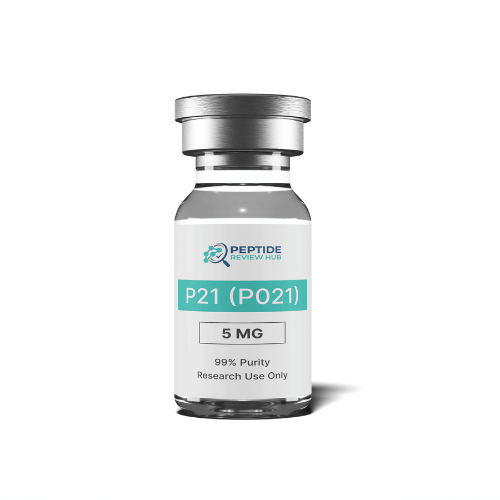
PT 21
PT-21 is an experimental research peptide investigated in controlled laboratory studies of cellular signaling, molecular pathways, tissue biology, and cellular responses. Supplied as a research material for qualified researchers, it is intended strictly for in vitro research and not for human or animal use.
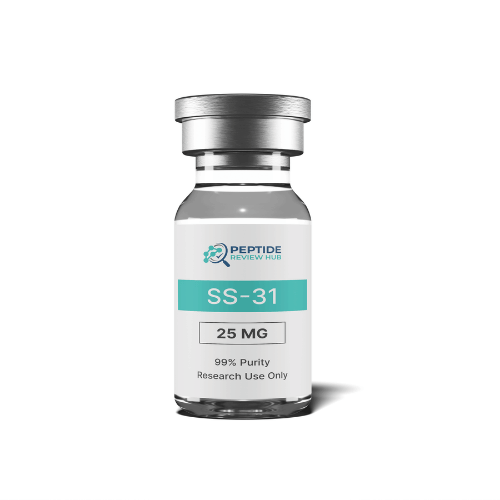
SS-31
SS-31, also known as elamipretide or MTP-131, is a synthetic mitochondria-targeted tetrapeptide studied in laboratory research involving cardiolipin interactions, mitochondrial respiration, oxidative stress, ATP production, and cellular energy metabolism.
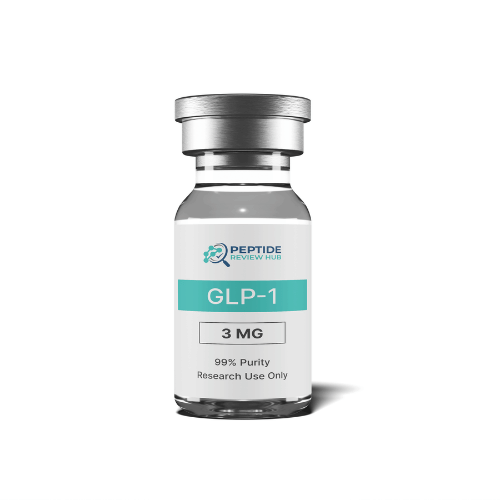
GLP-1
GLP-1 is a peptide hormone studied in research involving GLP-1 receptor signaling, cellular communication, metabolic biology, pancreatic pathways, and gastrointestinal research. It is intended strictly for laboratory research and not for human or animal consumption.
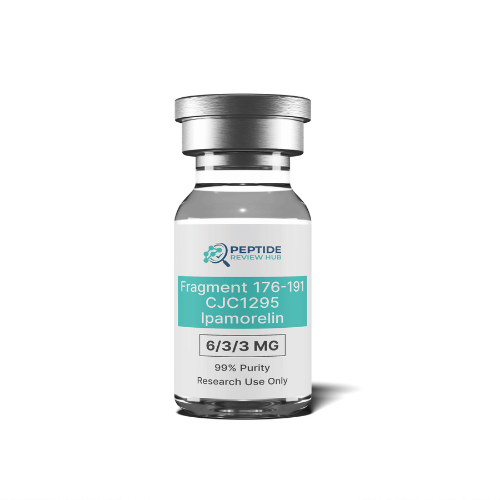
Fragment-176-191-CJC1295-Ipamorelin
Fragment-176-191-CJC1295-Ipamorelin is a research peptide blend combining Fragment 176-191, CJC-1295, and Ipamorelin for laboratory research into growth hormone signaling, metabolic pathways, adipose biology, and IGF-1-related mechanisms.