
Research Use Only. This compound is not intended for human consumption or therapeutic use.
Where to Buy AHK-Cu: Vendor Comparison & Research Info
This PRODUCT IS INTENDED AS A RESEARCH CHEMICAL ONLY. This designation allows the use of research chemicals strictly for in vitro testing and laboratory experimentation only. All product information available on this website is for educational purposes only. Bodily introduction of any kind into humans or animals is strictly forbidden by law. This product should only be handled by licensed, qualified professionals.
What is AHK-Cu?
This PRODUCT IS INTENDED AS A RESEARCH CHEMICAL ONLY. This designation allows the use of research chemicals strictly for in vitro testing and laboratory experimentation only. All product information available on this website is for educational purposes only. Bodily introduction of any kind into humans or animals is strictly forbidden by law. This product should only be handled by licensed, qualified professionals. This product is not a drug, food, or cosmetic and may not be misbranded, misused or mislabled as a drug, food or cosmetic.
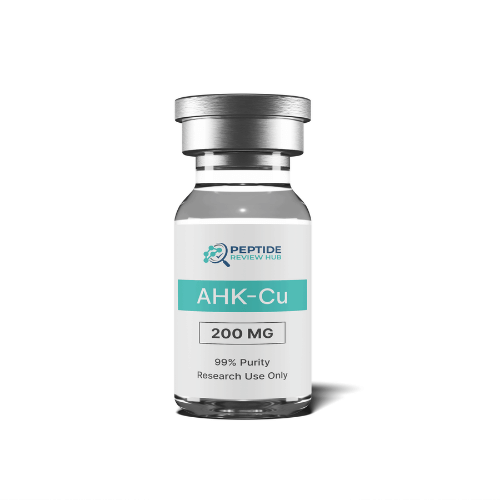
AHK-Cu 200mg
AHK-Cu is a peptide with a copper ion linked to it. It is found in the blood of most mammals and is particularly important in regulating the growth, development, and death of vascular endothelial cells, the cells that line the inside of blood vessels. It is often called “copper AHK” and is of interest to researchers for its ability to improve hair growth and prevent the effects of aging as they relate to skin.
Sequence: (Three-Letter Code): Ala-His-Lys-Cu Molecular formula: C15H25CuN6O4 Molecular weight: 416.9 g/mol
Research Application:
AHK-Cu is of primary interest for its effects on fibroblasts, cells that are responsible for the growth and maintenance of extracellular matrix (the stuff between cells). Fibroblasts also secrete substances, like vascular endothelial growth factor (VEGF), which promote the growth of blood vessels. AHK-Cu has been studied extensively in animal and laboratory models by the cosmeceutical industry for its effects on skin health, collagen synthesis, and hair growth.
What Is AHK-Cu?
AHK-Cu is a short peptide that is complexed with (chemically linked to) a copper molecule. In the case of AHK, the copper atom is linked between the alanine and histidine residues of the alanine-histidine-lysine peptide. The copper atom is bound to three of the nitrogen atoms in the tripeptide. AHK-Cu has been heavily researched as a skin conditioning agent and has recently gained interest as a potential treatment for hair loss after promising bench-top experiments.
What Does AHK-Cu Do?
AHK-Cu can affect several different cellular processes simply by influencing the levels of two molecules – VEGF and transforming growth factor beta-1 (TGF-β1). By increasing VEGF levels, AHK-Cu can activate fibroblasts and endothelial cells. Fibroblasts are responsible for the production of collagen and elastin, two complex molecules that influence skin tone, texture, and flexibility. Endothelial cells line blood vessels and are essential to blood vessel health and growth. The combined effects of activating fibroblasts and endothelial cells are improved skin flexibility, improved wound healing, and decreases in fine lines and wrinkles. Research using human skin cells grow in a laboratory has shown that AHK-Cu can increase collagen type I production by as much as 300% [1].
AHK-Cu Research and The Reduction of Wrinkles
Copper and copper peptides are common additives in things like sunscreen and skin creams. Research in animal models indicates that AHK-Cu is an effective stimulator of collagen synthesis. Collagen has several important effects on the skin. First, it provides structure to the skin and makes it tauter. Second, collagen attracts water. When water enters the skin, it hydrates cells as well as the extracellular matrix, which can reduce the appearance of fine lines and wrinkles [1]. Simply put, AHK-Cu can reduce wrinkles in animal models.
AHK-Cu Research and Hair Loss
AHK-Cu affects hair loss in two ways. First, it promotes the growth of blood vessels by stimulating the secretion of VEGF. Blood vessels are necessary to supply nutrients to hair follicles. Studies in animals show that AHK-Cu not only improves blood flow to existing hair follicles, but that it can promote the growth of new hair follicles by encouraging the growth of blood vessels.
The second way that AHK-Cu affects hair loss, at least in animals models, is by down-regulating TGF-β1. DHT (dihydrotestosterone) is the major hormone involved in male pattern baldness and thinning hair in both men and women as they age. DHT produces many of its effects through TGF-β1. By down-regulating TGF-β1, AHK-Cu can directly reduce the impact of DHT and protect hair follicles from negative stress
Where to Buy AHK-Cu Online
| Rank | Vendor | Trust Score | Vial Size | Price / mg | Status | Action |
|---|---|---|---|---|---|---|
1 | N/A/10 Editorial Rating | $59.99 10mg vial | $6.00/mg | In Stock | Visit Site | |
2 | N/A/10 Editorial Rating | $45.00 1mg vial | $45.00/mg | In Stock | Visit Site |

Top-Ranked Vendor
<p>Primal Peptides is a Netherlands-based supplier of premium analytical peptide reference materials designed exclusively for in-vitro laboratory research. The company offers a broad catalog of research materials, including peptides such as BPC-157, TB-500, GHK-Cu, MOTS-c, Retatrutide, SS-31, and other specialized compounds. Its website emphasizes quality, analytical accuracy, and batch-level verification, with products independently tested through methods including RP-HPLC and LC-MS. Primal Peptides also provides access to test reports and technical product information to support research transparency. With controlled storage, discreet packaging, and shipping across Europe, the platform aims to provide researchers with reliable reference materials for laboratory and analytical applications.</p>
Chemical Properties & Handling
Standard storage protocols for lyophilized peptides generally apply unless otherwise specified.
- Lyophilized (Powder): Store at -20°C for up to 3 years. Keep away from direct light and moisture.
- Reconstituted (Liquid): Store at 2-8°C (refrigerated) and use within 20-30 days to maintain stability.
Research Reviews
No Research Reviews Yet
Be the first to share your research protocol and vendor experience with AHK-Cu.
Best AHK-Cu Vendors & Price Comparison
Compare current AHK-Cu prices, vial sizes, availability, and vendor information in the prices section above before choosing a supplier.
Current Research & Evidence
Research evidence for AHK-Cu has not yet been added.
Key Findings on AHK-Cu Use
Key findings for AHK-Cu have not yet been added.
Related Peptides in Peptide
GLOW
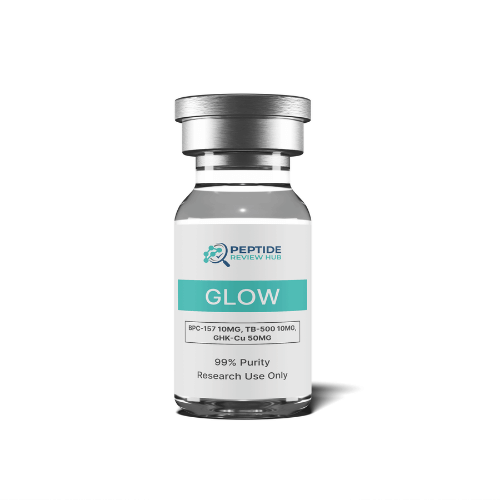
GLOW (60mg) is an experimental peptide research stack combining GHK-Cu, BPC-157, and TB-500 for laboratory studies of cellular signaling, extracellular matrix biology, tissue-response pathways, cell migration, and inflammatory mechanisms.
Acipotide
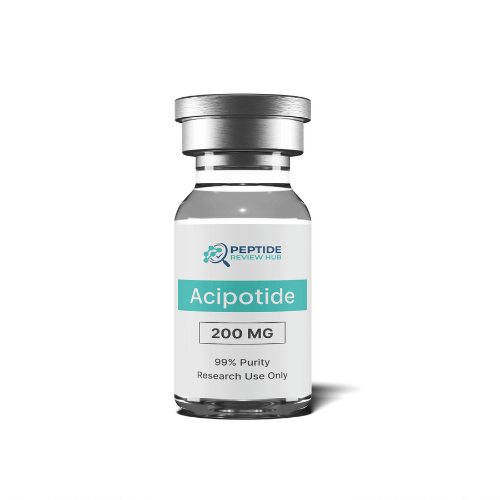
Adipotide is an experimental peptide compound investigated in preclinical research involving adipose-tissue biology, vascular targeting, and metabolic pathways. Research has focused on its proposed ability to interact with blood vessels associated with adipose tissue, making it a compound of interest for studies examining targeted cellular and metabolic mechanisms. Researchers may investigate Adipotide in controlled laboratory models to better understand its biological activity, molecular pathways, and potential effects on adipose-related processes. When evaluating an Adipotide research product, researchers should consider available product documentation, identity information, purity data, batch details, and applicable laboratory testing. Peptide Review Hub provides a research-oriented database where users can compare product and vendor information alongside available testing and sourcing data. Adipotide products listed for research purposes should be treated strictly as laboratory research materials. They are not intended for human consumption, diagnosis, or treatment. Independent verification of product identity, purity, and documentation is recommended before use in research.
Tesamorelin
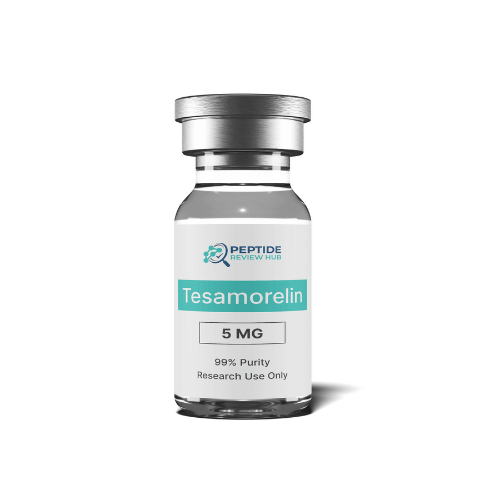
Tesamorelin 5mg is a synthetic GHRH analog studied for its interaction with the GHRH–GH–IGF-1 signaling pathway. It is researched in areas including visceral adipose tissue, lipid metabolism, endocrine signaling, glucose regulation, and metabolic health. Supplied as a lyophilized peptide, Tesamorelin 5mg is intended strictly for controlled laboratory and preclinical research.
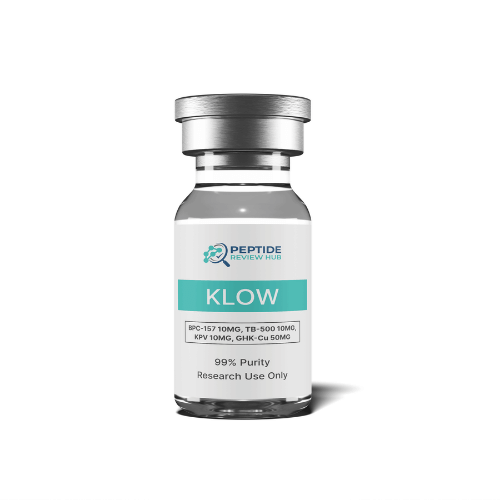
Klow Blend
The Klow Blend combines BPC-157, TB-500, KPV, and GHK-Cu in an 80mg lyophilized peptide formulation designed for laboratory research. The four peptides are studied across areas including inflammatory signaling, cellular migration, angiogenesis, tissue repair, and extracellular-matrix research. Supplied as a research-use-only formulation, it offers researchers a convenient way to investigate multiple peptide pathways within a single blend.