
Research Use Only. This compound is not intended for human consumption or therapeutic use.
Where to Buy Fragment, Modified GRF, Ipamorelin: Vendor Comparison & Research Info
This PRODUCT IS INTENDED AS A RESEARCH CHEMICAL ONLY. This designation allows the use of research chemicals strictly for in vitro testing and laboratory experimentation only. All product information available on this website is for educational purposes only. Bodily introduction of any kind into humans or animals is strictly forbidden by law. This product should only be handled by licensed, qualified professionals.
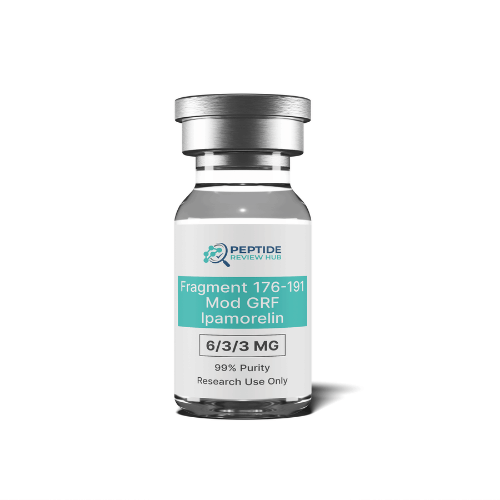
What is Fragment, Modified GRF, Ipamorelin?
This PRODUCT IS INTENDED AS A RESEARCH CHEMICAL ONLY. This designation allows the use of research chemicals strictly for in vitro testing and laboratory experimentation only. All product information available on this website is for educational purposes only. Bodily introduction of any kind into humans or animals is strictly forbidden by law. This product should only be handled by licensed, qualified professionals. This product is not a drug, food, or cosmetic and may not be misbranded, misused or mislabled as a drug, food or cosmetic.
Research has shown that achieving maximum natural growth hormone (GH) release by the anterior pituitary can be accomplished, in general, by combining a growth hormone releasing hormone (GHRH) analogue with a growth hormone secretagogue receptor (GHSR) agonist. There are multiple combinations that can accomplish this goal, including combining modified GRF with ipamorelin. Of course, sometimes the goal might be to achieve more specific effects in addition to maximum GH release. In other words, by fine tuning the types of GHRH agonist and GHSR agonist used, it could be possible to create more targeted outcomes.
In the case of Modified GRF, a potent GHRH analogue, the effects go beyond simply boosting GH release. The peptide has been shown, in animal studies, to have benefits in intestinal inflammation, heart function, and wound healing[1], [2], [3].
By adding ipamorelin to the mix with modified GRF, GH release is pulsed to its maximum level. Ipamorelin, known for its specificity in boosting GH with few additional effects, has recently been linked to bone regrowth and matrix stabilization. These effects appear to be in addition to the bone benefits of enhanced GH release[4], [5].
Finally, it is possible to boost targeted fat burning, something that both modified GRF and ipamorelin cause to a limited degree, with the aid of fragment 176-191. While technically a GHRH agonist, fragment 176-191 has been shown in animal models to be a primary and potent stimulator of adipocyte catabolism (fat burning). The peptide is orders of magnitude more potent than most GHRH agonists in stimulating fat metabolism and thus is sometimes referred to as the “lipolytic fragment.” Adding fragment 176-191 to the mix is a way to boost fat burning, particularly in the setting of enhanced GH release, and shift metabolism toward the accumulation of lean body mass.
Scientific Journal Author
Dr. Jan Izdebski has been listed as a noteworthy Chemist, researcher by Marquis Who's Who. He attained a Master of Science from University Warsaw, Poland, 1959 and is a Doctor of Philosophy, University Warsaw, Poland, 1965, along with a Doctor of Science, University Warsaw, Poland, 1979. He studied how GRF 1-29 is more resistant to enzymatic degradation and how that affects its half-life.
Dr. Jan Izdebski is being referenced as one of the leading scientists involved in the research and development of GRF 1-29. In no way is this doctor/scientist endorsing or advocating the purchase, sale, or use of this product for any reason. There is no affiliation or relationship, implied or otherwise, between peptide Review Hub and this doctor. The purpose of citing the doctor is to acknowledge, recognize, and credit the exhaustive research and development efforts conducted by the scientists studying this peptide. Dr. Jan Izdebski is listed in [9] under the referenced citations.
Where to Buy Fragment, Modified GRF, Ipamorelin Online
| Rank | Vendor | Trust Score | Vial Size | Price / mg | Status | Action |
|---|---|---|---|---|---|---|
1 | 8.7/10 Editorial Rating | $94.00 5mg vial | $18.80/mg | In Stock | Visit Site | |
2 |  Biotechpeptides Verified | N/A/10 Editorial Rating | $87.00 12mg vial | $7.25/mg | In Stock | Visit Site |
Top-Ranked Vendor

Chemical Properties & Handling
Standard storage protocols for lyophilized peptides generally apply unless otherwise specified.
- Lyophilized (Powder): Store at -20°C for up to 3 years. Keep away from direct light and moisture.
- Reconstituted (Liquid): Store at 2-8°C (refrigerated) and use within 20-30 days to maintain stability.
Research Reviews
No Research Reviews Yet
Be the first to share your research protocol and vendor experience with Fragment, Modified GRF, Ipamorelin.
Best Fragment, Modified GRF, Ipamorelin Vendors & Price Comparison
Fragment 176-191 + Modified GRF (1-29) + Ipamorelin is a multi-peptide research formulation designed to investigate complementary pathways involved in growth hormone regulation, endocrine signaling, fat metabolism, body-composition biology, pituitary function, and GH/IGF-1 axis physiology.
Researchers study this peptide combination because it brings together three distinct research compounds:
Modified GRF (1-29), a Growth Hormone Releasing Hormone (GHRH) analogue
Ipamorelin, a Growth Hormone Secretagogue Receptor (GHS-R) agonist
Fragment 176-191, a modified growth hormone fragment frequently investigated in adipocyte and metabolic signaling research
Together, these peptides provide a laboratory model for examining growth hormone regulation, metabolic adaptation, hormonal feedback systems, and fat-metabolism pathways.
This Fragment 176-191 + Modified GRF + Ipamorelin Vendor Price Comparison Guide helps researchers evaluate suppliers using objective criteria including:
Product Pricing
Cost Per Milligram
Product Purity
Third-Party Testing
Certificate of Analysis (COA)
Vendor Reputation
Customer Reviews
Shipping Performance
Product Availability
Overall Value
Whether you're searching for the lowest-priced supplier, the highest-purity research-grade material, or vendors offering extensive analytical verification, this guide provides a framework for comparing research peptide vendors.
Explore Fragment 176-191 + Modified GRF + Ipamorelin Vendors by Criteria
Most Popular Vendors
Compare suppliers frequently selected by endocrine and metabolic researchers.
Highest Reviewed Vendors
Discover peptide suppliers with strong customer satisfaction and positive marketplace reputations.
Lowest Price Vendors
Identify suppliers offering competitive pricing and favorable cost-per-milligram value.
Highest Purity Vendors
Review suppliers providing transparent purity verification and analytical testing.
Best Value Vendors
Compare pricing, product quality, laboratory documentation, and customer support.
Fastest Shipping Vendors
Evaluate fulfillment reliability, shipping speed, and packaging quality.
Newly Listed Vendors
Explore recently added suppliers offering this triple-peptide research formulation.
What Is Fragment 176-191 + Modified GRF + Ipamorelin?
Overview
Fragment 176-191 + Modified GRF + Ipamorelin is a research-directed peptide combination used to investigate multiple pathways involved in growth hormone biology and metabolic regulation.
Researchers investigate this blend because of its relationship with:
Growth hormone secretion
GHRH receptor signaling
Growth hormone secretagogue receptor activity
GH/IGF-1 axis physiology
Endocrine communication
Metabolic regulation
Adipocyte signaling
Body-composition research
The formulation allows researchers to examine multiple signaling mechanisms simultaneously.
Modified GRF (1-29) Research Profile
What Is Modified GRF?
Modified GRF (1-29), often referred to as Mod GRF 1-29, is a synthetic analogue of Growth Hormone Releasing Hormone.
Researchers investigate Modified GRF because of its relationship with:
GHRH receptor activation
Growth hormone regulation
Pituitary signaling
Endocrine communication
GH/IGF-1 axis biology
Modified GRF was engineered to improve stability and resistance to enzymatic degradation compared with native GHRH.
Ipamorelin Research Profile
What Is Ipamorelin?
Ipamorelin is a highly selective Growth Hormone Secretagogue Receptor (GHS-R) agonist.
Researchers investigate Ipamorelin because of its relationship with:
Ghrelin receptor signaling
Growth hormone secretion
Pituitary physiology
Bone biology
Muscle physiology
Metabolic regulation
Its receptor selectivity makes it one of the most commonly studied growth hormone secretagogues.
Fragment 176-191 Research Profile
What Is Fragment 176-191?
Fragment 176-191 is a synthetic peptide derived from the terminal region of growth hormone.
Researchers investigate Fragment 176-191 because of its relationship with:
Adipocyte biology
Fat metabolism
Energy utilization
Metabolic signaling
Body-composition research
It is frequently referred to in research as a "lipolytic fragment" because of its association with adipose-tissue signaling pathways.
Combined Research Interest
One of the primary reasons researchers study this combination is that each peptide contributes to a distinct research pathway.
Modified GRF (1-29)
GHRH receptor signaling
Growth hormone release
Pituitary communication
Ipamorelin
GHS-R activation
Secretagogue signaling
Ghrelin-related pathways
Fragment 176-191
Adipocyte metabolism
Fat-cell signaling
Energy-regulation pathways
Combined Research Model
Multi-pathway endocrine regulation
Growth hormone physiology
Metabolic adaptation
GH/IGF-1 axis research
Adipose-tissue biology
Researchers investigate whether combining these mechanisms provides insight into complex endocrine and metabolic systems.
Molecular Characteristics
Product Information
Researchers evaluating Fragment 176-191 + Modified GRF + Ipamorelin products should carefully review analytical documentation and batch specifications.
Product Type
Triple-Peptide Research Blend
Components
Fragment 176-191
Modified GRF (1-29)
Ipamorelin
Classification
Growth Hormone & Metabolic Research Peptides
Research Category
Endocrine, Metabolic & Body-Composition Research
Product Format
Lyophilized Peptide Preparation
Research Focus
GH/IGF-1 Axis & Metabolic Signaling
Why Researchers Compare Vendors
Research reproducibility depends heavily on peptide quality and manufacturing consistency.
Differences among suppliers may include:
Purity levels
Batch consistency
Stability testing
Manufacturing standards
Analytical verification
Product documentation
Storage procedures
Quality-control systems
Careful supplier evaluation may improve consistency and reliability across research studies.
How We Compare Vendors
Third-Party Laboratory Testing
Independent testing remains one of the strongest indicators of peptide quality.
Researchers should prioritize suppliers offering:
Third-party laboratory testing
Identity verification
Purity analysis
Batch-specific laboratory reports
Certificate of Analysis (COA)
A quality COA should include:
Batch number
Test date
Purity results
Identity confirmation
Analytical methodology
Product Purity
Purity remains one of the most important variables when evaluating research peptides.
Higher-purity products generally contribute to improved experimental consistency and reproducibility.
Cost Per Milligram
Comparing vial prices alone can be misleading.
Cost Per Milligram Formula
Product Price ÷ Total Milligrams = Cost Per Milligram
This metric offers a more accurate comparison between suppliers.
Customer Reviews
Customer experiences often provide insight regarding:
Product consistency
Shipping reliability
Packaging quality
Customer support
Purchasing experience
Vendor Reputation
Established suppliers often demonstrate:
Transparent testing standards
Strong quality-control systems
Reliable inventory availability
Positive customer feedback
Current Research & Evidence
Growth Hormone Research
The primary focus of this peptide blend involves growth hormone physiology.
Researchers continue investigating:
Growth hormone secretion
Pituitary signaling
Hormonal communication
Endocrine adaptation
Receptor-mediated pathways
GH/IGF-1 Axis Research
Researchers study pathways involving:
Growth factor signaling
Hormonal regulation
Endocrine feedback loops
Growth hormone physiology
Metabolic communication
This remains a major area of endocrine research.
Fat Metabolism Research
Fragment 176-191 has generated interest in studies involving:
Adipocyte signaling
Lipid metabolism
Energy expenditure
Fat-cell biology
Metabolic adaptation
This remains a significant area of investigation.
Bone Biology Research
Researchers investigate pathways involving:
Bone remodeling
Skeletal physiology
Growth-factor communication
Bone-cell signaling
Structural adaptation
Muscle Biology Research
Experimental studies continue exploring:
Skeletal-muscle physiology
Growth-factor signaling
Muscle maintenance
Tissue adaptation
Body-composition biology
Cardiovascular Research
Research involving Modified GRF and related pathways has examined:
Cardiac physiology
Vascular biology
Cardiometabolic signaling
Cellular adaptation
Endocrine influences on heart function
Intestinal Biology Research
Researchers have also investigated pathways involving:
Gastrointestinal signaling
Intestinal physiology
Tissue adaptation
Cellular maintenance
Growth-factor communication
Additional studies remain ongoing.
Potential Areas of Future Research
Researchers continue exploring this peptide combination in studies involving:
Healthy aging biology
Metabolic regulation
Body-composition research
Endocrine adaptation
Bone physiology
Muscle biology
Adipose-tissue signaling
Growth-factor communication
Scientific interest in these areas continues to grow.
Research Limitations
Most findings involving Fragment 176-191, Modified GRF, and Ipamorelin originate from:
Cell-culture studies
Animal models
Laboratory investigations
Preclinical endocrine research
Additional studies remain necessary to fully characterize biological mechanisms and long-term outcomes.
Research findings should not be interpreted as evidence of approved therapeutic applications.
Product Quality & Analytical Testing
Why Testing Matters
Research-grade peptide products should undergo testing to verify:
Identity
Purity
Stability
Composition
Batch consistency
Common Testing Methods
High-Performance Liquid Chromatography (HPLC)
Used to evaluate purity and identify impurities.
Mass Spectrometry (MS)
Used to verify molecular identity and composition.
Identity Verification Testing
Confirms peptide authenticity.
Stability Testing
Measures peptide integrity during storage.
Batch Consistency Testing
Evaluates reproducibility between manufacturing lots.
Understanding Pricing
Several variables influence pricing among peptide suppliers.
Product Purity
Higher-purity formulations generally command premium pricing.
Multi-Peptide Manufacturing
Triple-peptide products require additional synthesis, formulation, and verification procedures.
Analytical Verification
Comprehensive testing programs improve transparency while increasing production costs.
Research Demand
Growing interest in metabolic and endocrine research contributes to demand.
Vendor Reputation
Trusted suppliers often command higher prices due to stronger quality-assurance procedures.
Vendor Evaluation Checklist
Quality Verification
✅ Third-party testing available
✅ Certificate of Analysis provided
✅ Identity verification documented
✅ Purity information disclosed
✅ Batch-specific testing available
✅ Stability information available
Vendor Reliability
✅ Positive customer reviews
✅ Transparent company information
✅ Responsive customer support
✅ Reliable inventory availability
Purchasing Experience
✅ Secure checkout process
✅ Shipment tracking available
✅ Clear refund policies
✅ Reliable order fulfillment
Red Flags When Comparing Vendors
Testing Concerns
❌ No third-party testing
❌ Missing COAs
❌ Unverified purity claims
❌ Missing identity verification
❌ Outdated analytical reports
Transparency Issues
❌ Hidden specifications
❌ Missing batch information
❌ Limited documentation
❌ No contact information
Service Problems
❌ Frequent inventory shortages
❌ Poor customer communication
❌ Negative customer reviews
❌ Unclear shipping policies
Frequently Asked Questions
What is Fragment 176-191 + Modified GRF + Ipamorelin?
It is a triple-peptide research formulation combining Fragment 176-191, Modified GRF (1-29), and Ipamorelin for the investigation of growth hormone, endocrine, and metabolic signaling pathways.
What is this combination used for in research?
Researchers investigate this blend in studies involving growth hormone secretion, pituitary function, adipocyte signaling, body-composition biology, metabolic regulation, and GH/IGF-1 axis physiology.
Why combine these three peptides?
Each peptide interacts with a distinct pathway, allowing researchers to study multiple complementary mechanisms simultaneously.
Why compare vendors?
Purity, testing standards, documentation quality, pricing, and supplier reliability may vary significantly between suppliers.
What should researchers review before purchasing?
Researchers should evaluate:
Certificate of Analysis (COA)
Third-party laboratory testing
Purity verification
Identity confirmation
Vendor reputation
Customer reviews
Why is third-party testing important?
Independent testing helps verify peptide identity, purity, composition, and batch consistency while improving transparency and reproducibility.
Is the cheapest supplier always the best option?
No. Product quality, testing standards, supplier reliability, and analytical documentation are often more important than price alone.
Final Thoughts
Fragment 176-191 + Modified GRF (1-29) + Ipamorelin remains a popular research combination because it brings together complementary pathways involved in growth hormone regulation, metabolic signaling, adipocyte biology, pituitary function, and endocrine communication. Ongoing investigations continue expanding scientific understanding of GH/IGF-1 physiology, metabolic adaptation, body-composition biology, and growth-factor signaling.
When comparing vendors, researchers should prioritize purity verification, third-party analytical testing, Certificate of Analysis availability, supplier reputation, and overall value rather than focusing exclusively on price. A structured vendor-comparison process can help identify suppliers capable of meeting rigorous research-quality standards.
Current Research & Evidence
Research evidence for Fragment, Modified GRF, Ipamorelin has not yet been added.
Key Findings on Fragment, Modified GRF, Ipamorelin Use
Key findings for Fragment, Modified GRF, Ipamorelin have not yet been added.
Related Peptides in Peptide
PT 21
PT-21 is an experimental research peptide investigated in controlled laboratory studies of cellular signaling, molecular pathways, tissue biology, and cellular responses. Supplied as a research material for qualified researchers, it is intended strictly for in vitro research and not for human or animal use.
SS-31
SS-31, also known as elamipretide or MTP-131, is a synthetic mitochondria-targeted tetrapeptide studied in laboratory research involving cardiolipin interactions, mitochondrial respiration, oxidative stress, ATP production, and cellular energy metabolism.
GLP-1
GLP-1 is a peptide hormone studied in research involving GLP-1 receptor signaling, cellular communication, metabolic biology, pancreatic pathways, and gastrointestinal research. It is intended strictly for laboratory research and not for human or animal consumption.
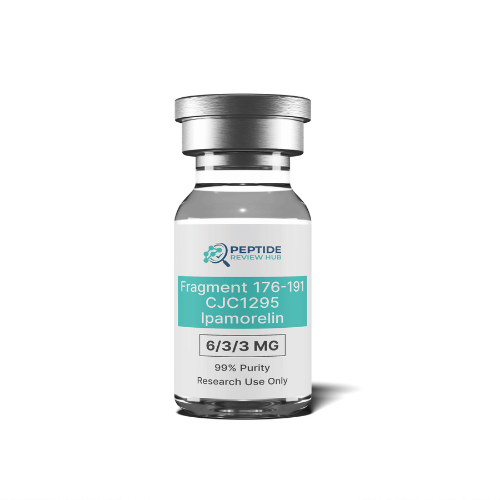
Fragment-176-191-CJC1295-Ipamorelin
Fragment-176-191-CJC1295-Ipamorelin is a research peptide blend combining Fragment 176-191, CJC-1295, and Ipamorelin for laboratory research into growth hormone signaling, metabolic pathways, adipose biology, and IGF-1-related mechanisms.